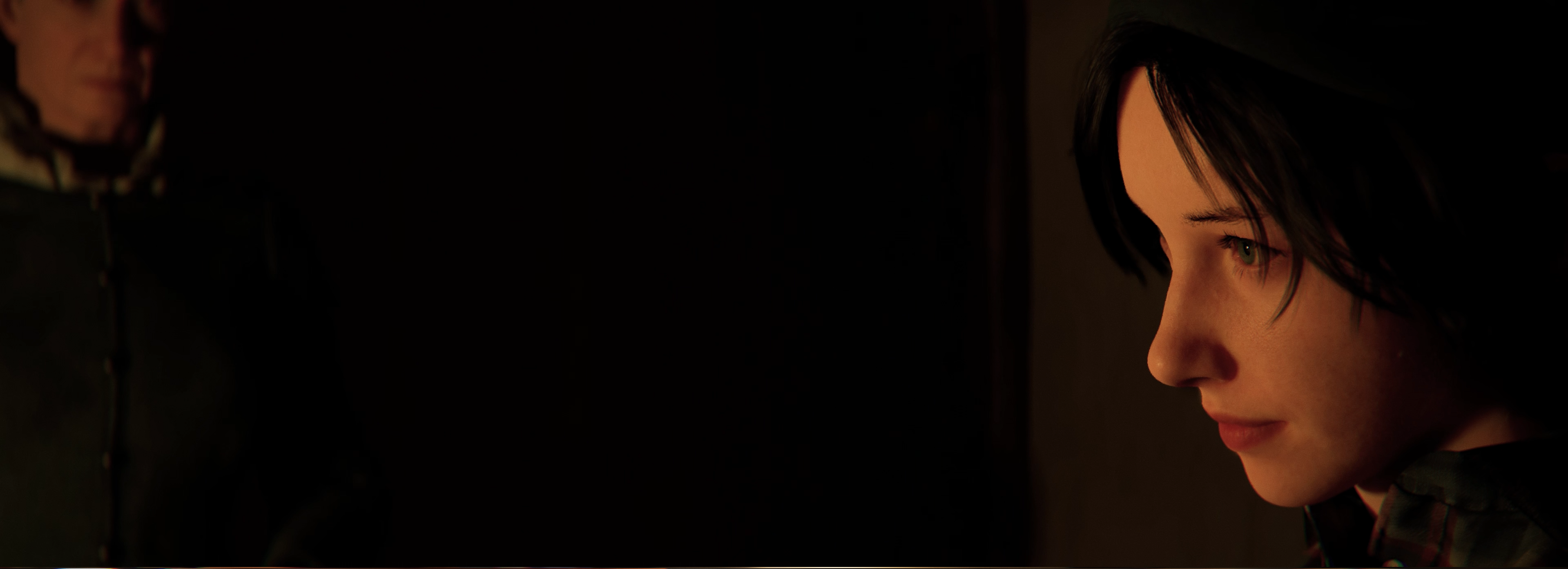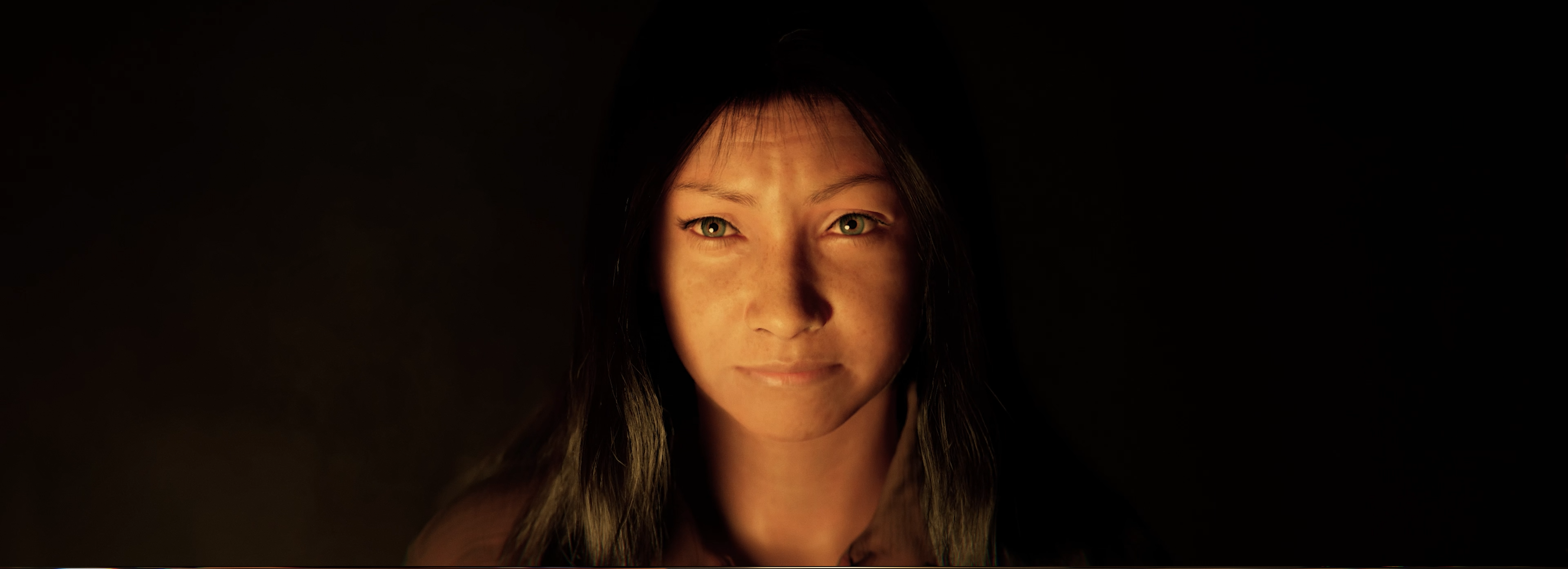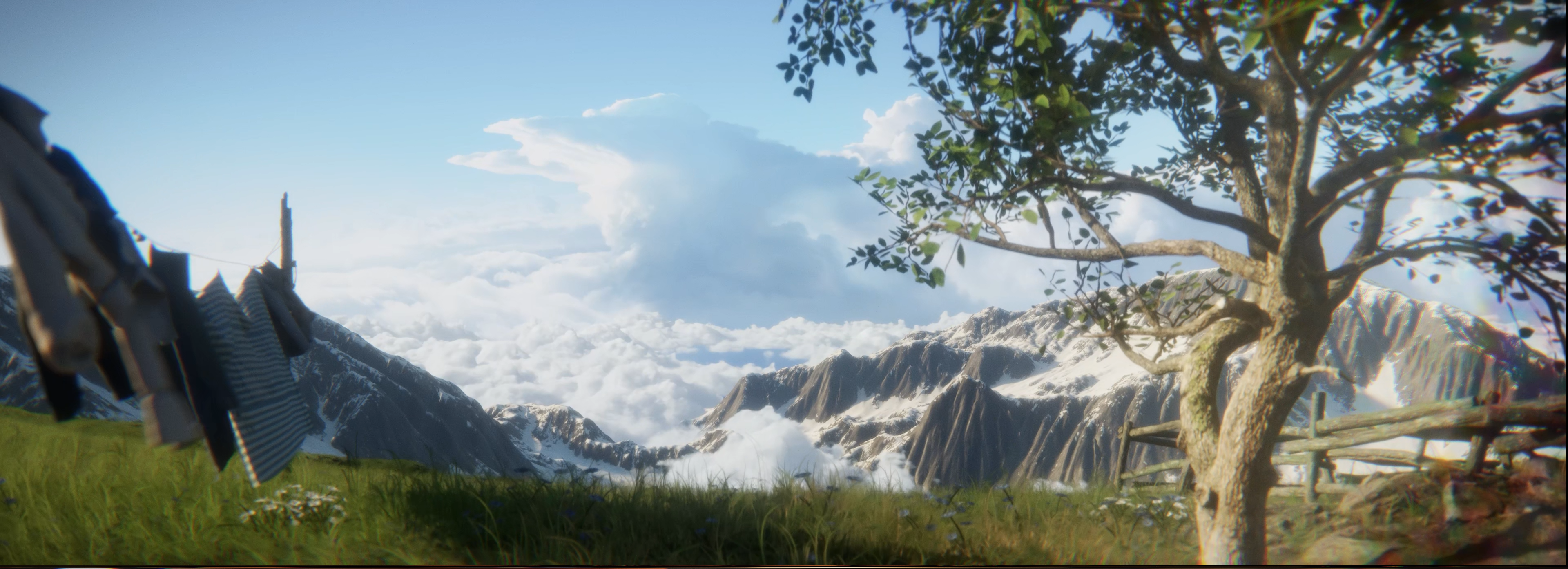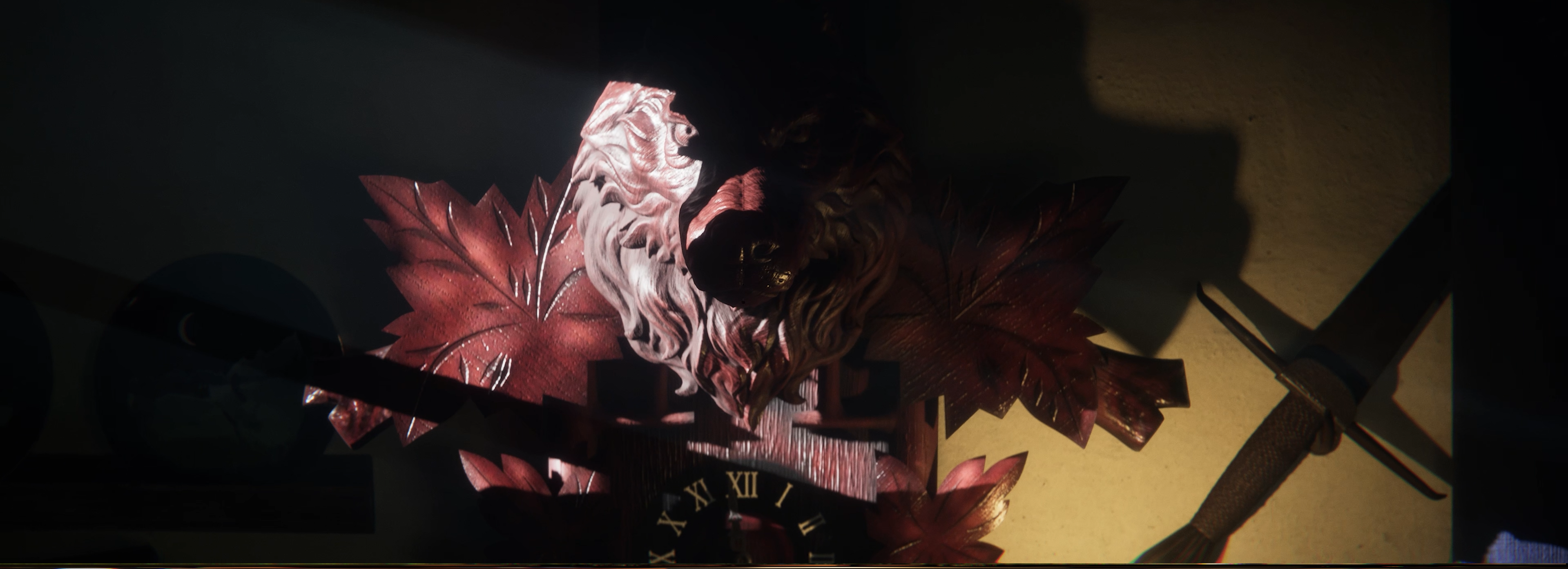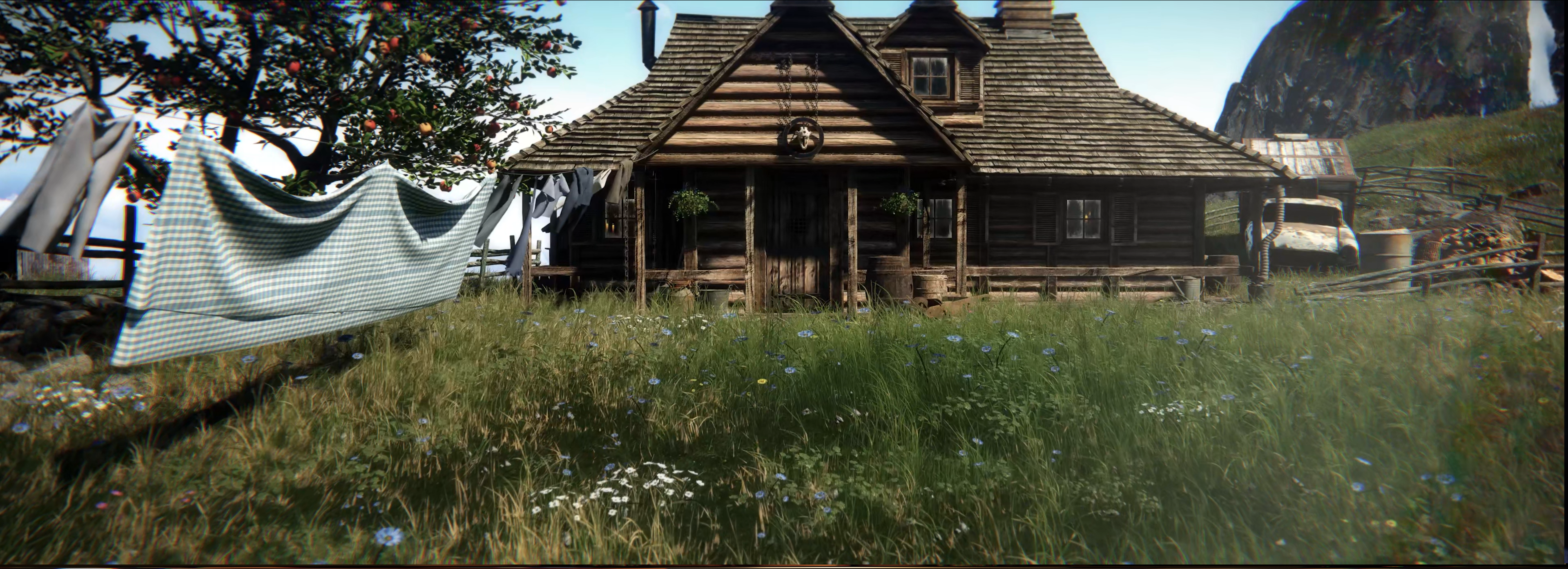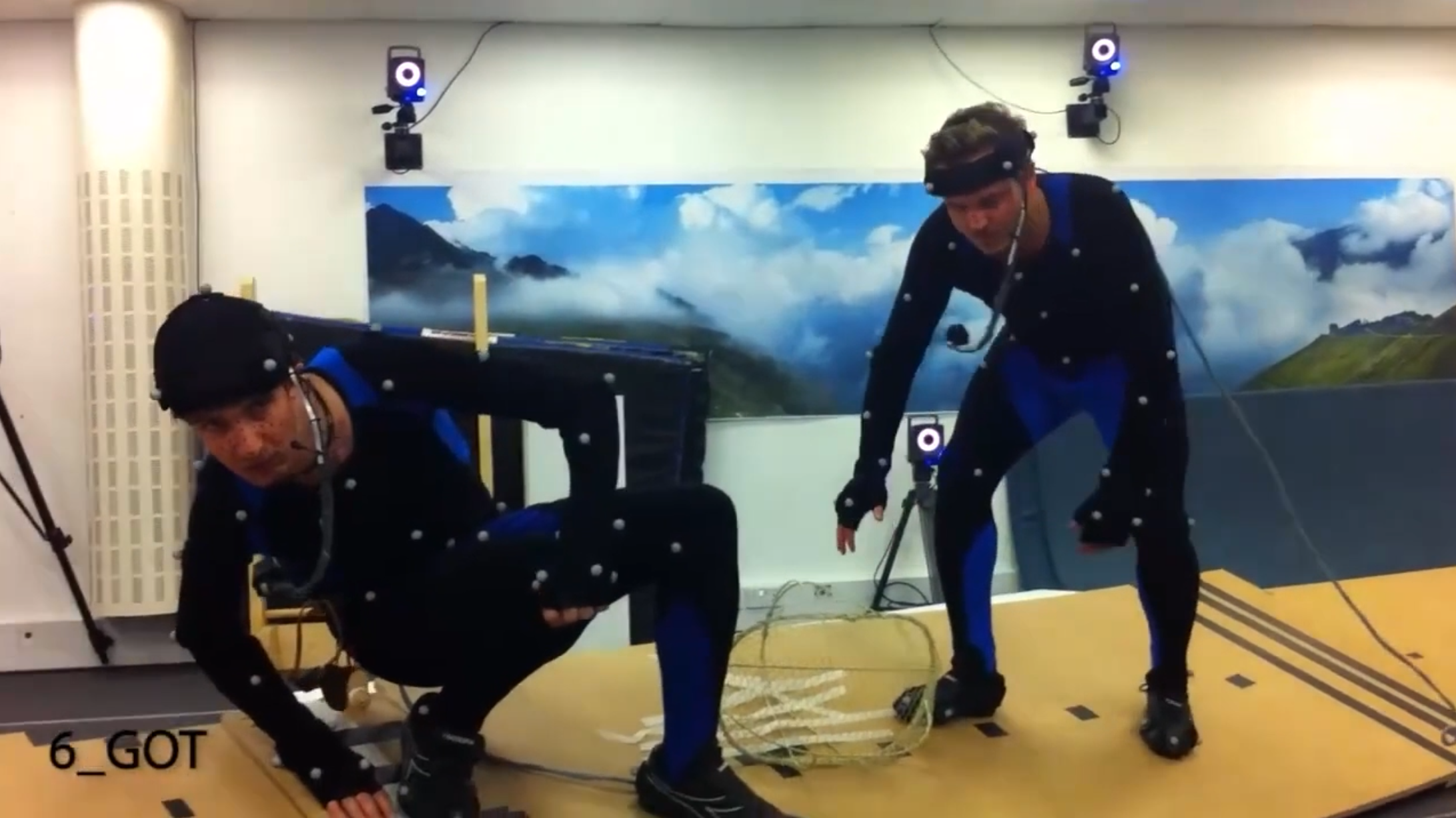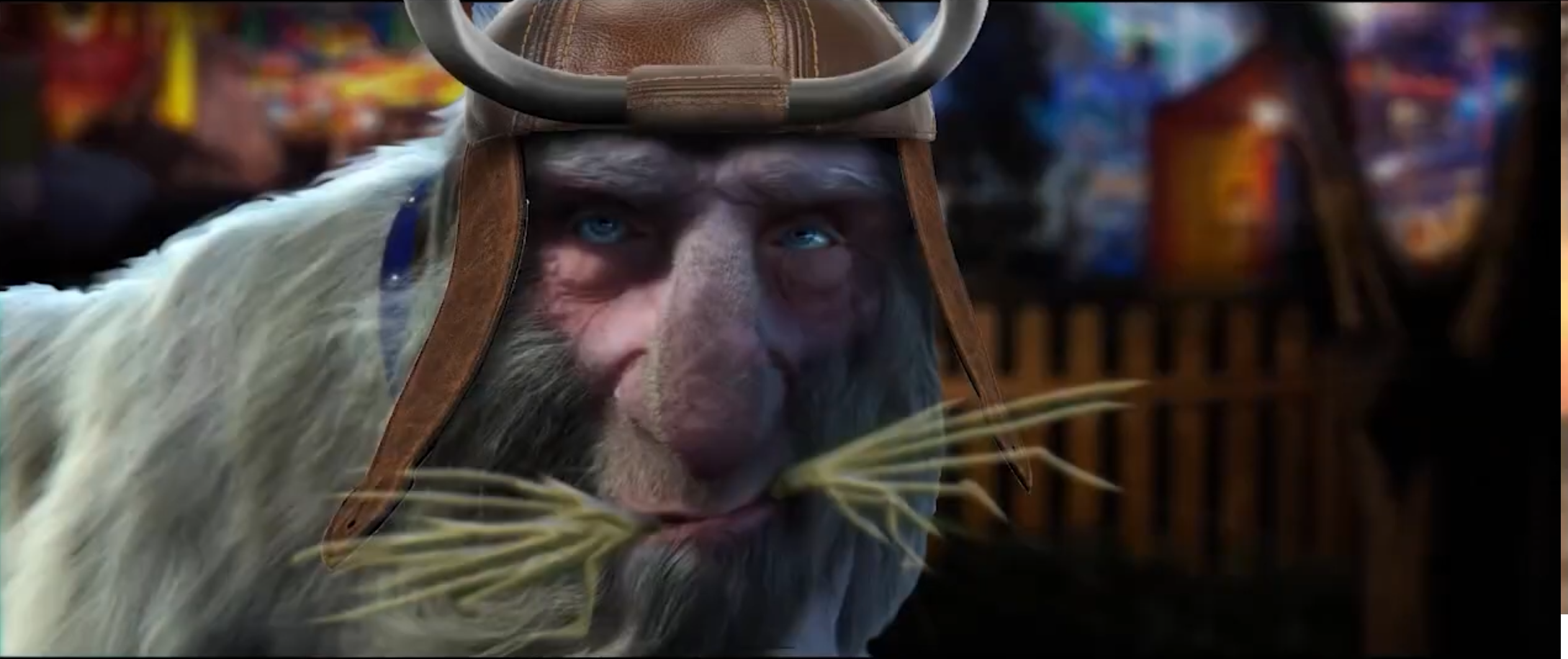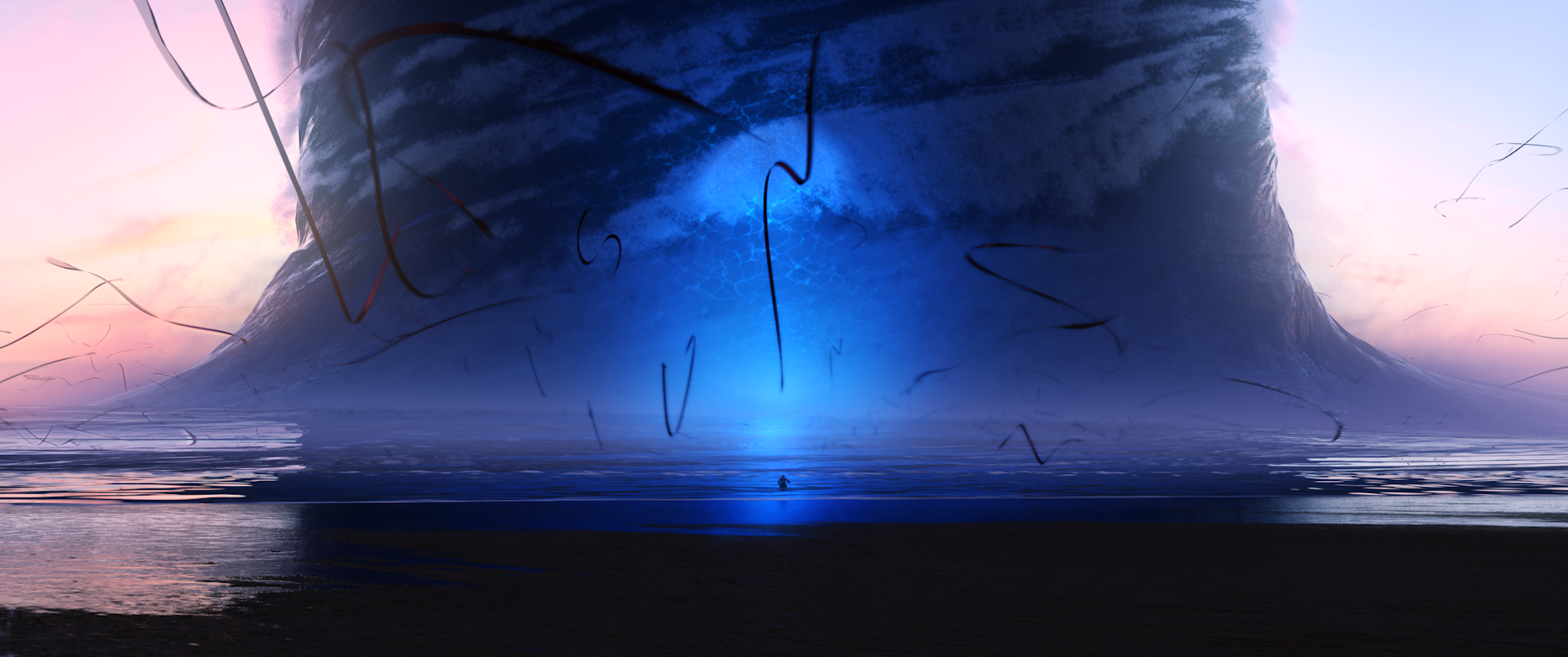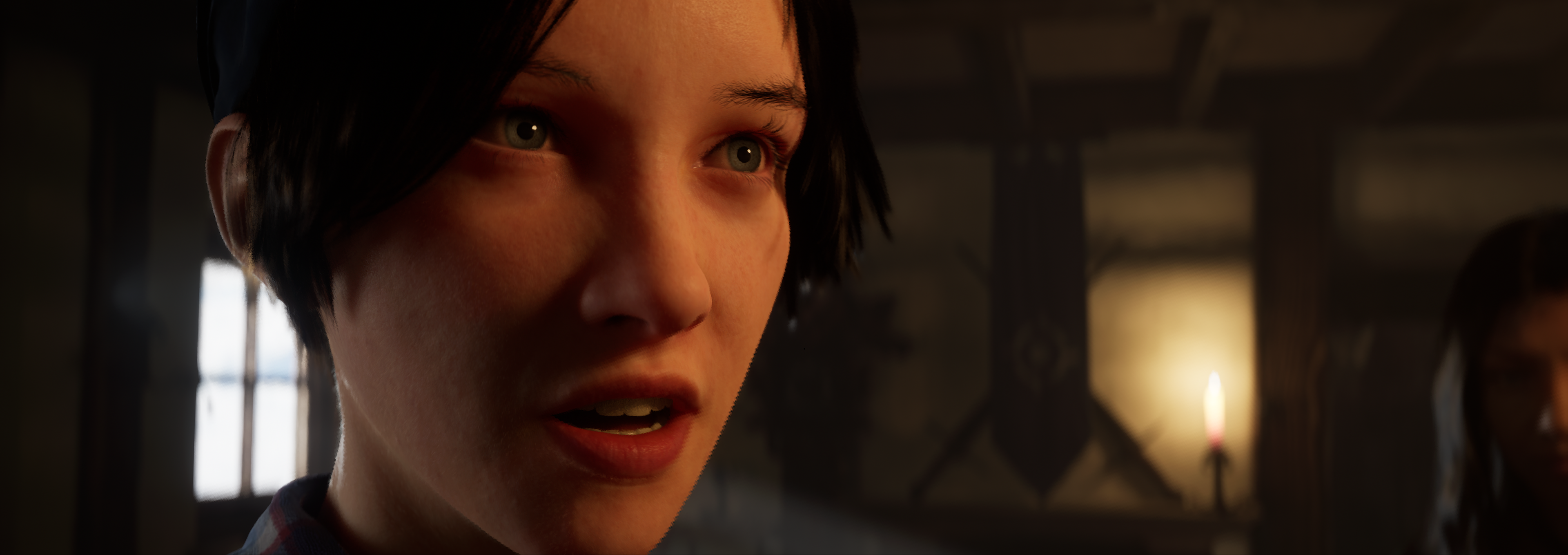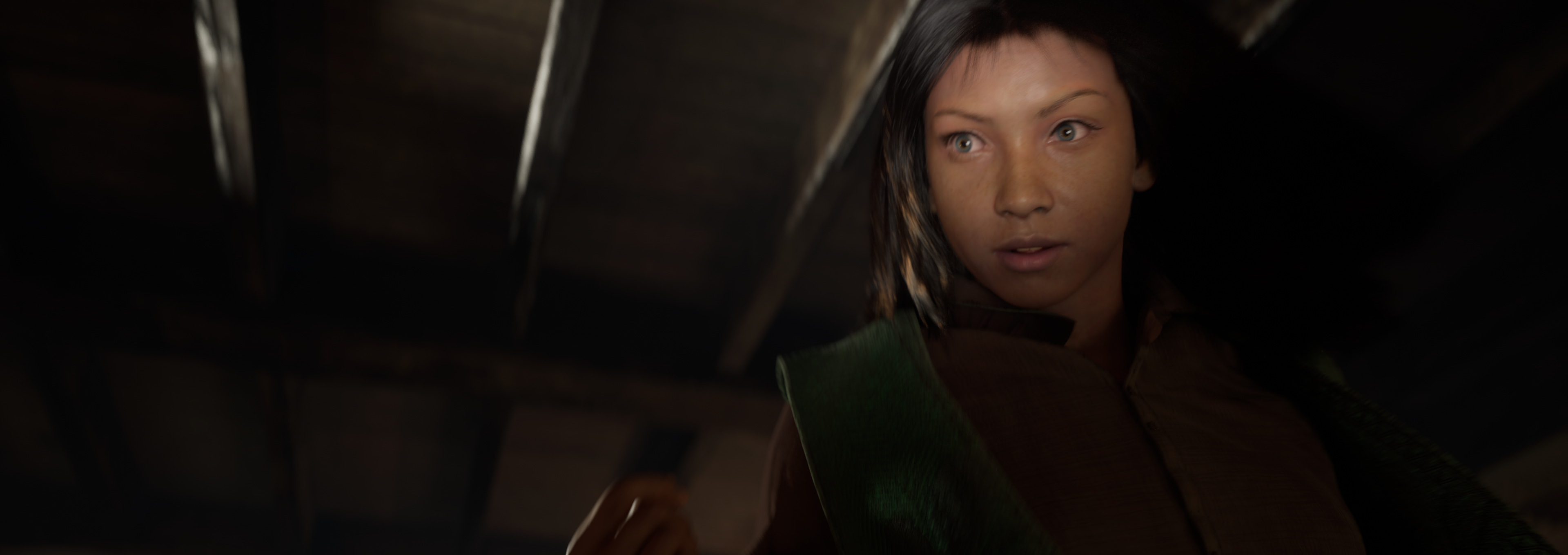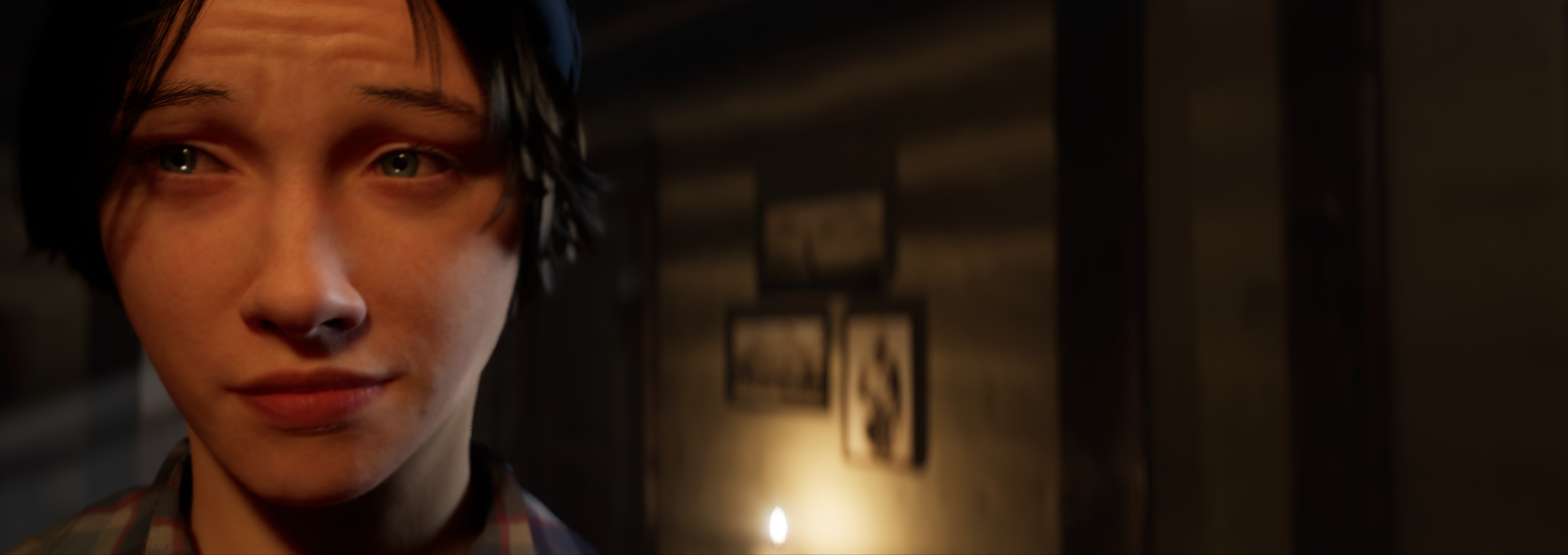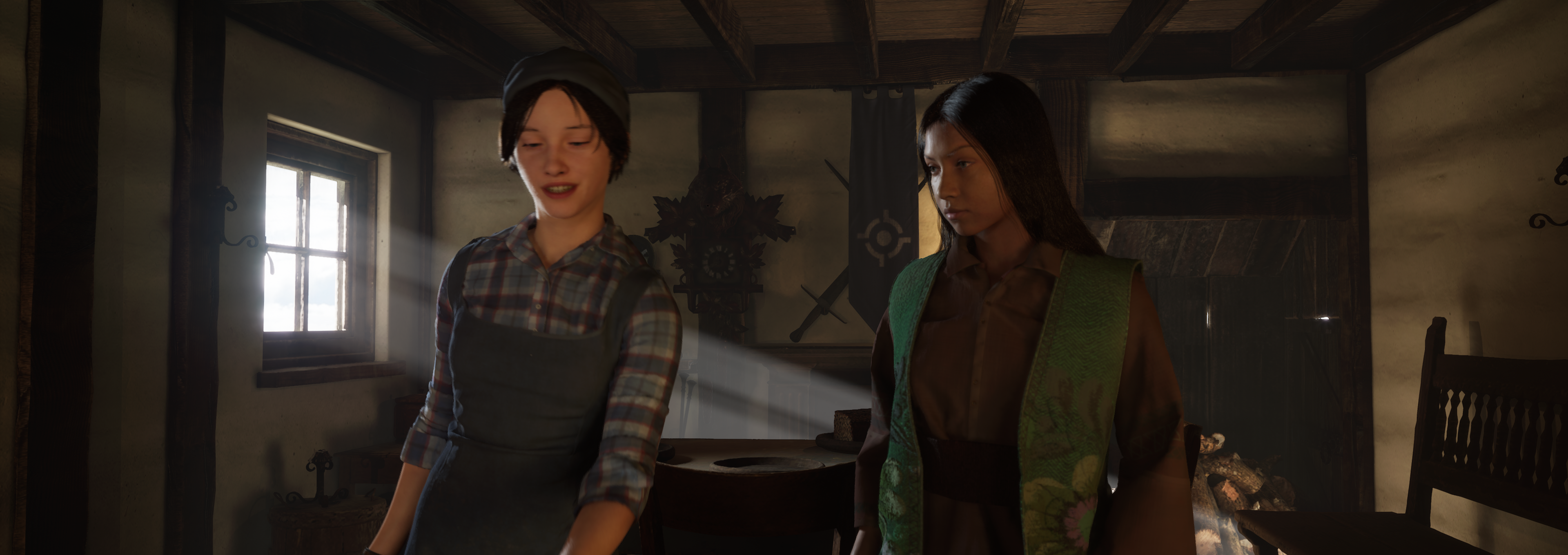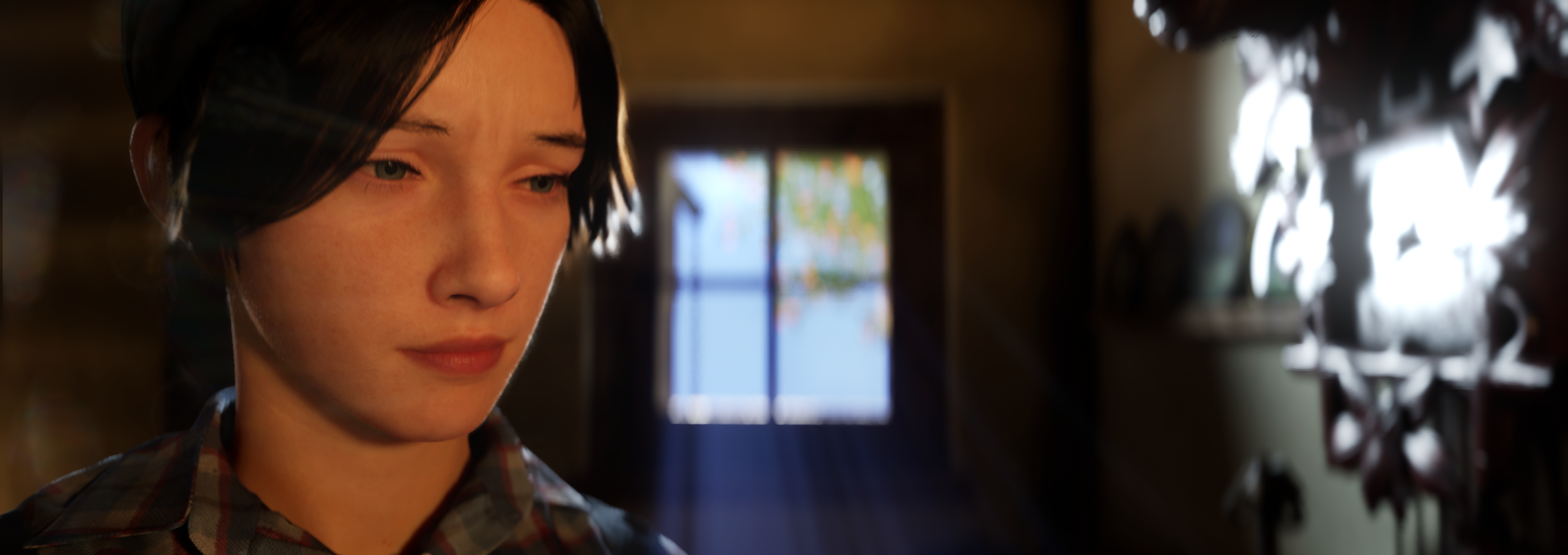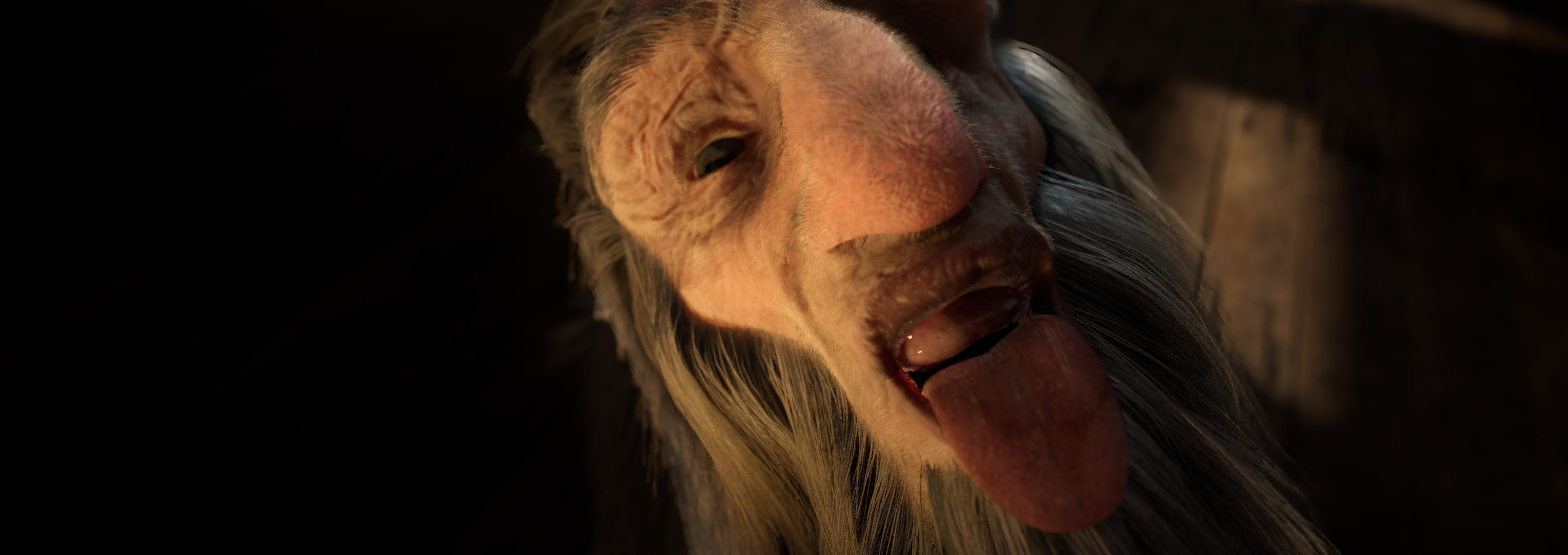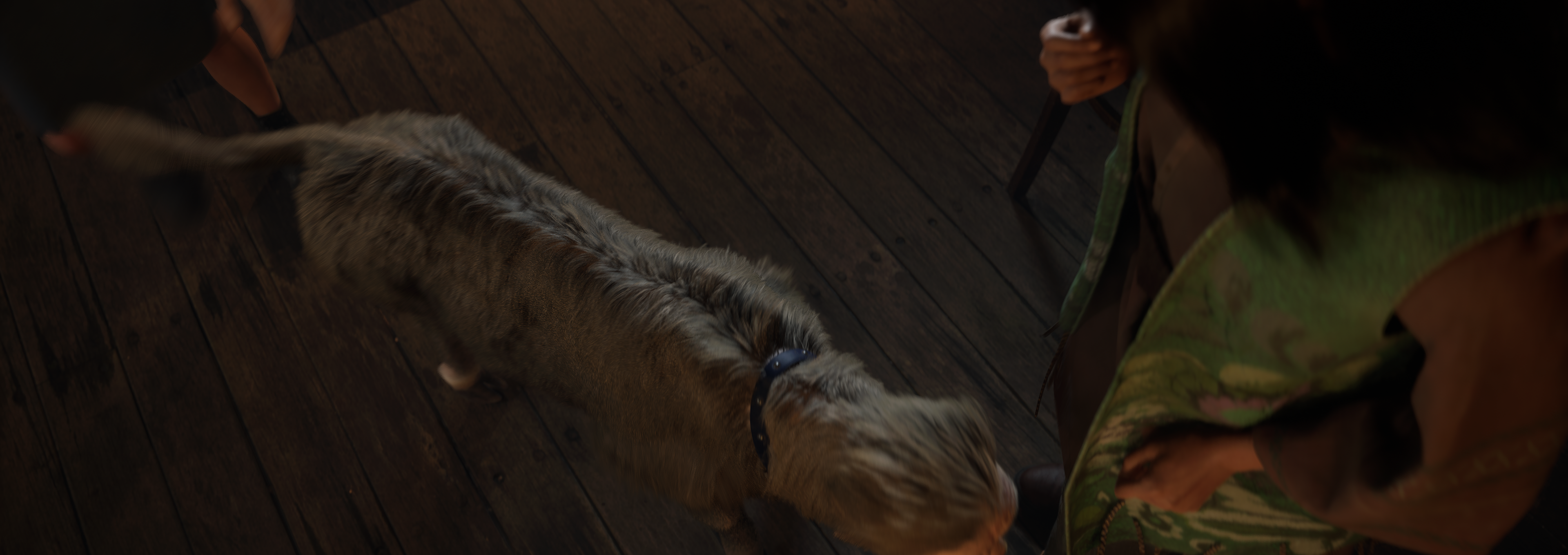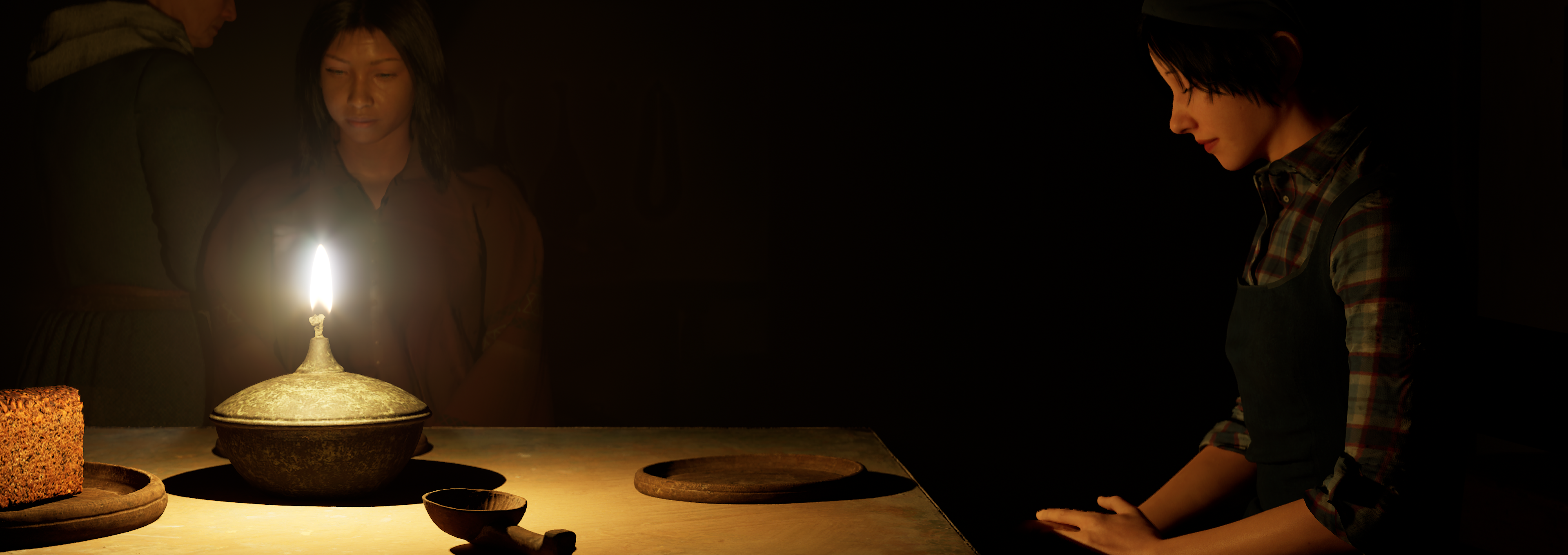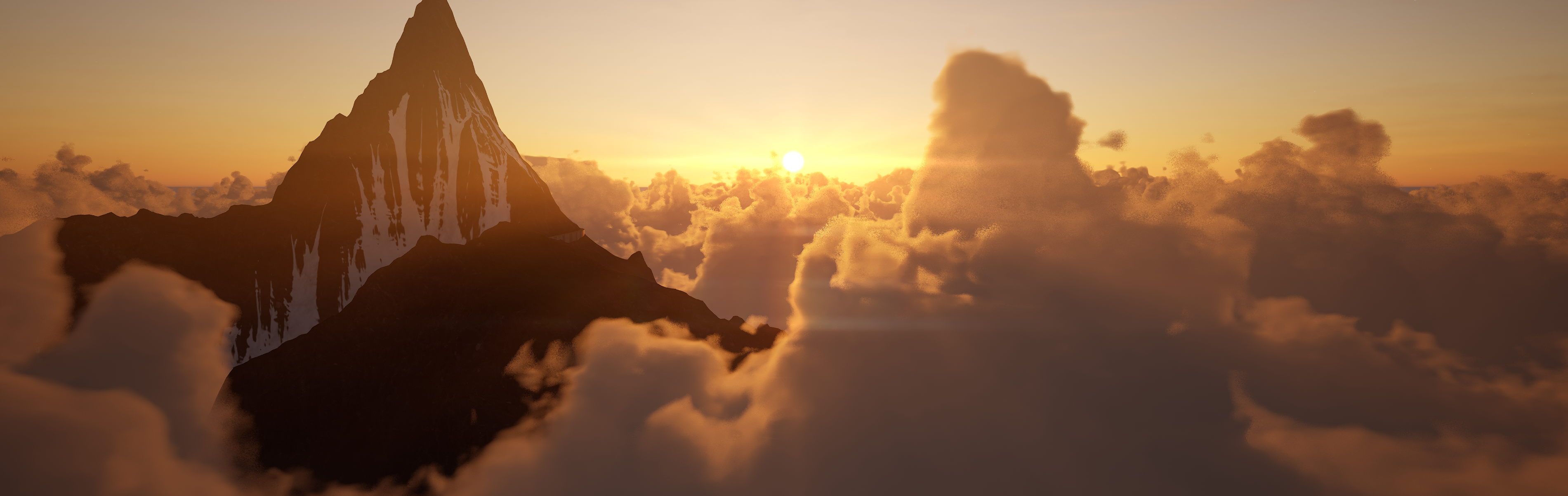
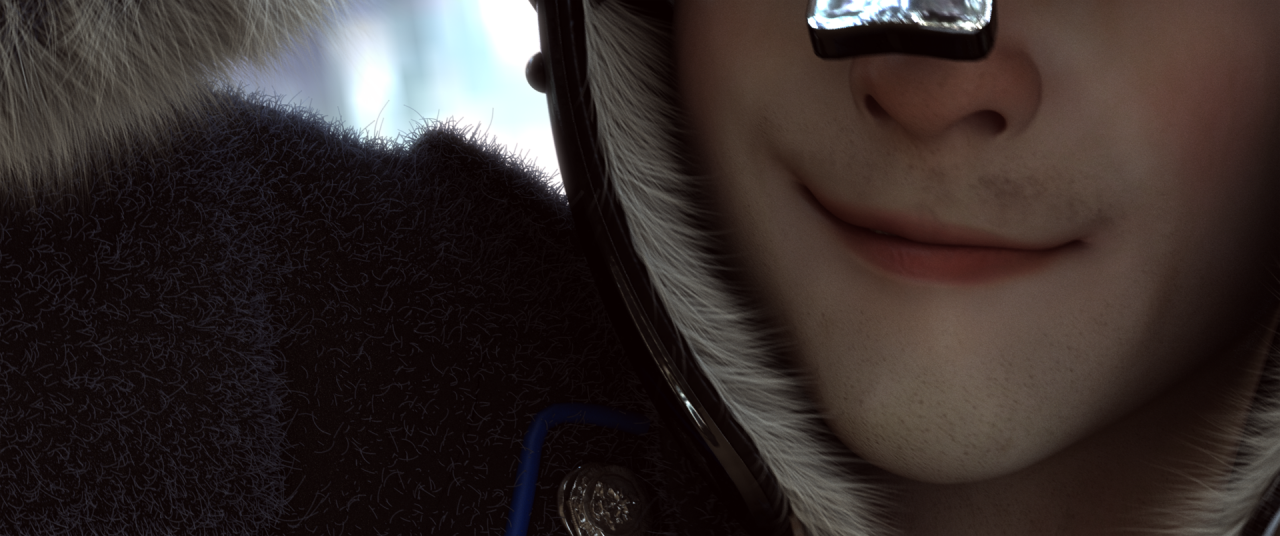





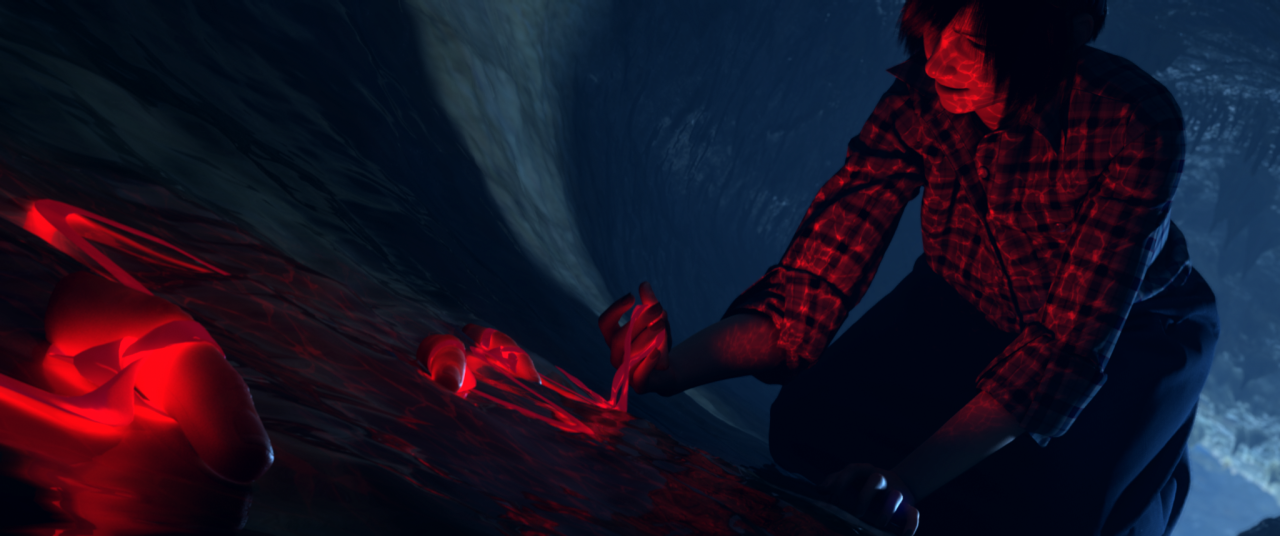
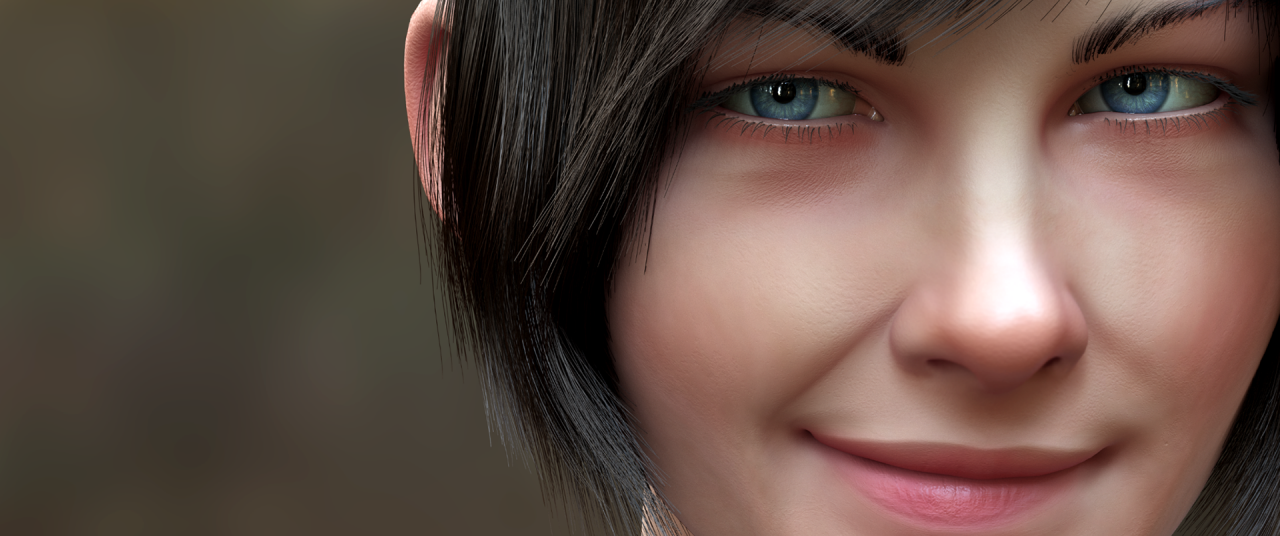
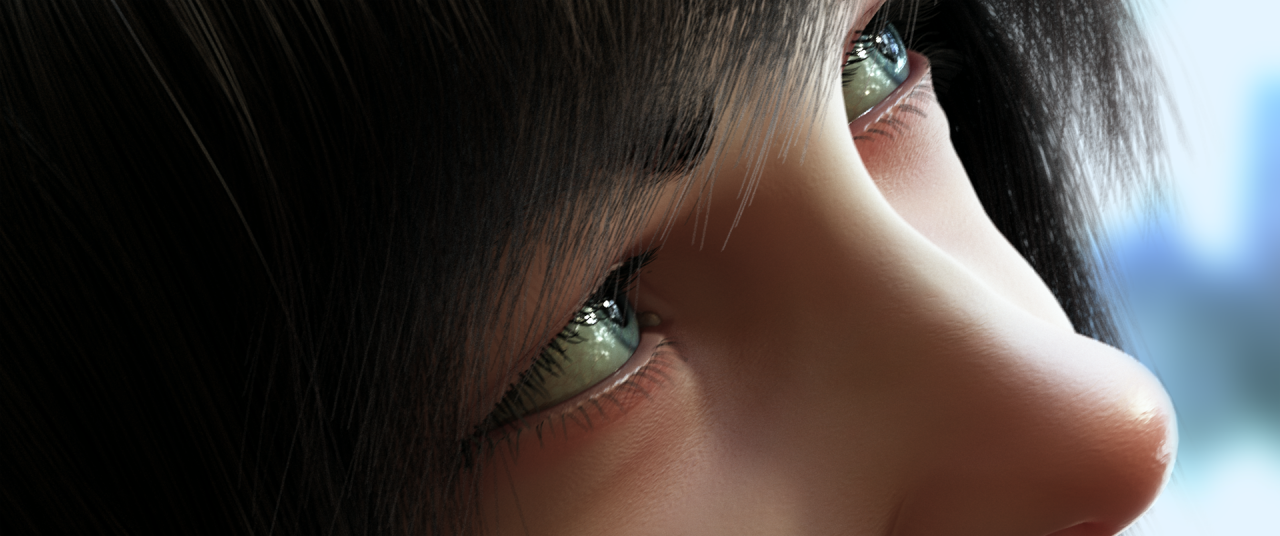
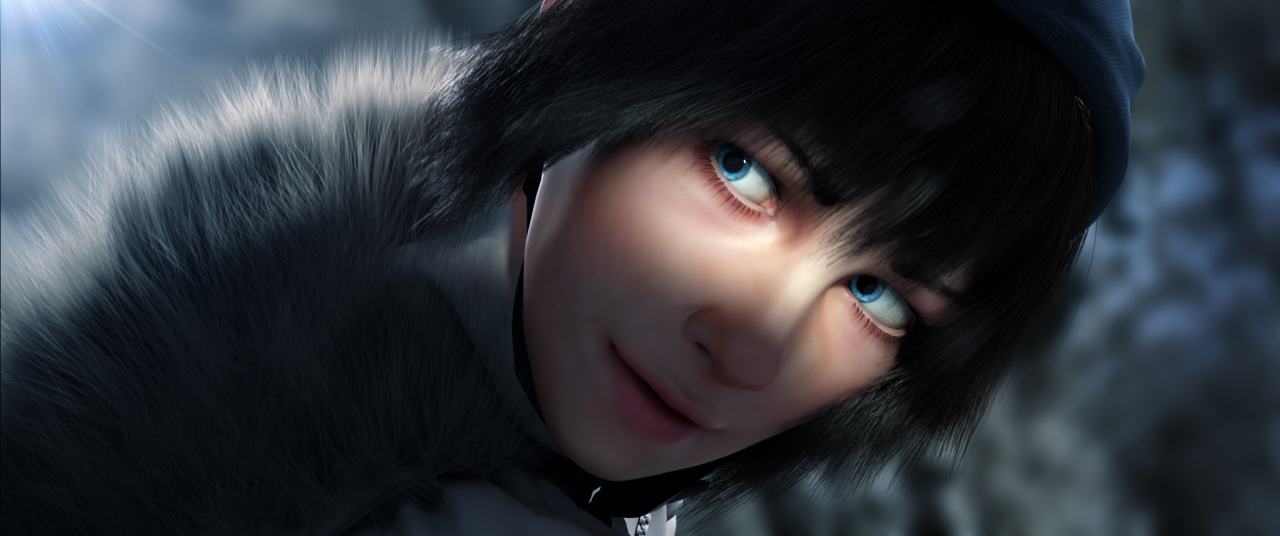
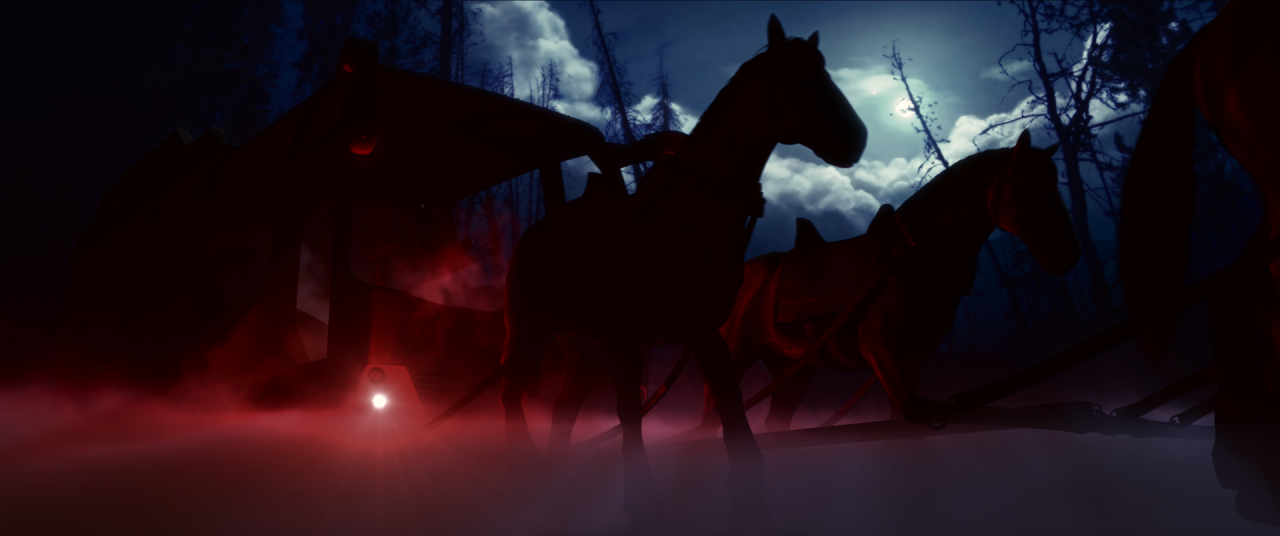
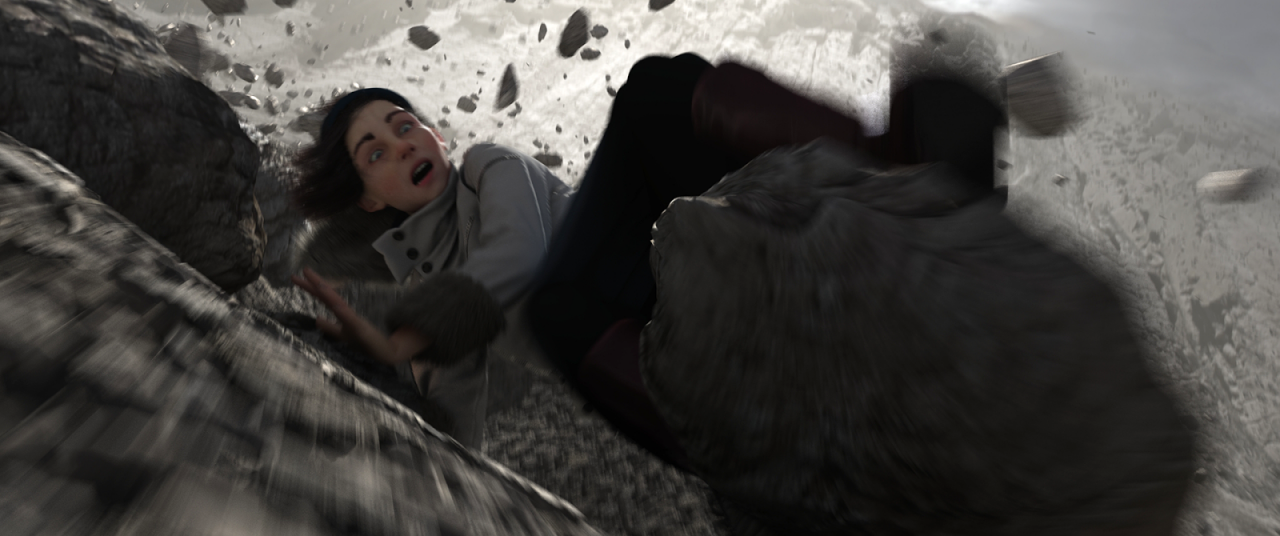

Awards, shows, finishing our first scene and what’s coming next..

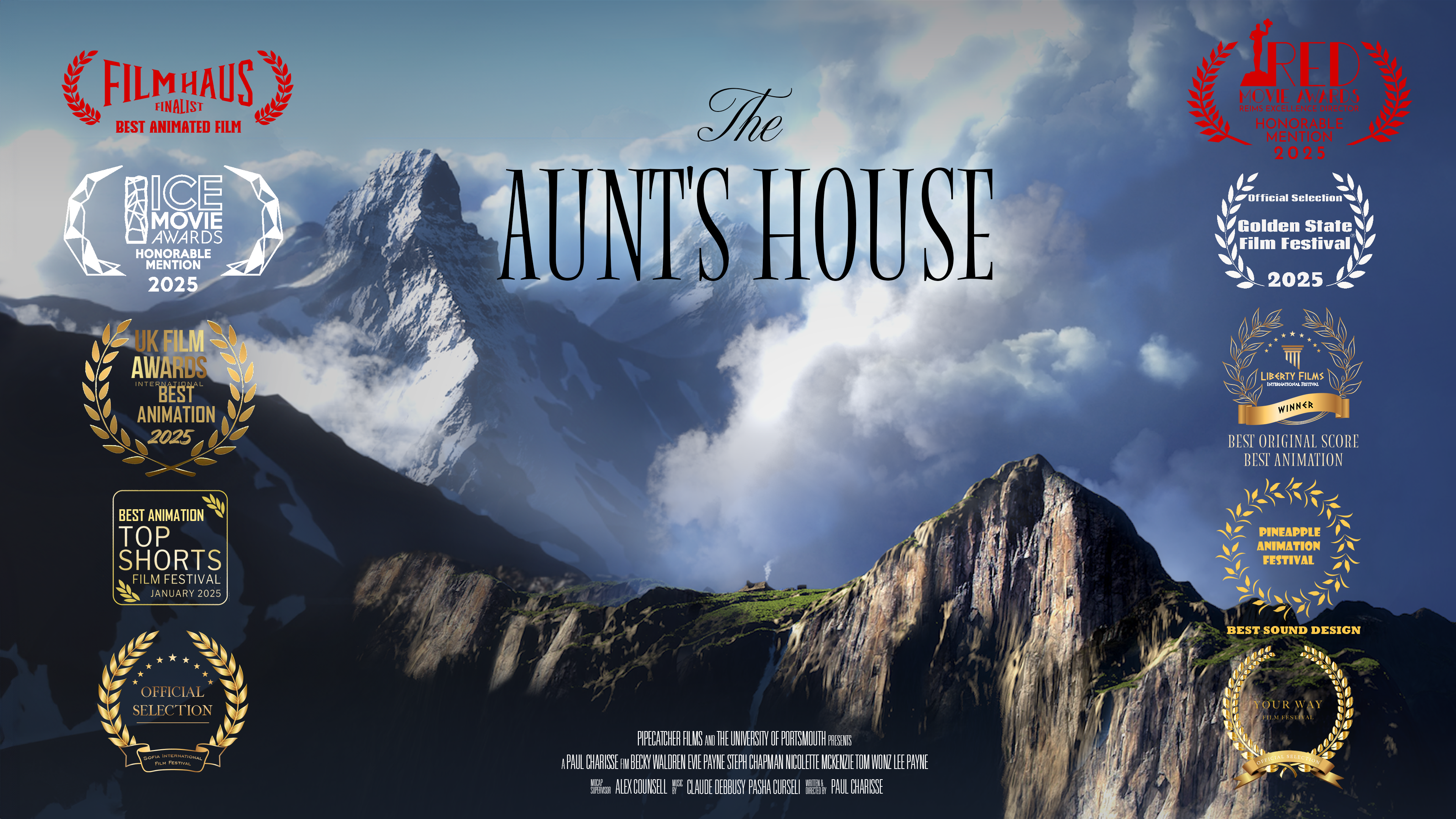
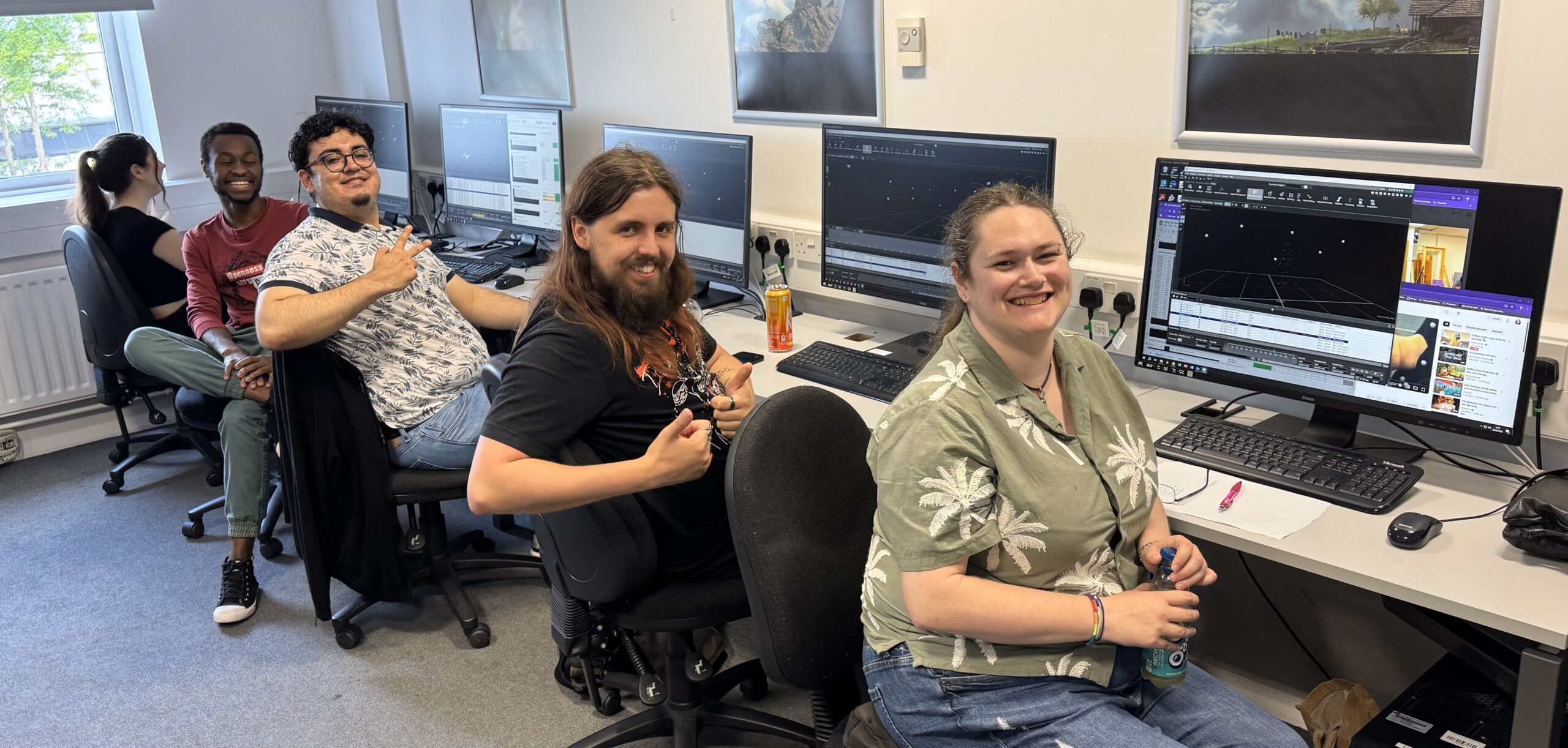
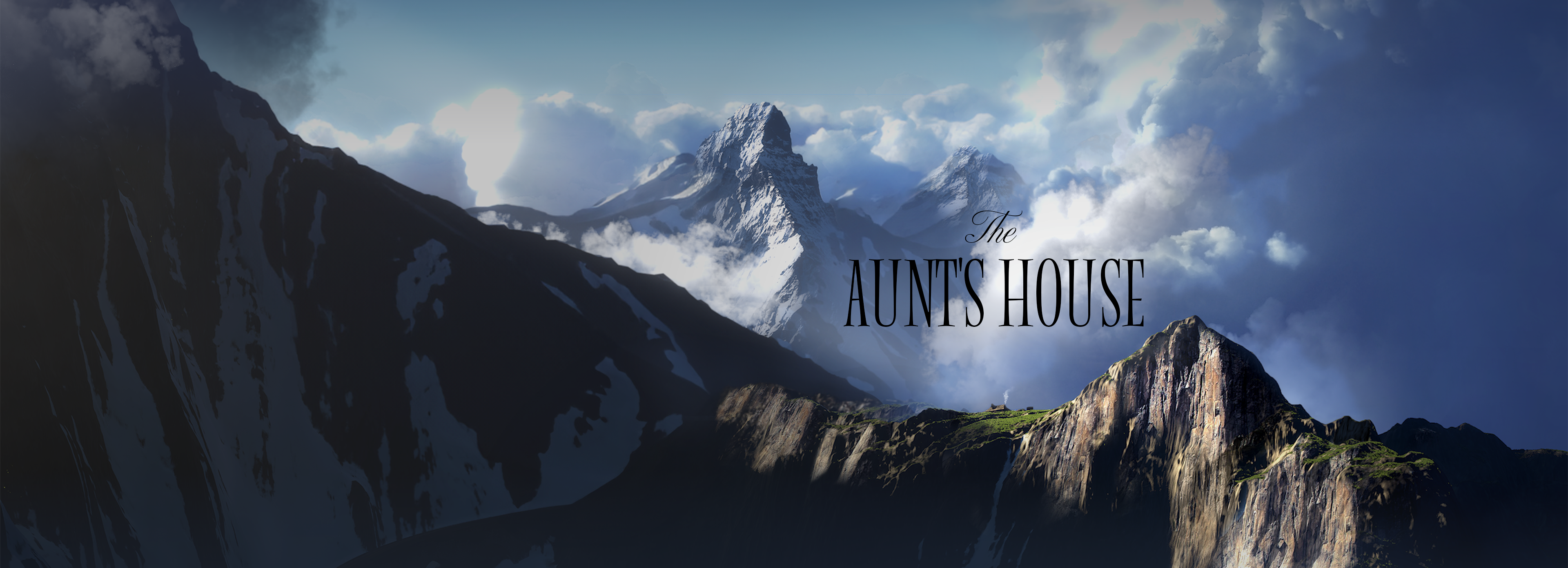
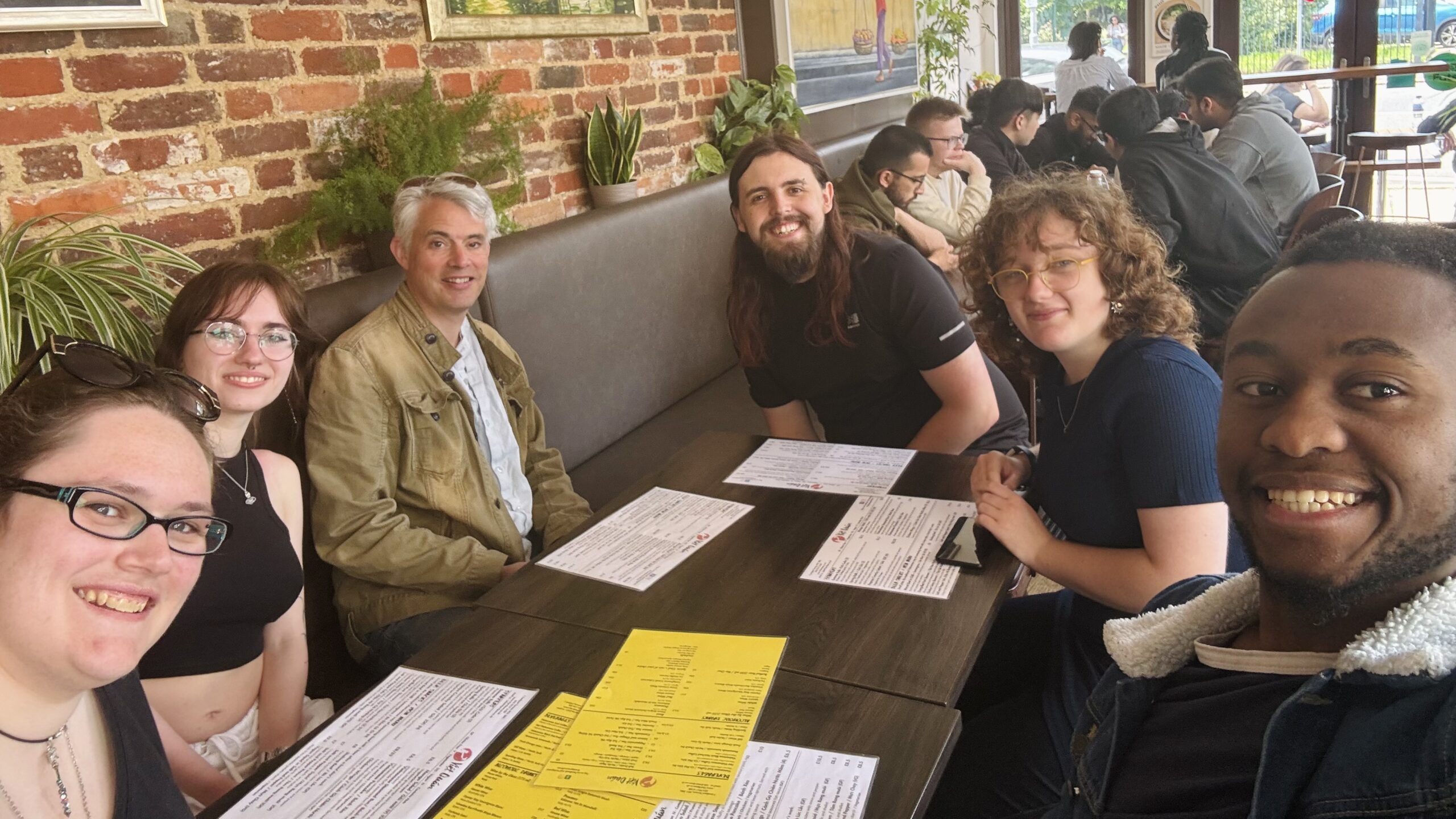
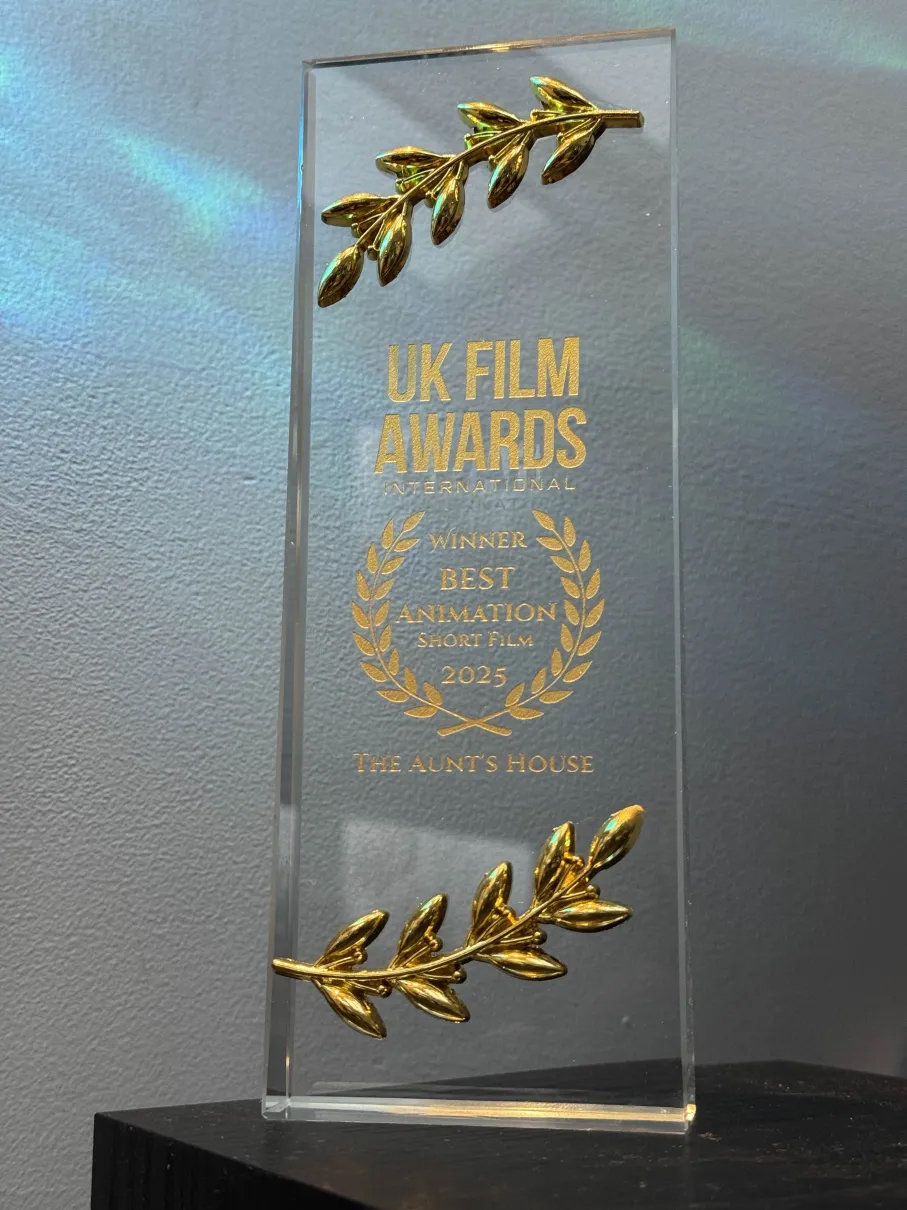
It’s been a packed few months for the project. We got our first UK award for The Aunt’s House (To join our many international ones!) So had a crew outing to celebrate!
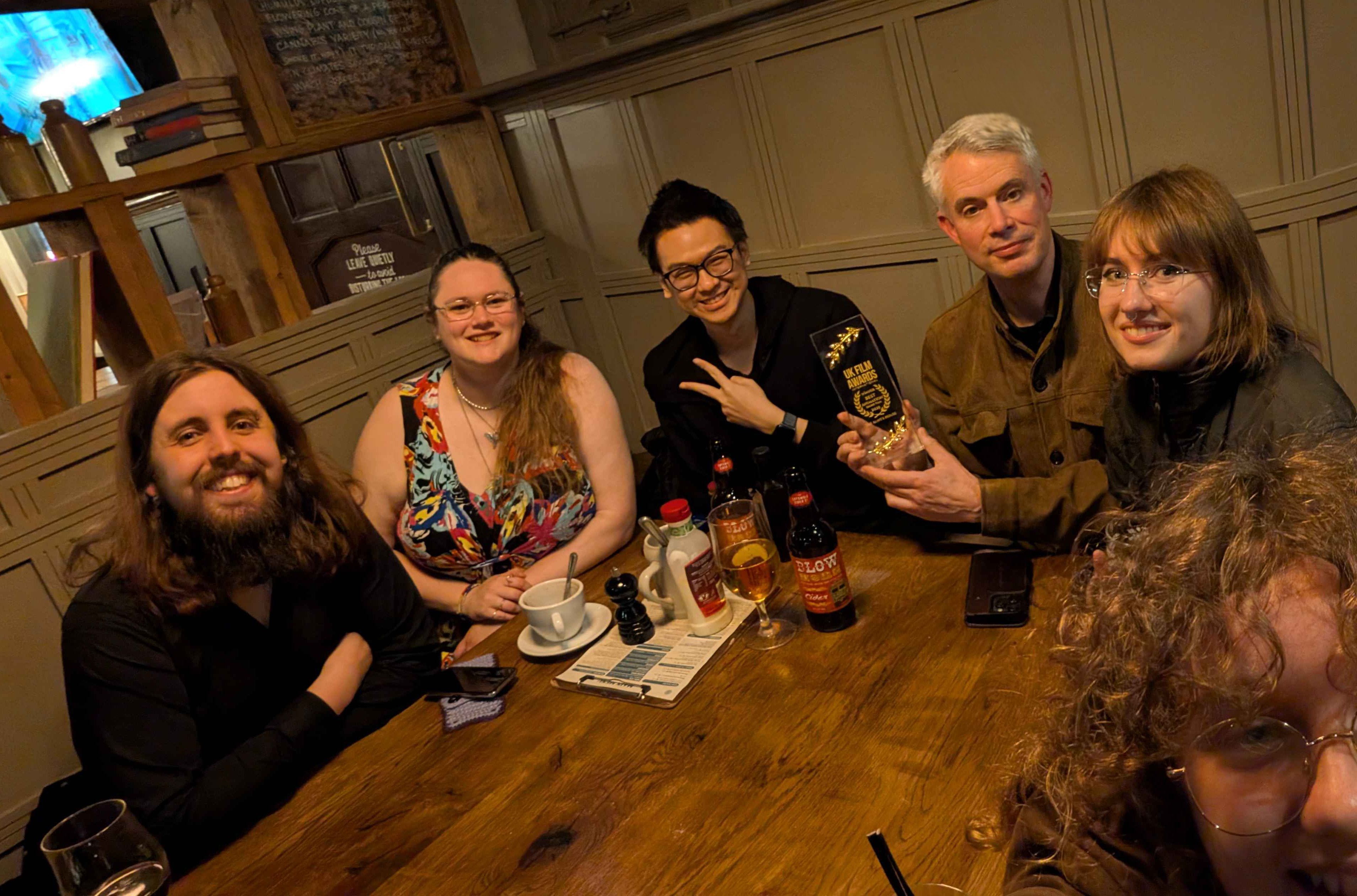
James (Producer), Fiona (Animator), Jonathon (Animator/VFX), Paul (Director), Sonya (Animator), 1/2 of Willow (Animator)
COMIC CON

We also got to present our work at Comic Con Portsmouth last months, where we got to sit in massive regal thrones, chat about the project and present the first 10 minutes of the feature:

Here’s the teaser we did for it:
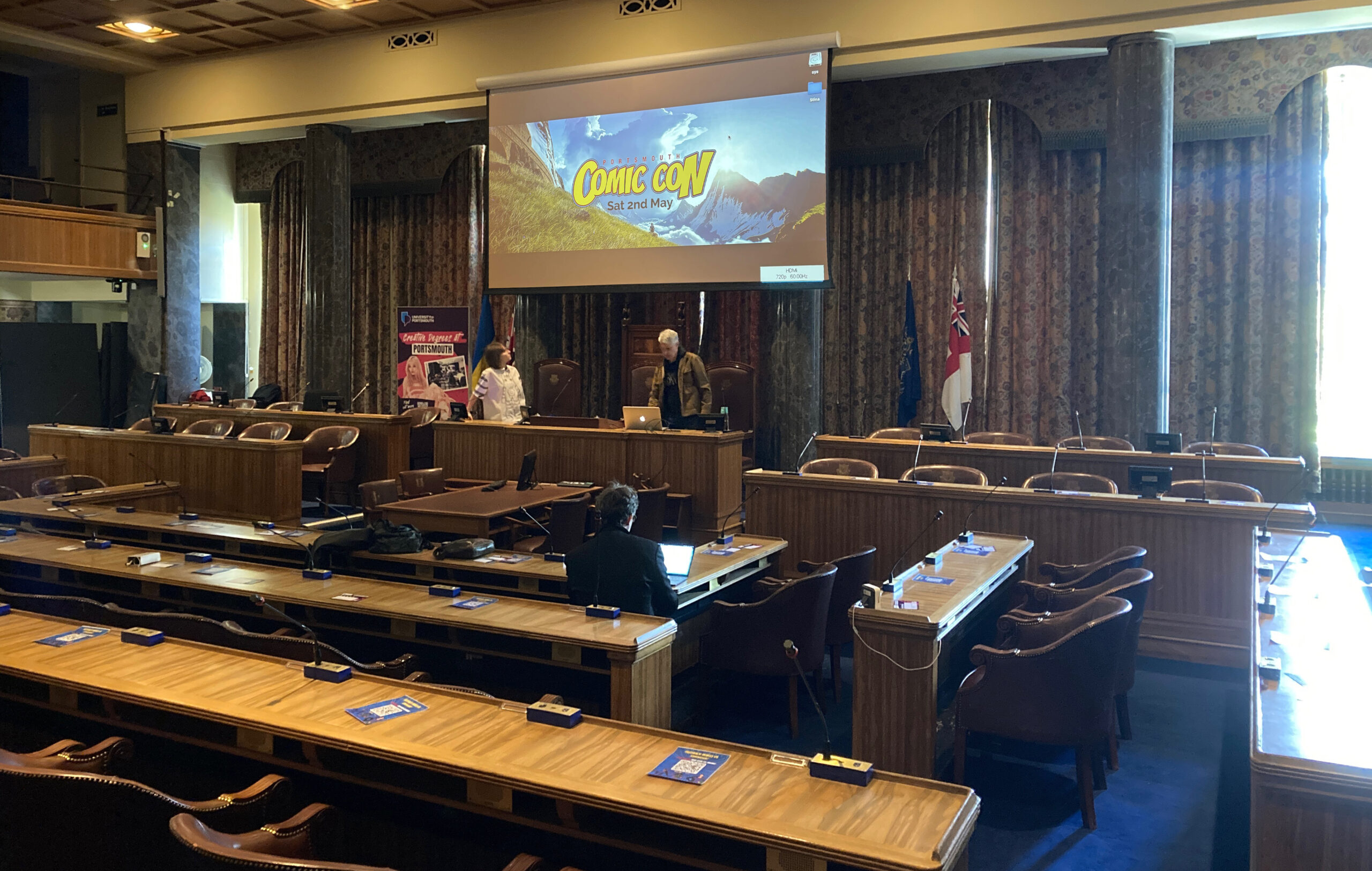
Sonya and Paul setting up. 
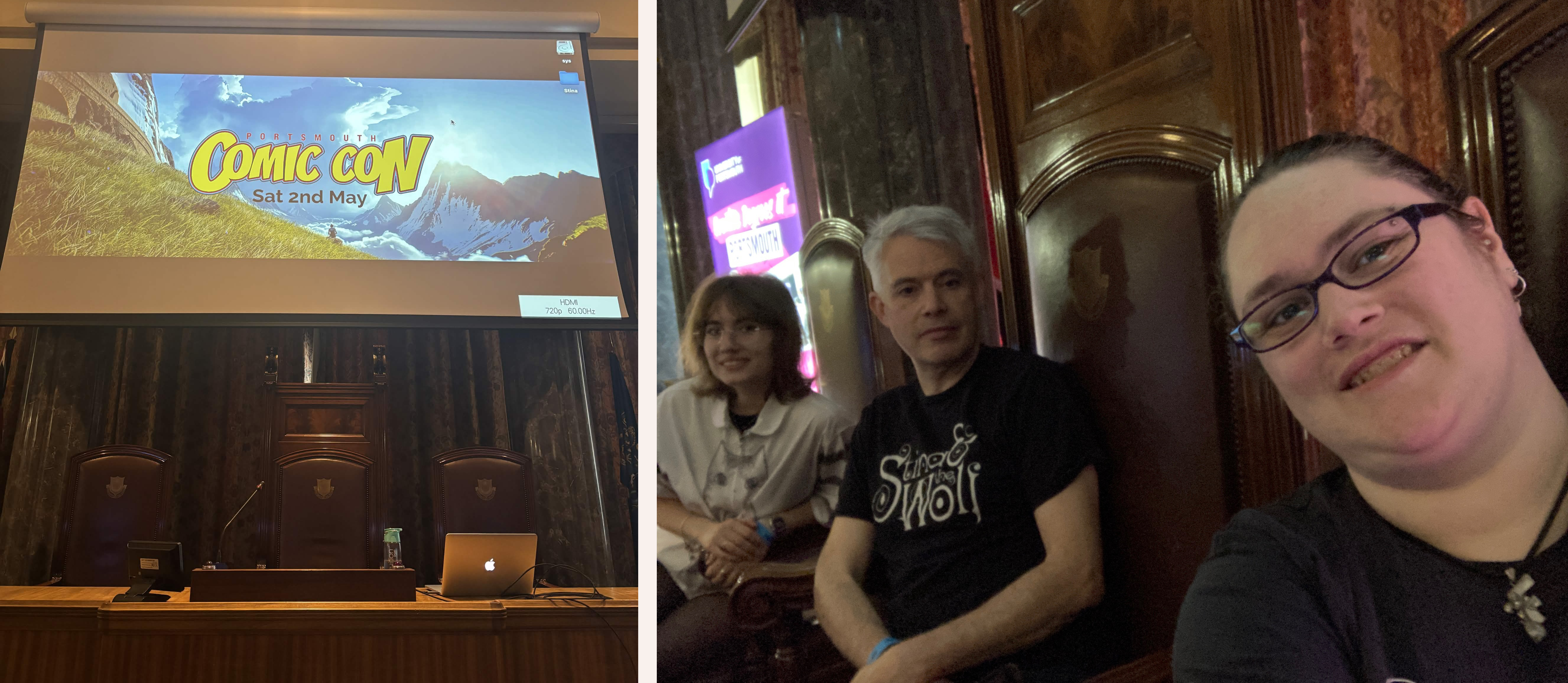
Sonya, Paul and Fiona adorn the thrones.

It was exciting (and a little nerve-wracking) finally previewing the first few scenes of the film, and a slightly strange format I’m not used to: people were wondering in and out as they discovered the room (Standard practice for a Con). The throne room was hidden away in a maze of corridors in the rafters of the Portsmouth Guild Hall, and almost impossible to find accept by accident. We got thoroughly lost trying finding it! We kept our film on a loop for the first 1/2 hour to tempt people in, then did a Q&A when it looked at its busiest.  We got a great reaction from the audience, and some insightful questions.

It has been very tempting for us to release it online and hit the festival circuit again. We’re very proud of it, and it really hits the mark for what we want the whole feature to feel like, but we’ve decided to hold off until we have a good chunk finished that can function as a satisfying and self-contained episode. Luckily the feature drama works in a way that it easily fits into an episodic format of 20-30 minute chunks.

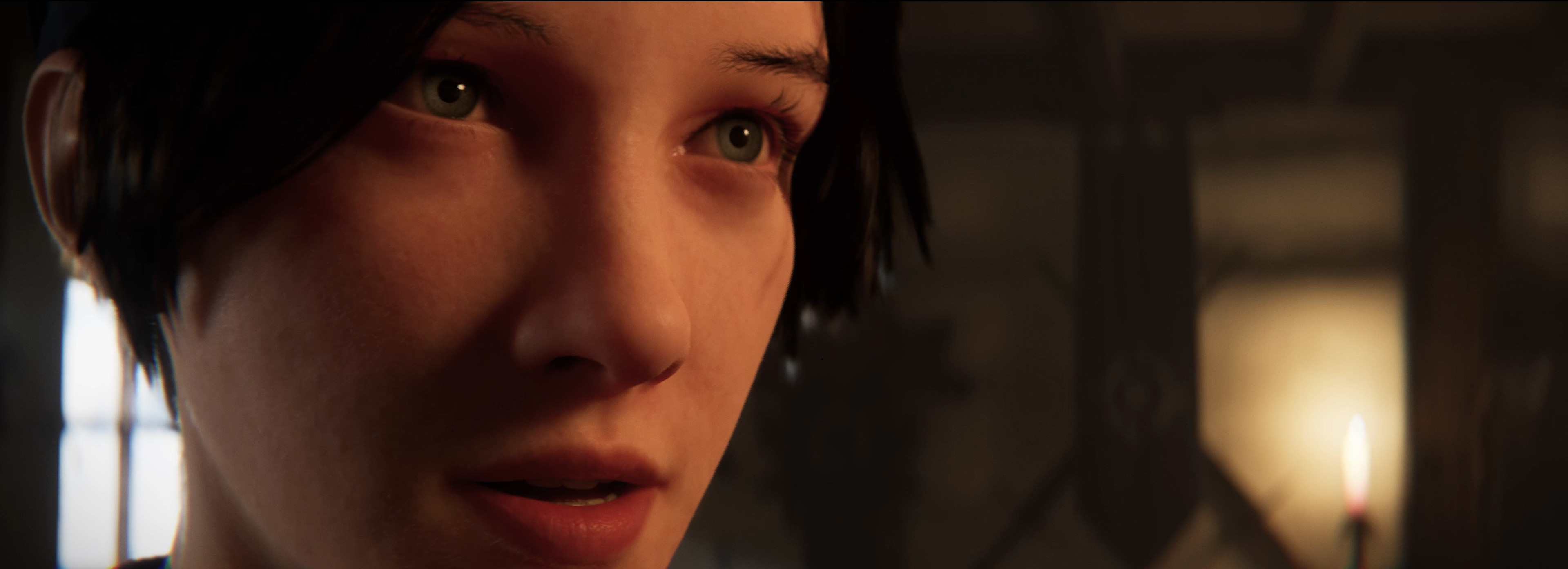
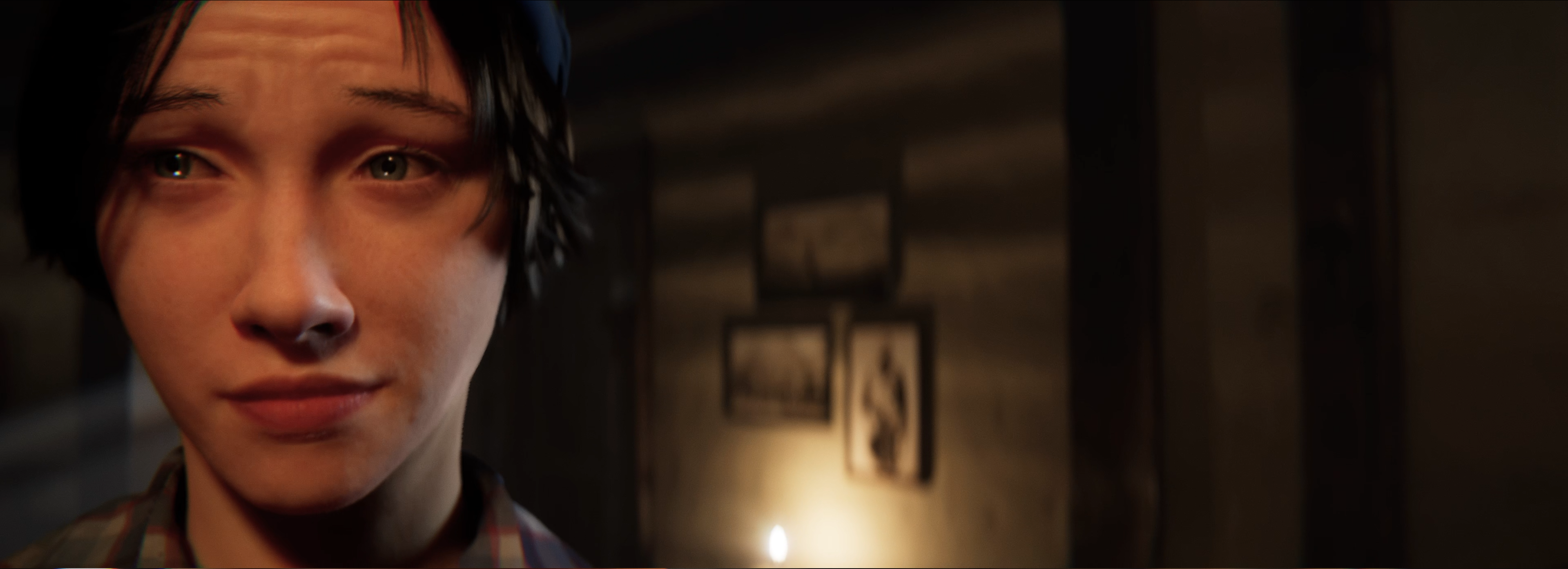
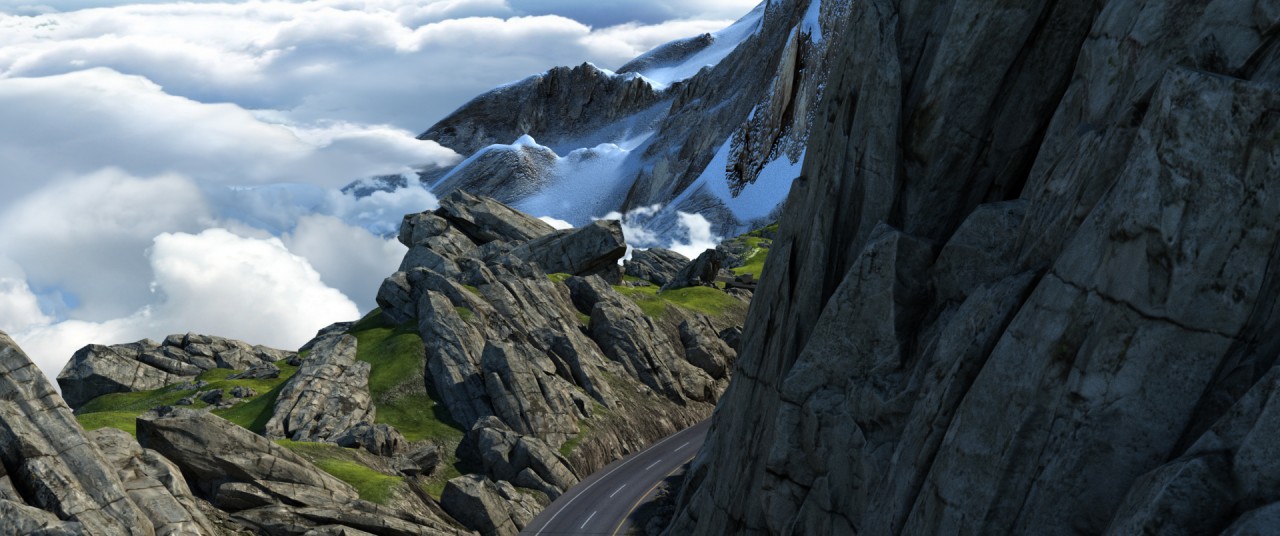
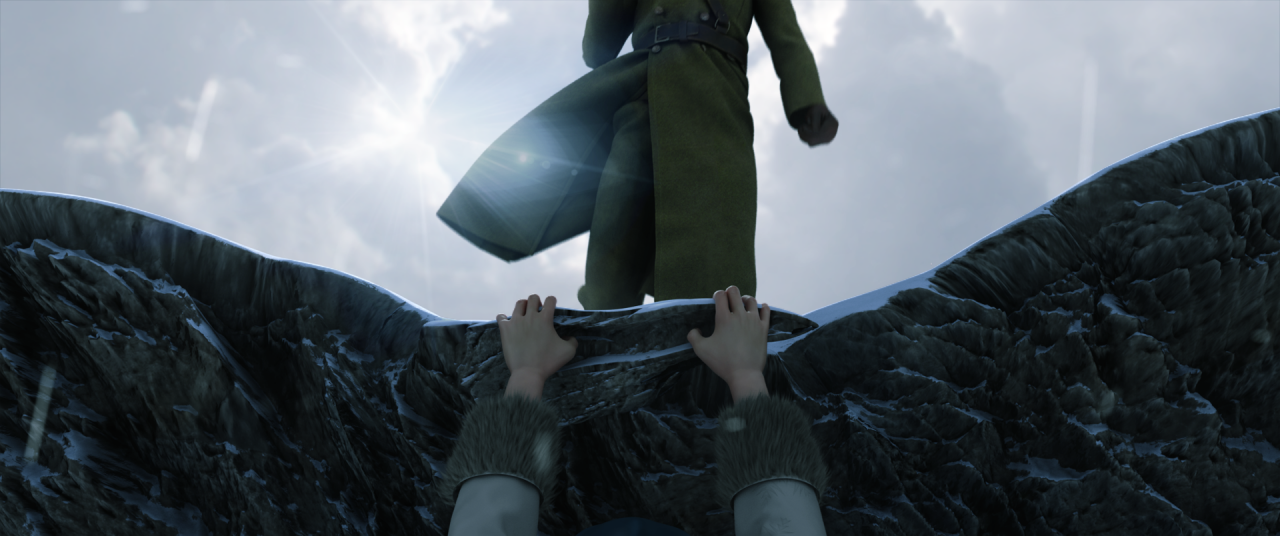
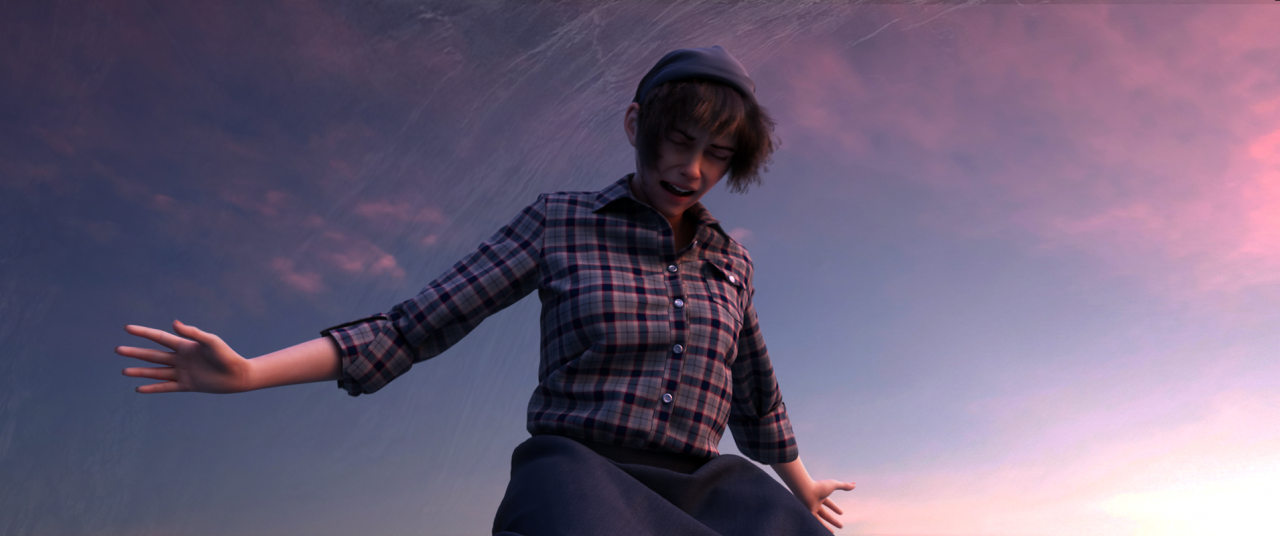
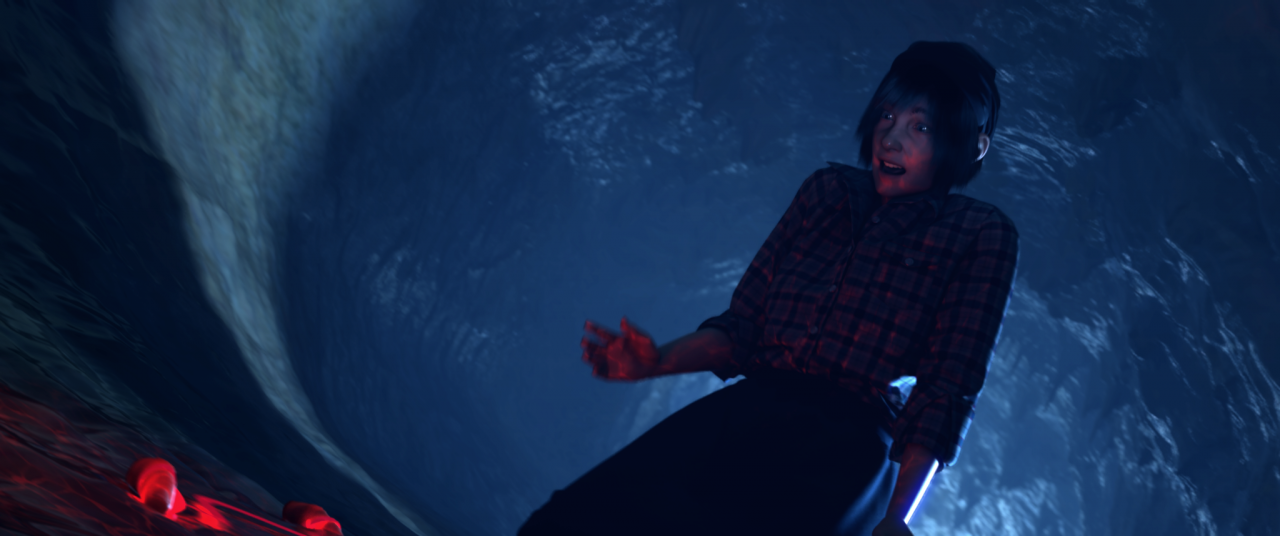
Until then, here are a few stills and a sneak peek from the end section:
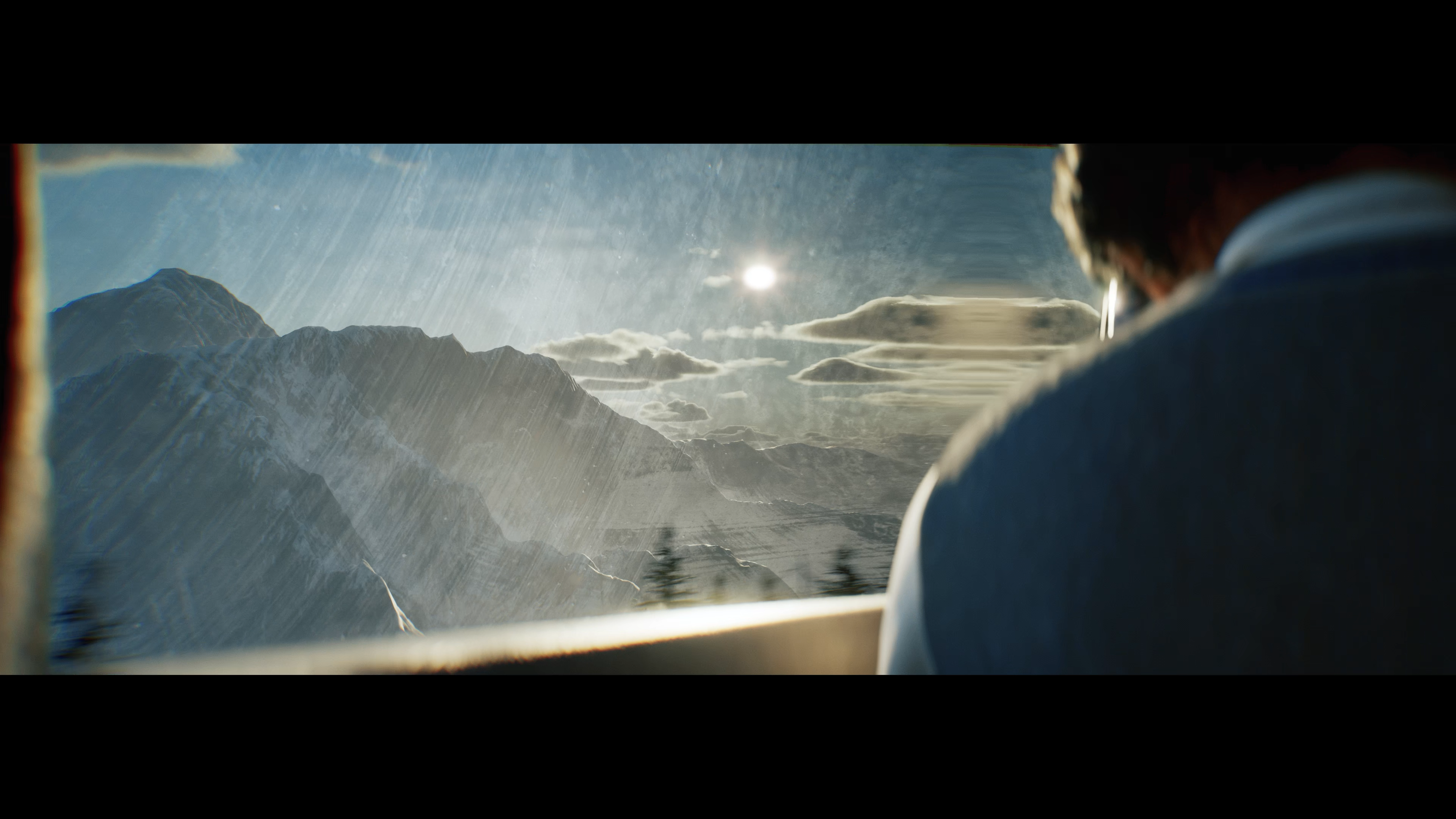
The start of the mountains.                                                                                                                          
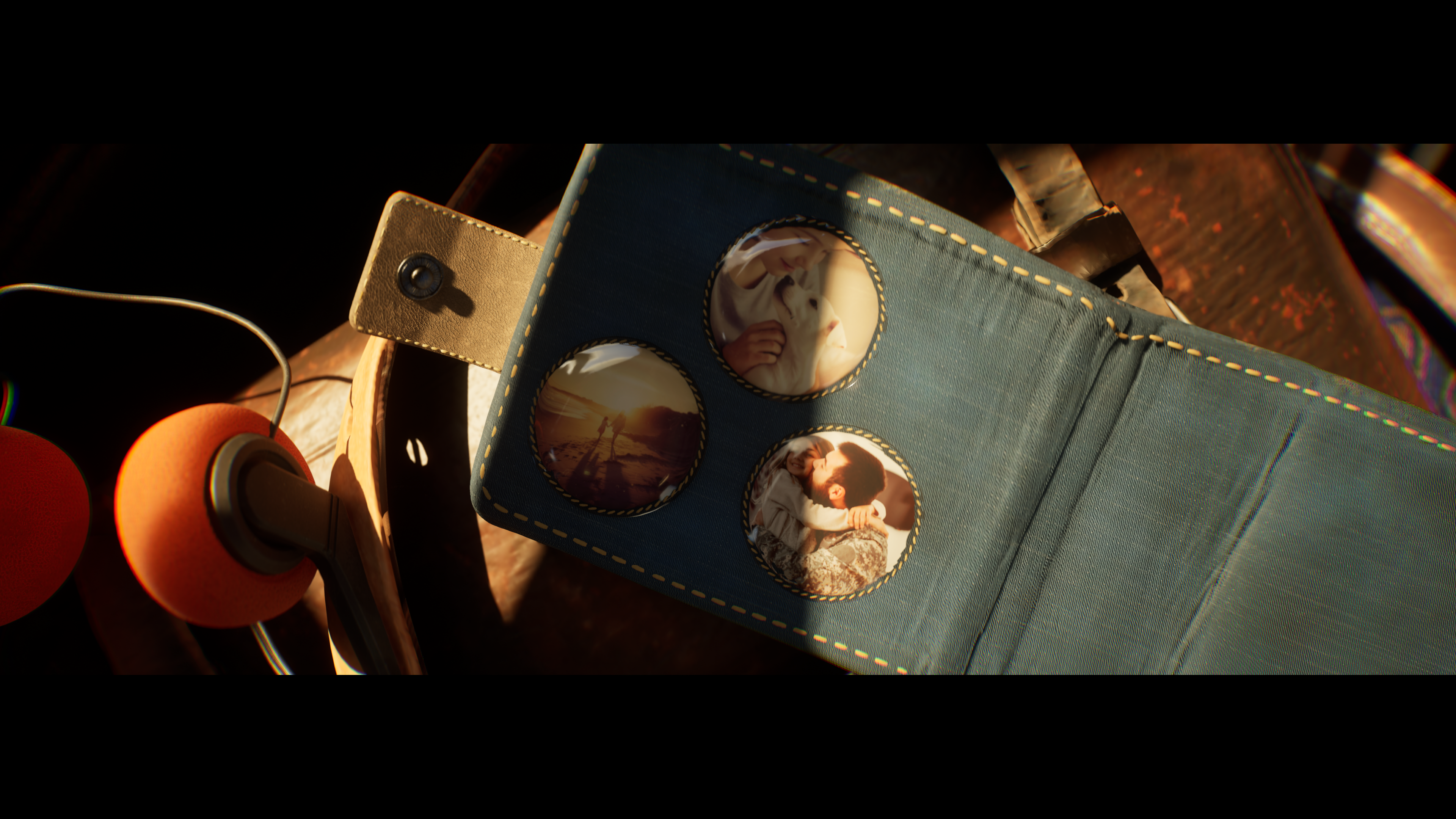
Family                                                                                                                                                           
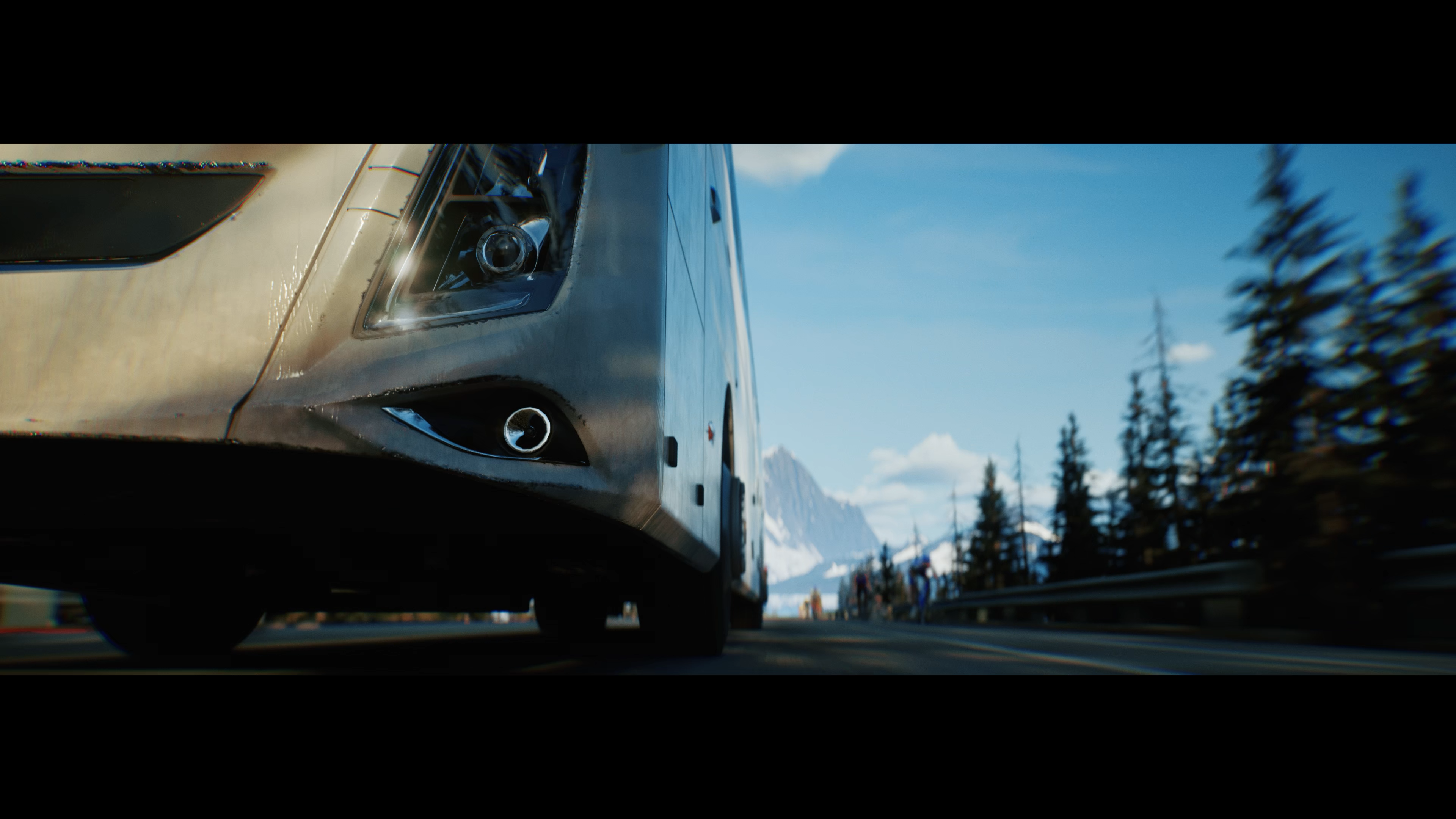
The coach.                                                                                                                                                                 
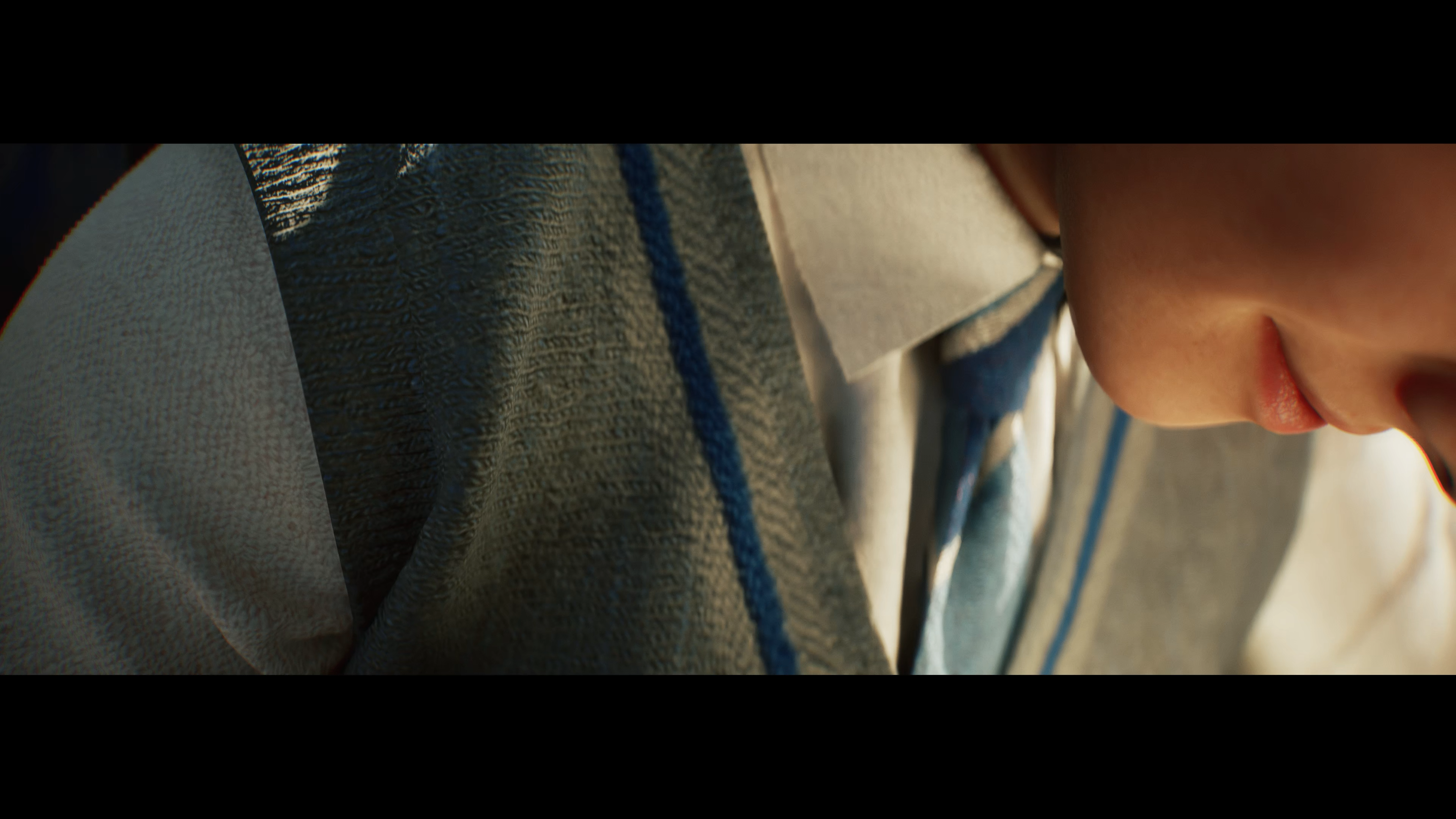
Sometimes people can be nice.                                                                                                                                
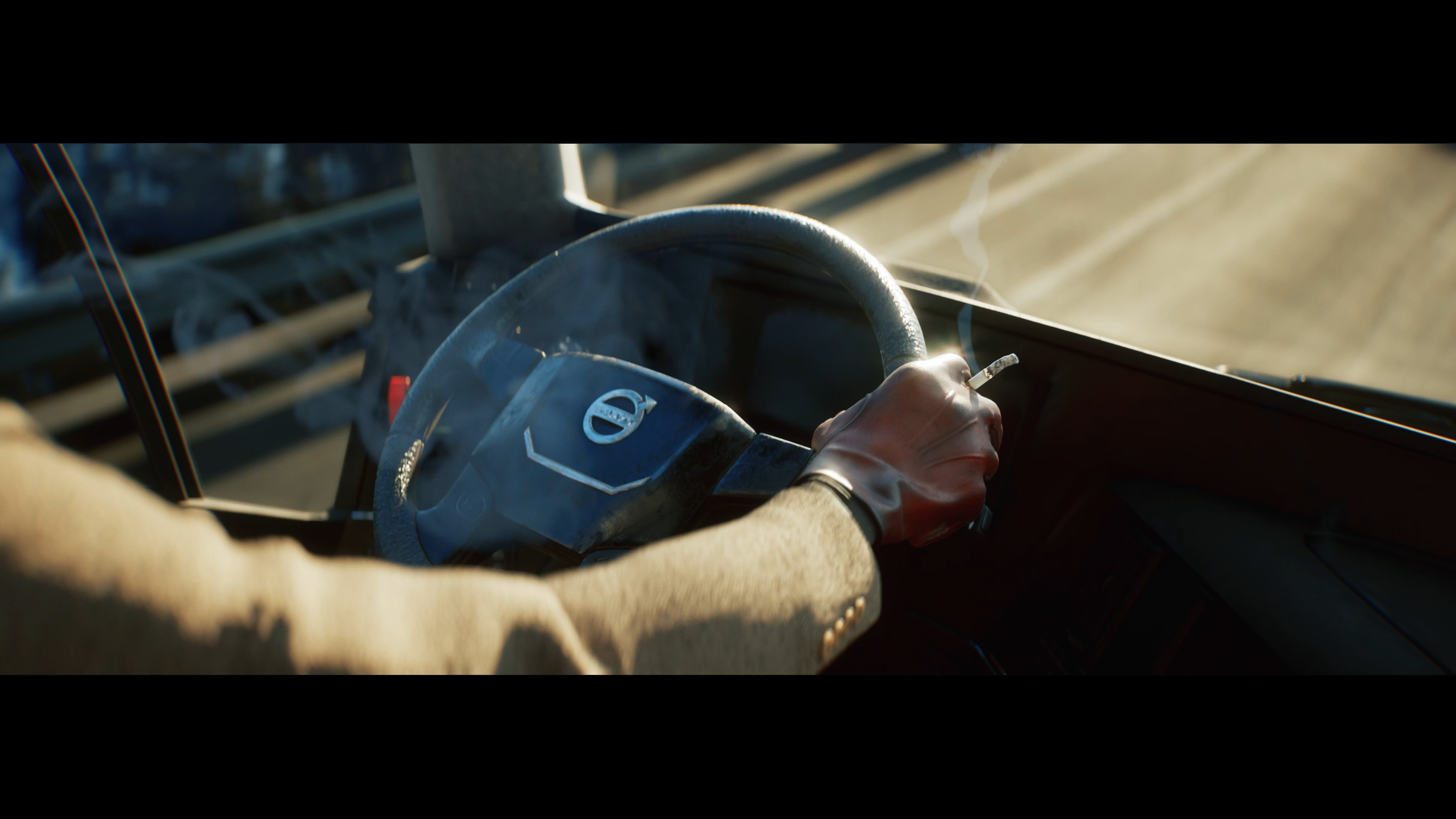
The driver.                                                                                                                                                             
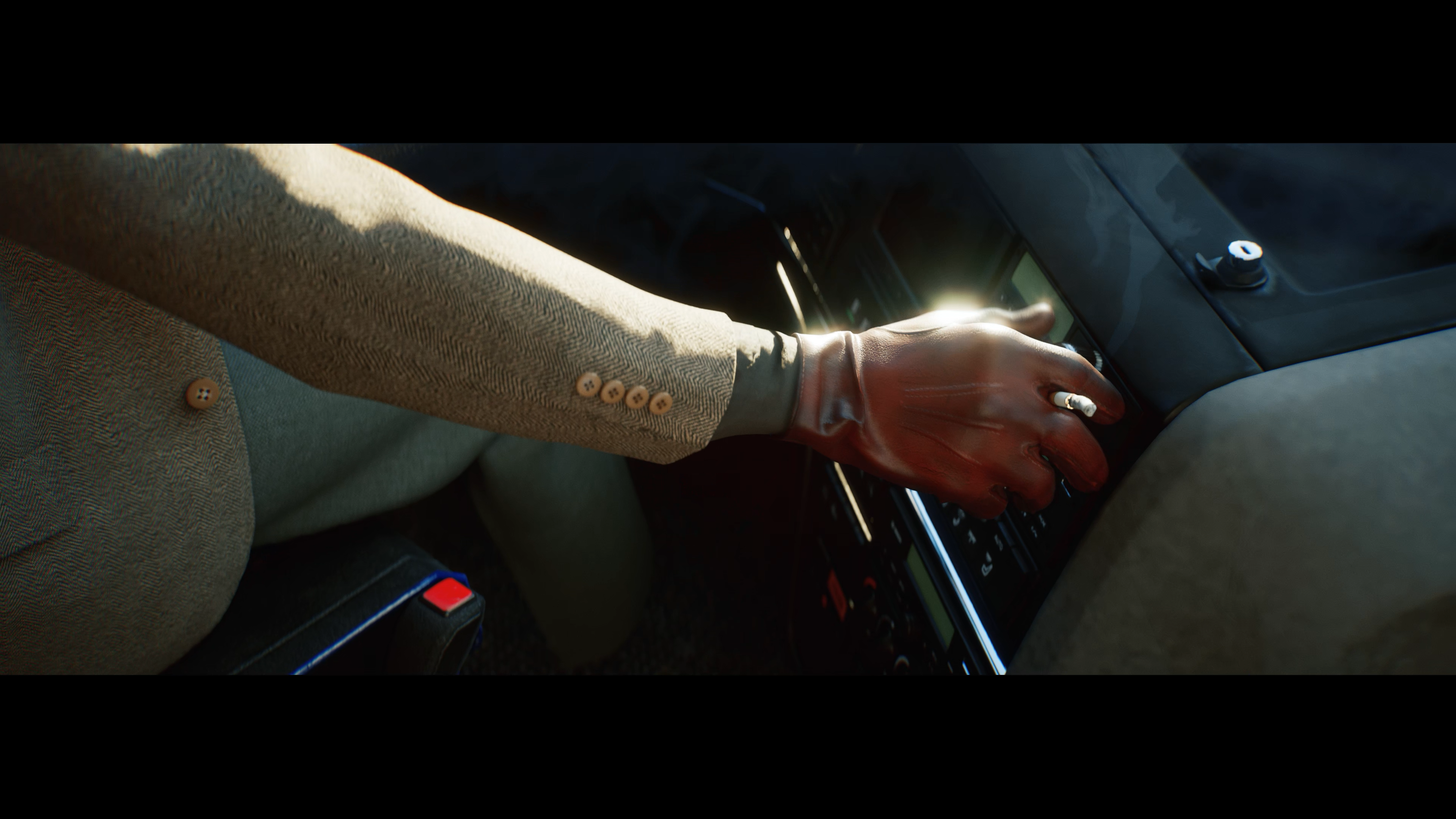
The song.                                                                                                                                                             
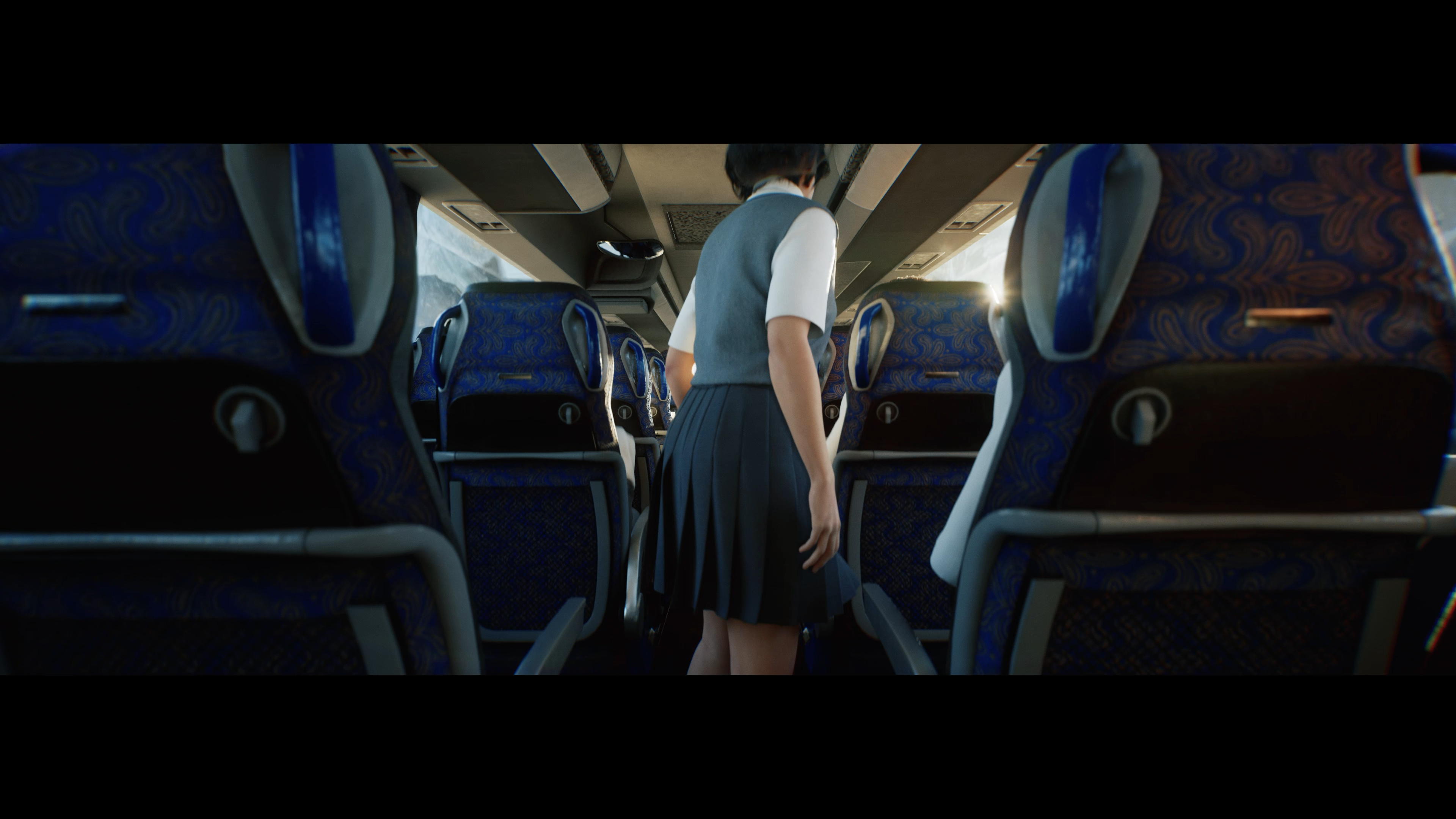
Sometimes people can be nasty.                                                                                                                     
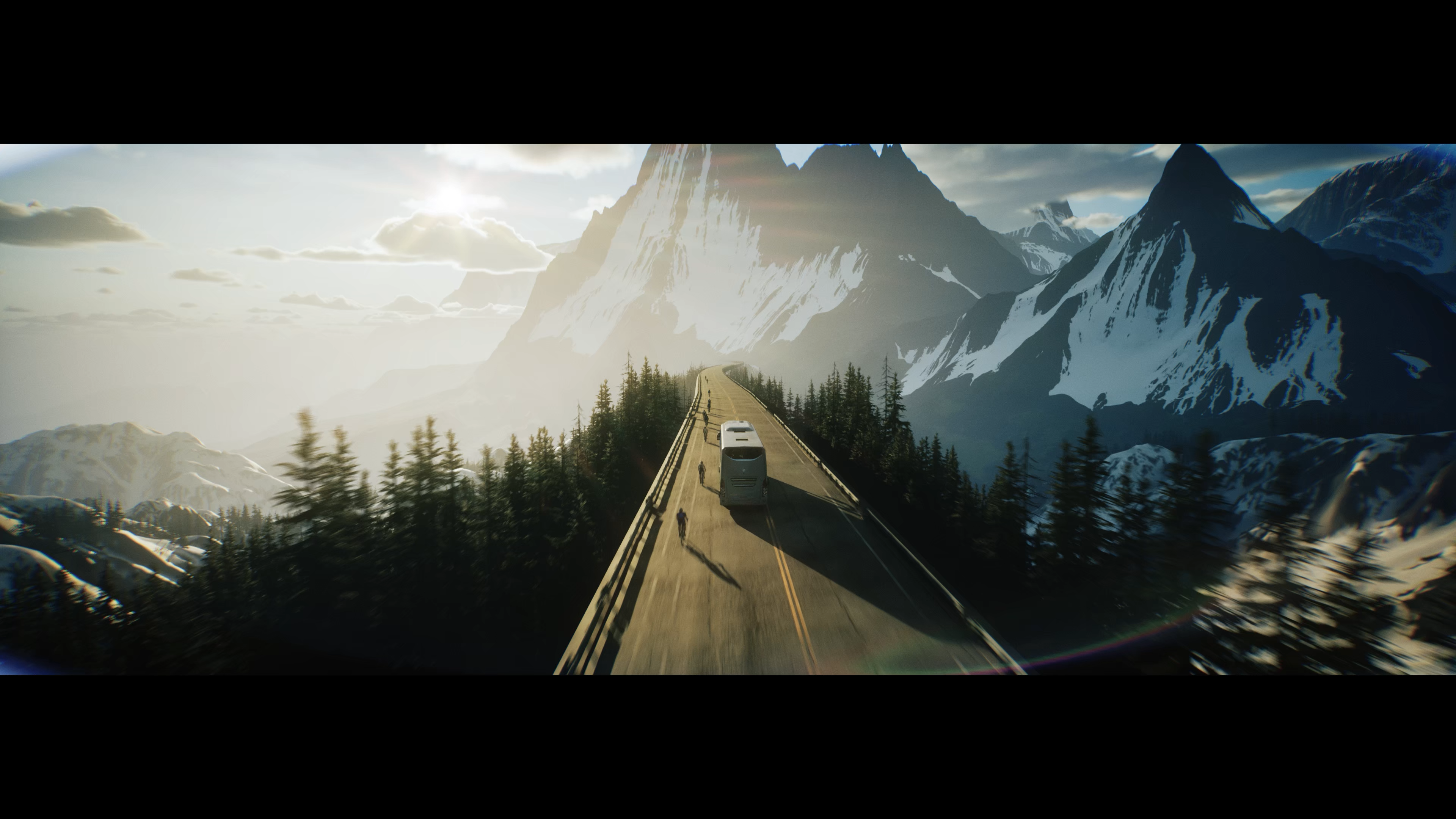
Into the mountains.                                                                                                                                       
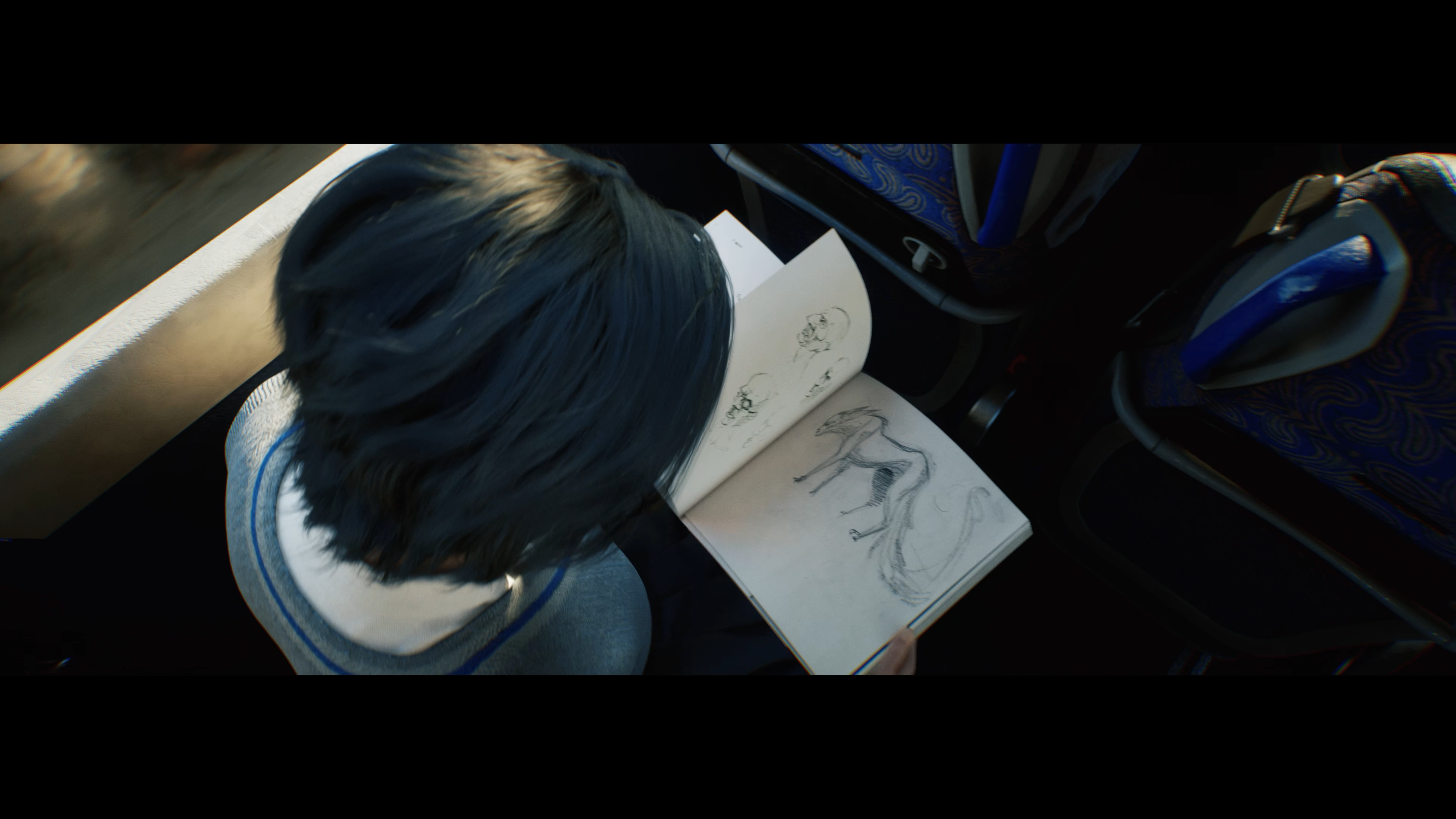
The missing page.                                                                                                                                             
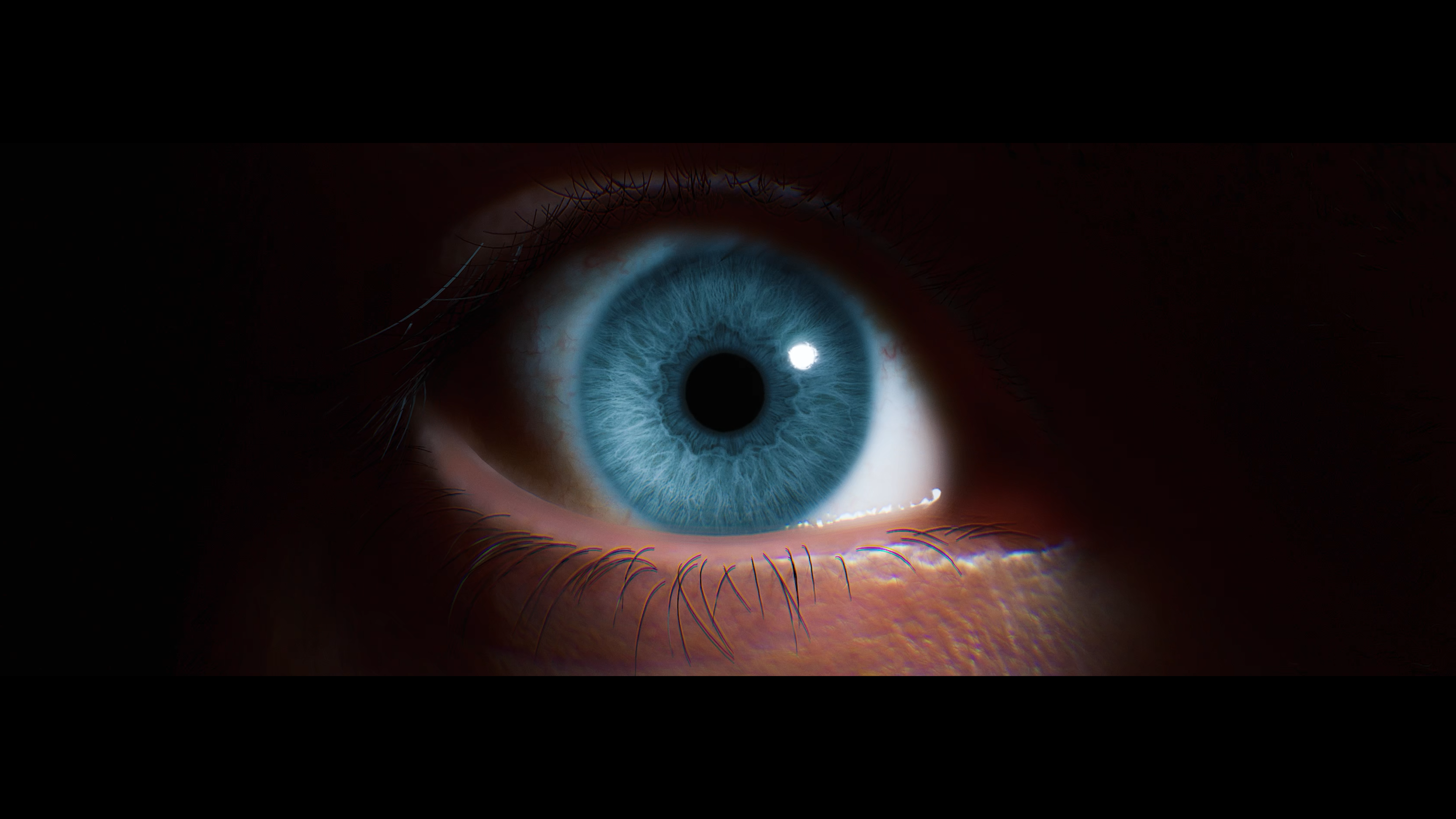
Change.                                                                                                                                                               
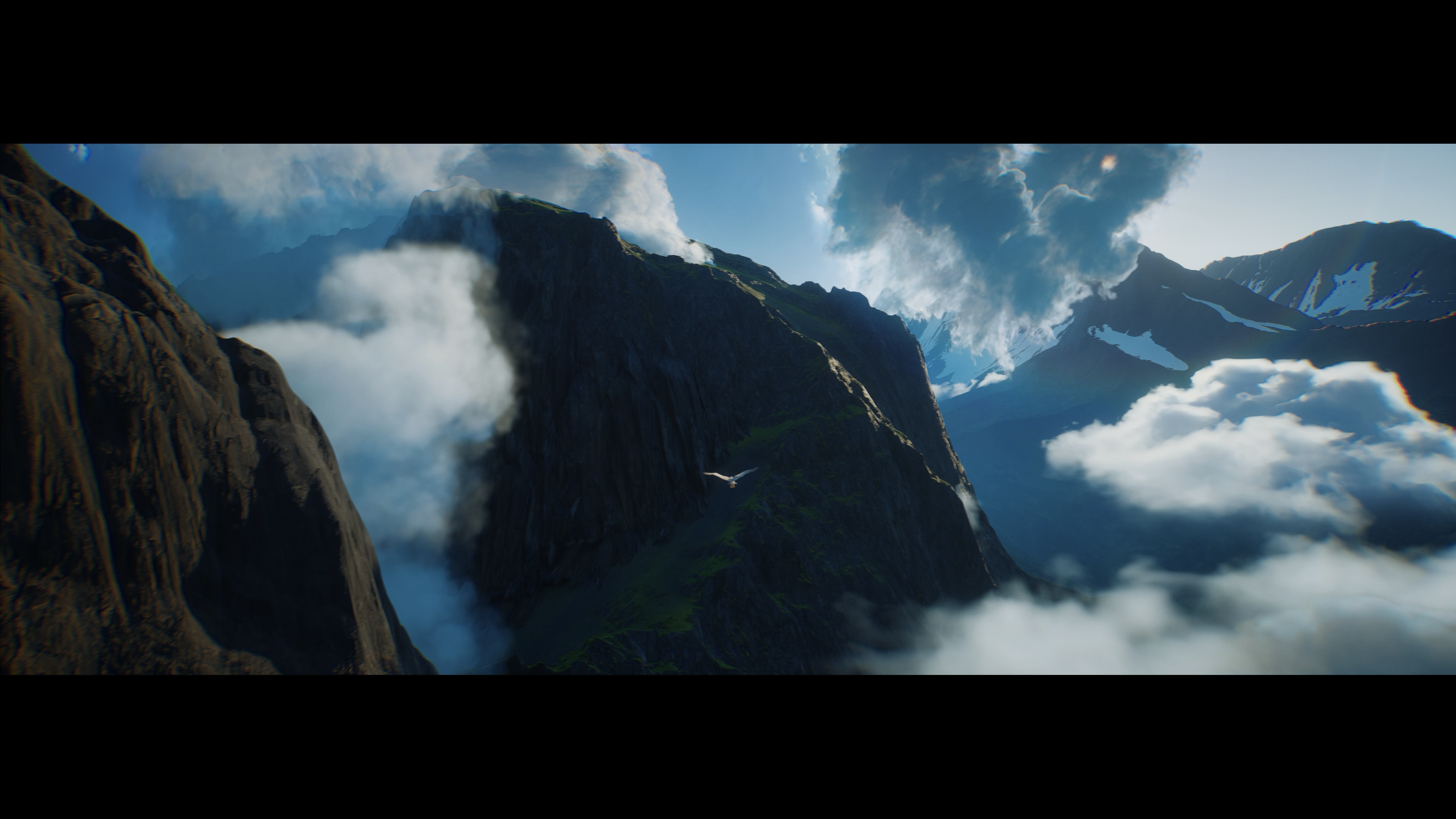
The eagle.                                                                                                                                                             
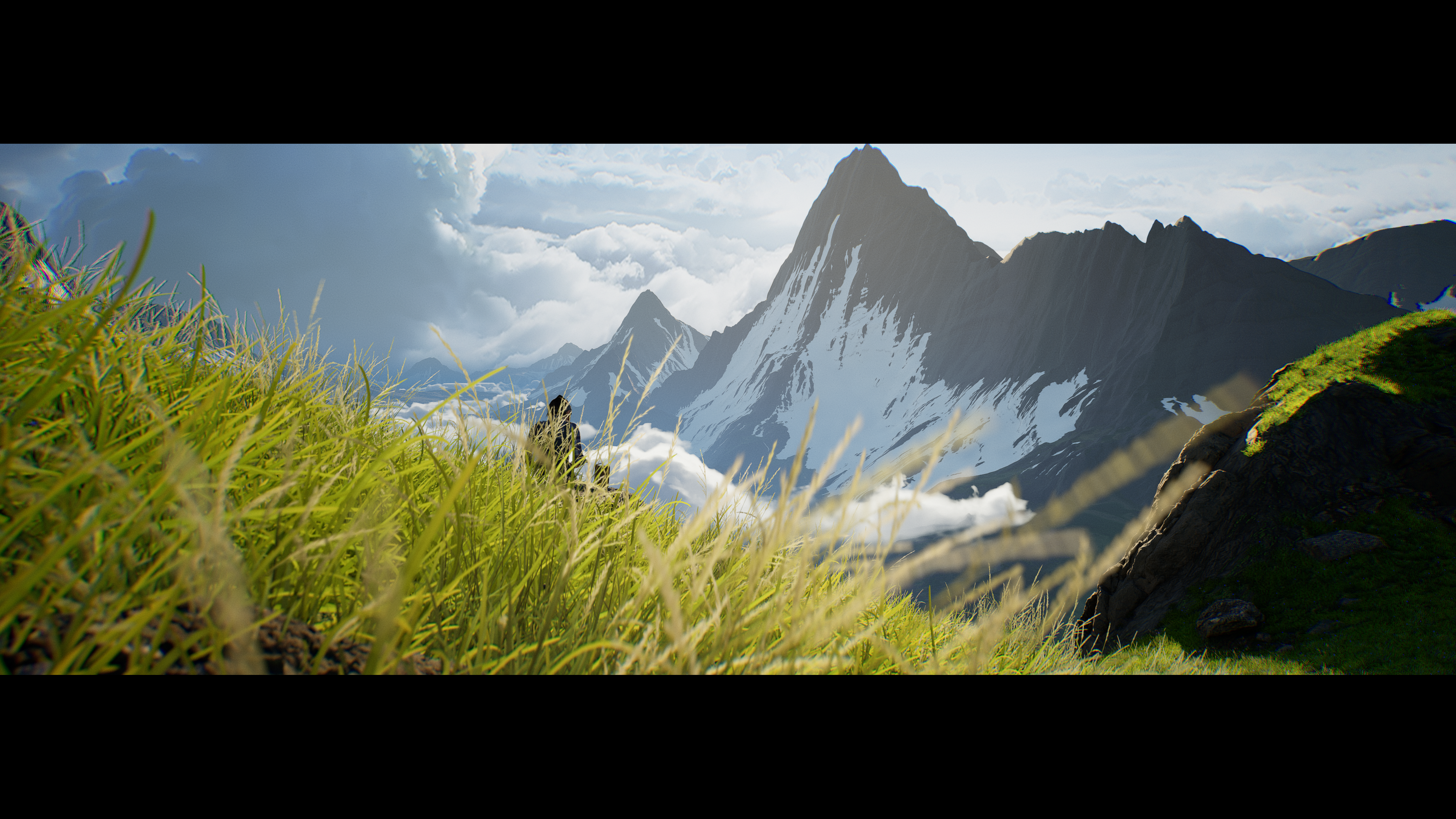
Stina’s field.                                                                                                                                                         
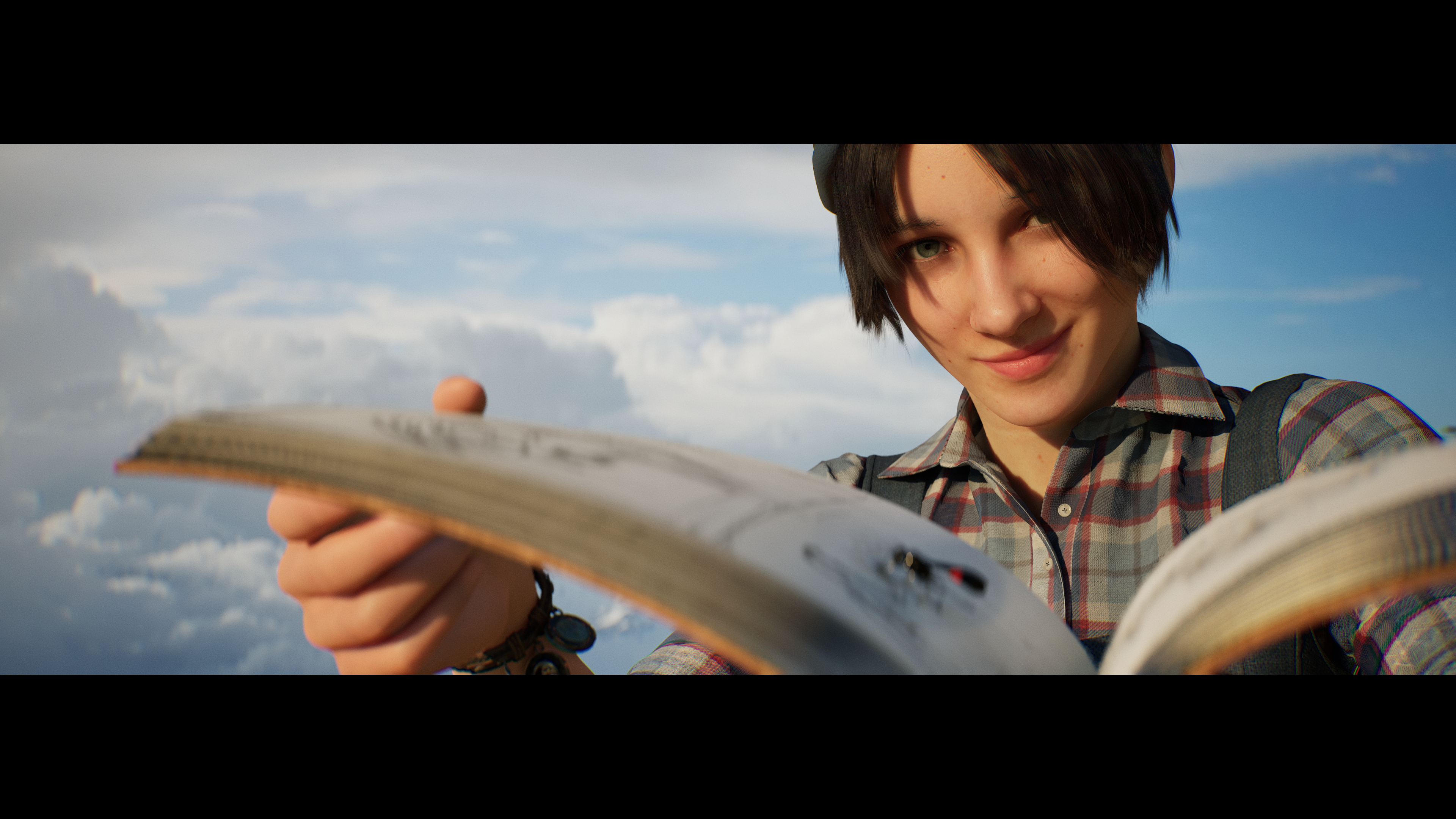
Stina and the wasp.
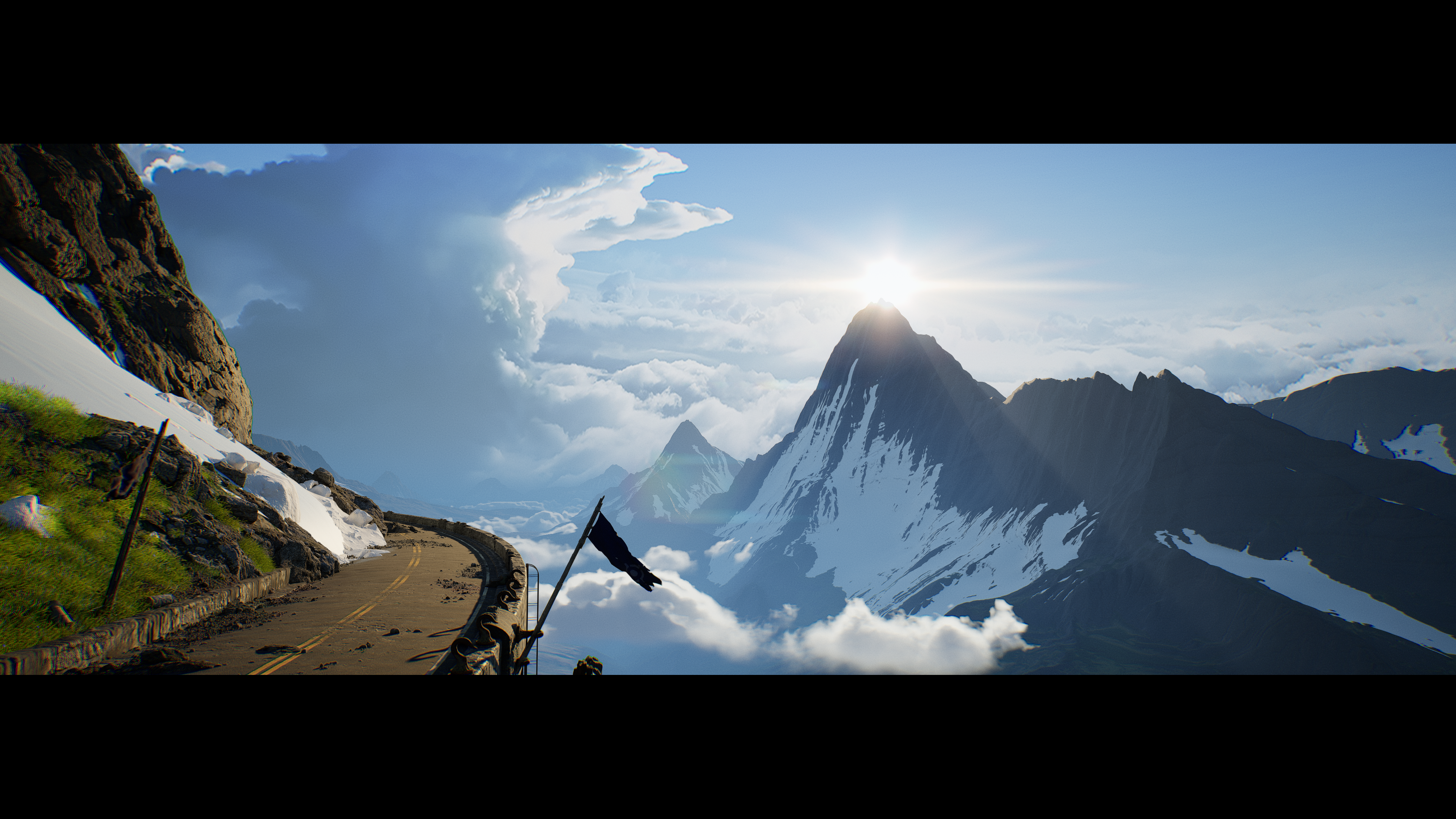
The road.

And here’s a sneak peek of the end of the sequence:  Stina’s peace and quiet is being interrupted again, for the second time!

BREAKDOWNS

We had a lot of different technical and creative challenges on this sequence.  Here’s a quick look at a few of them:

THE WASP

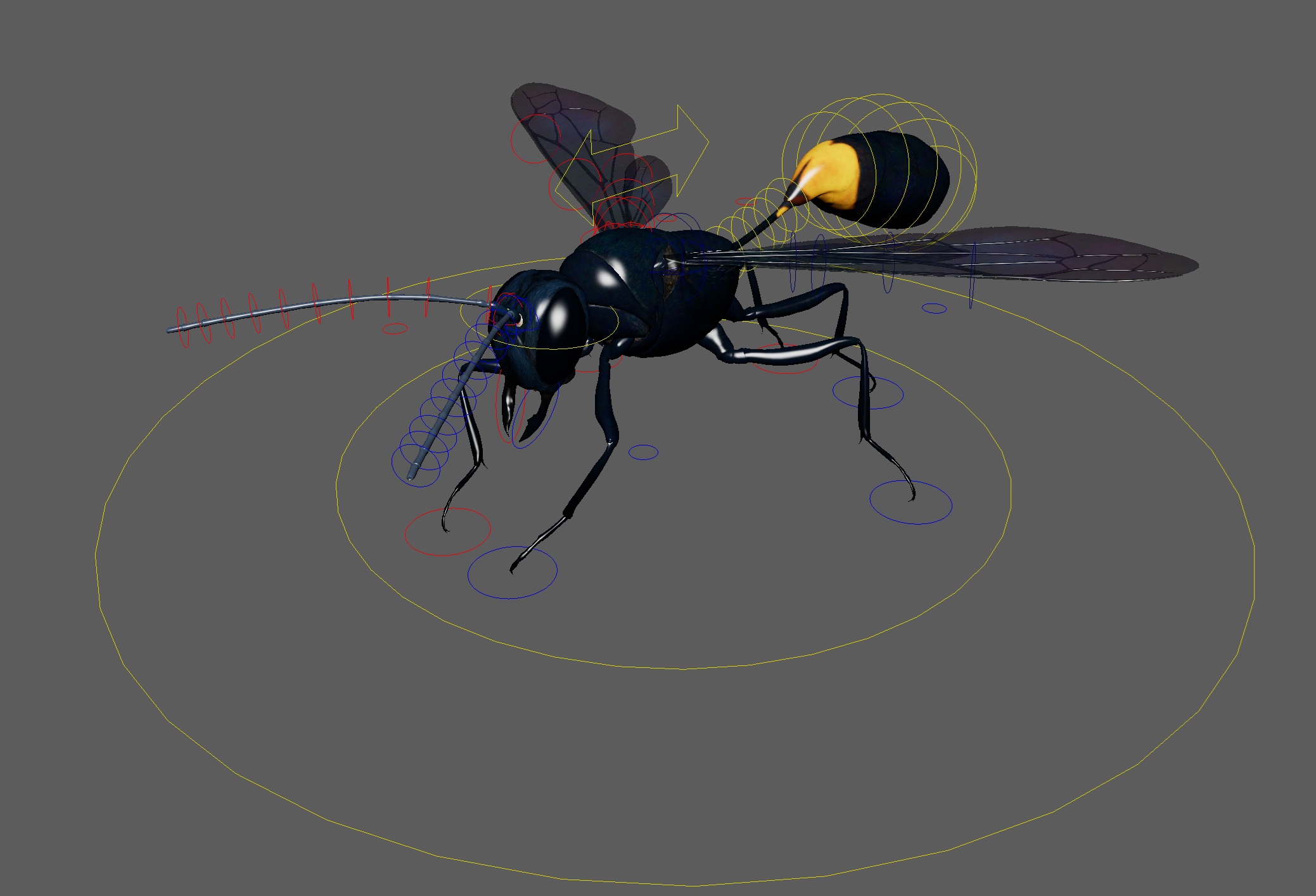
For the wasp we chose to base it on the very spooky-looking thread waist wasp:

It’s unnaturally thin and long looking abdomen was perfect for our world and our protagonist’s mental state. The original model was built by one of our graduates: Sonnie Harris, using ZBrush:
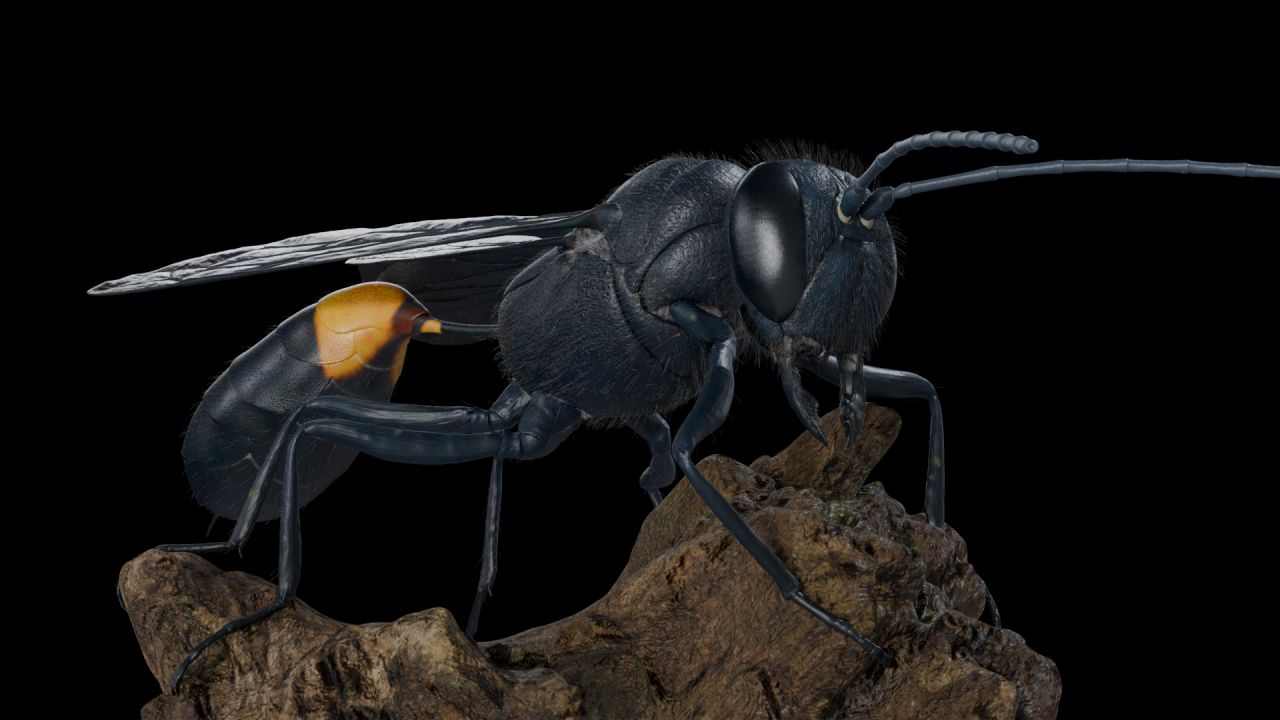
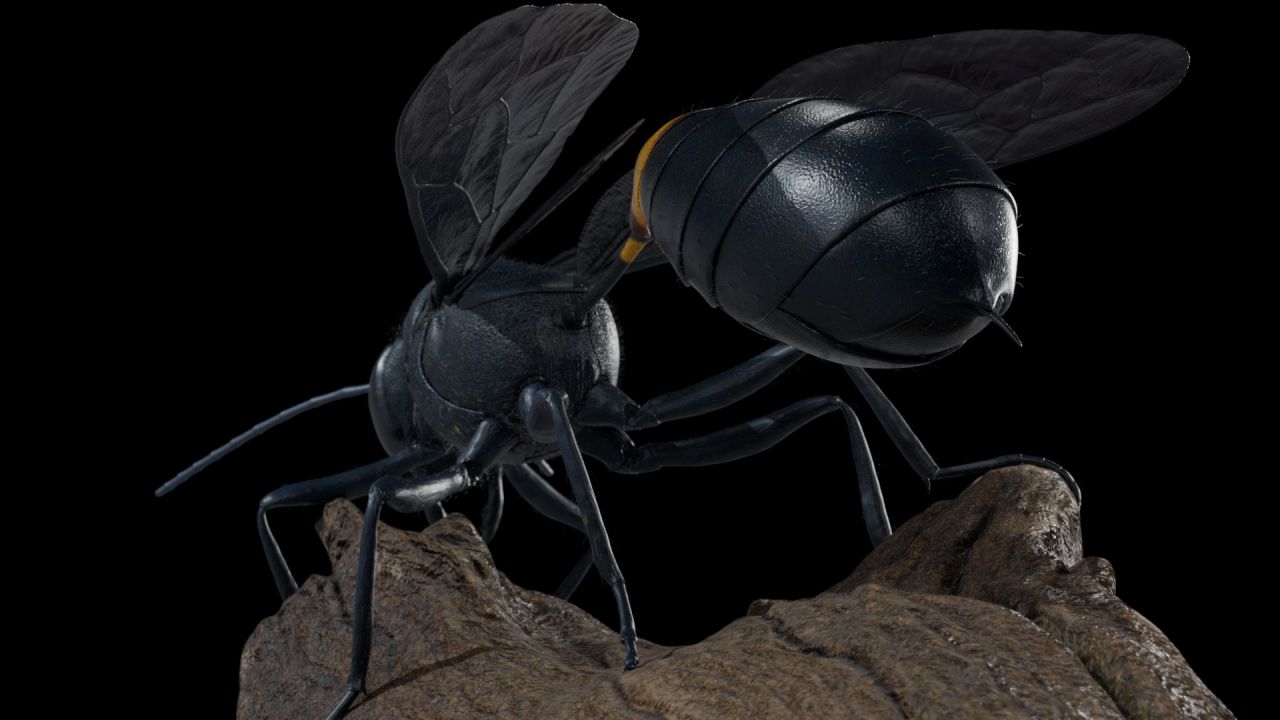
We then rigged it in Maya ready for animation:
And then added it into the final Unreal scene, with shaders, lighting and environment :
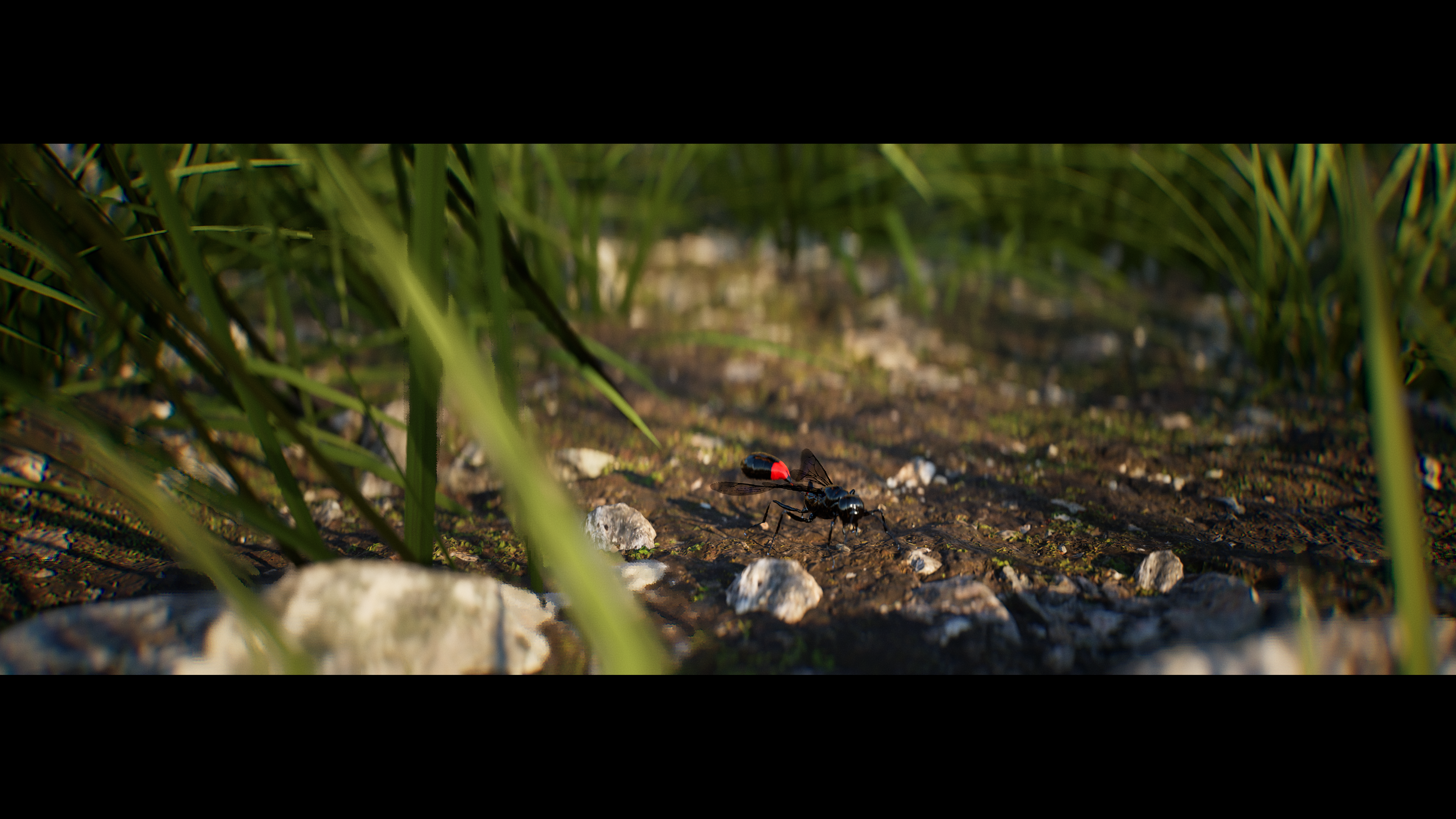
The animation of it was based on real-world thread waist wasp reference, and to our surprise the closer we got to replicating its real-life movement and posture, the more sympathetic it got!  Even weird-looking bugs need love! (Personal wasp opinions may apply.)

NAUGHTY SCHOOL KIDS

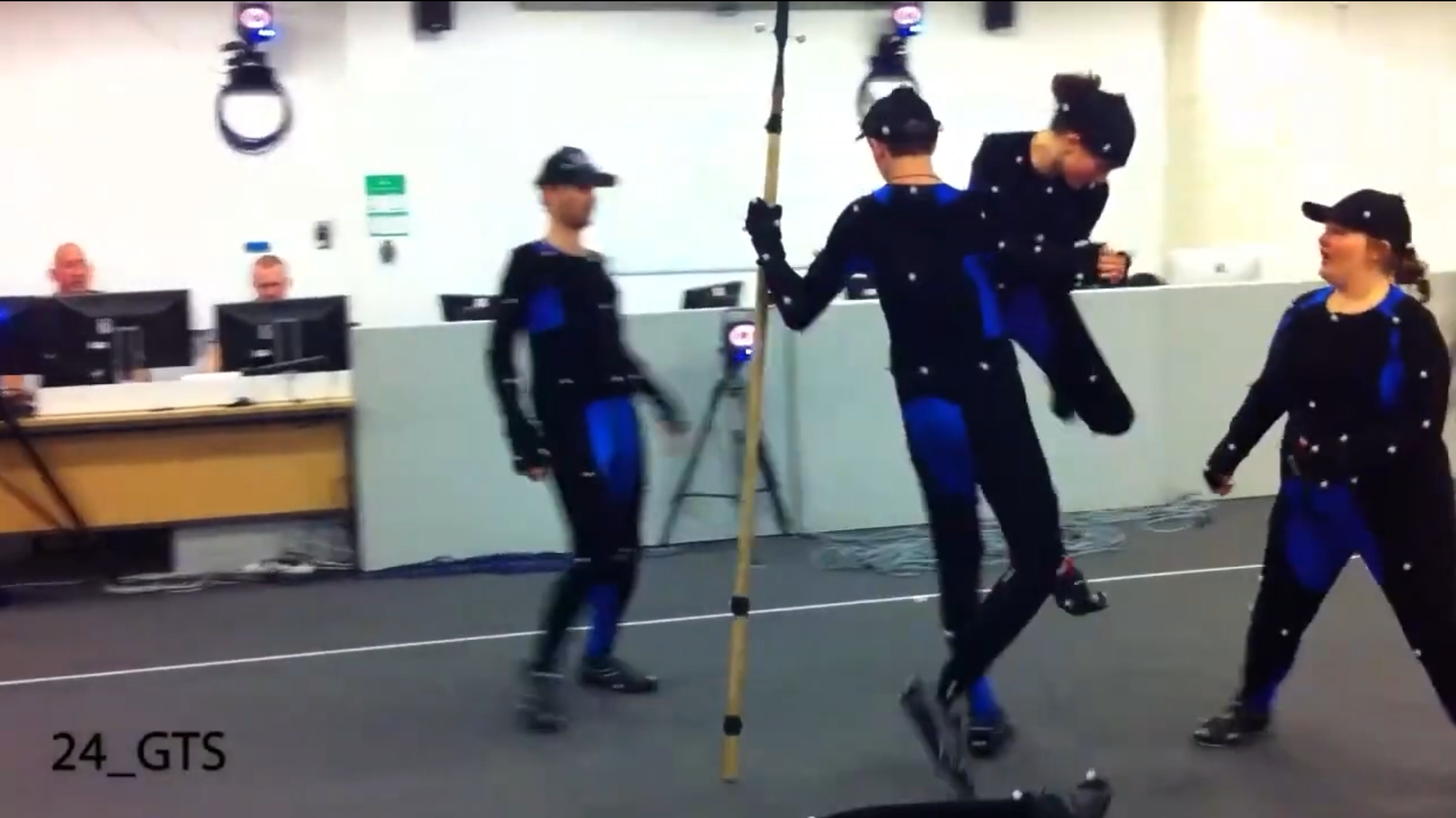
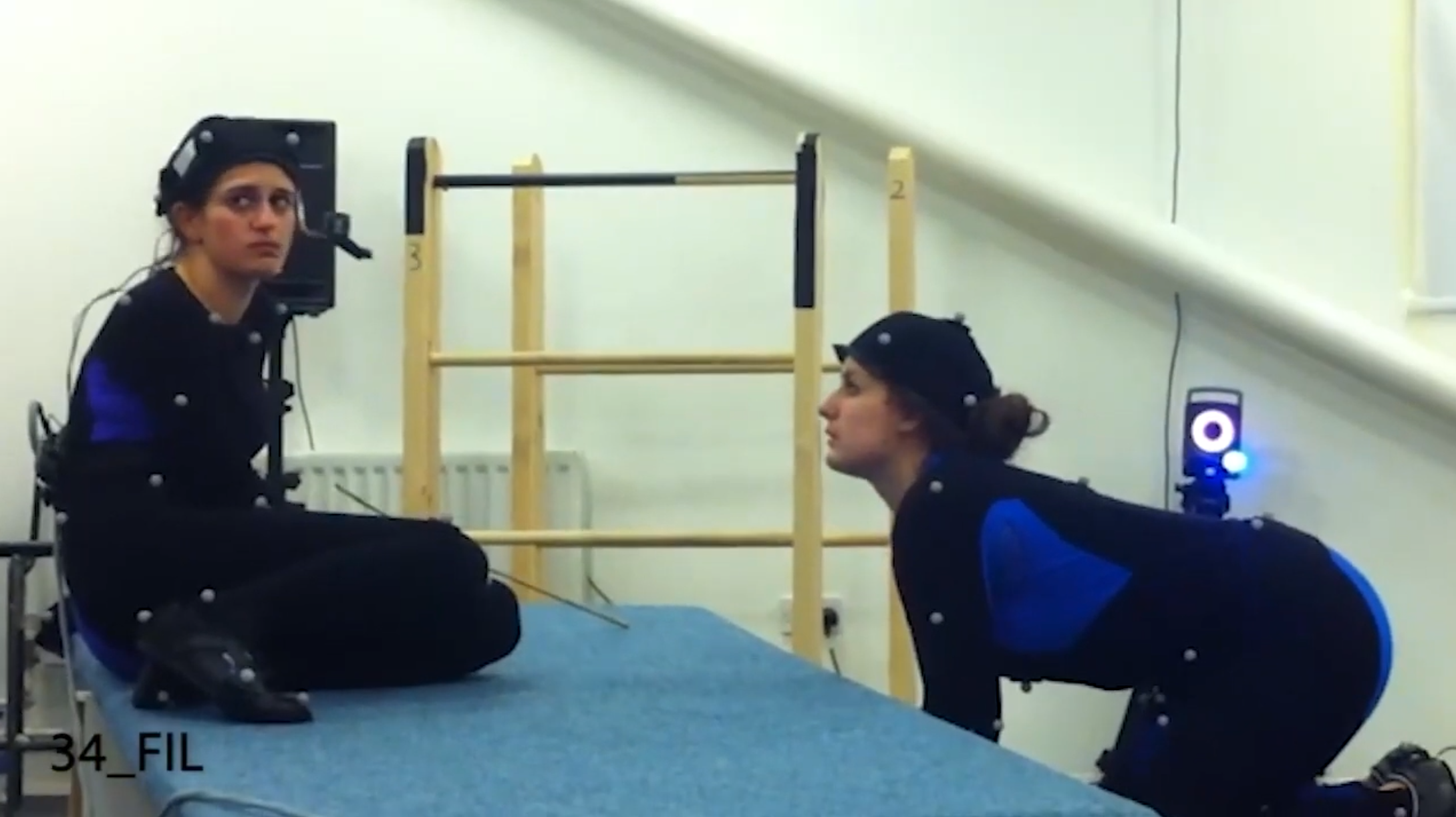
We really wanted our coach to feel alive with the chaos of a school trip. For that there was no short cut but to have a lot kids misbehaving around the main action of our protagonists. Although sound design and foley did a lot of heavy lifting here, we still wanted the visual chaos happening just out of frame, so we set about motion capturing as many scenarios as we could, with the students donning mocap suits in our CCIXR mocap studio:

Left to right:  Borka, Lloyd, Willow, Margarita

To get the performances into Unreal we pushed the motion capture through Unreal’s Metahuman system, crafting a collection of different characters to populate the coach. For the cloth we used enveloped meshes, rather than the Marvellous Designer simulated cloth we’d been using for our hero characters. (This was to save on production time and data size; hero cloth data can be 10s of GBs big!)

Once the characters were ready, we placed them around the bus seats to add some life around the main action:

BULLY GIRL CLOTH 

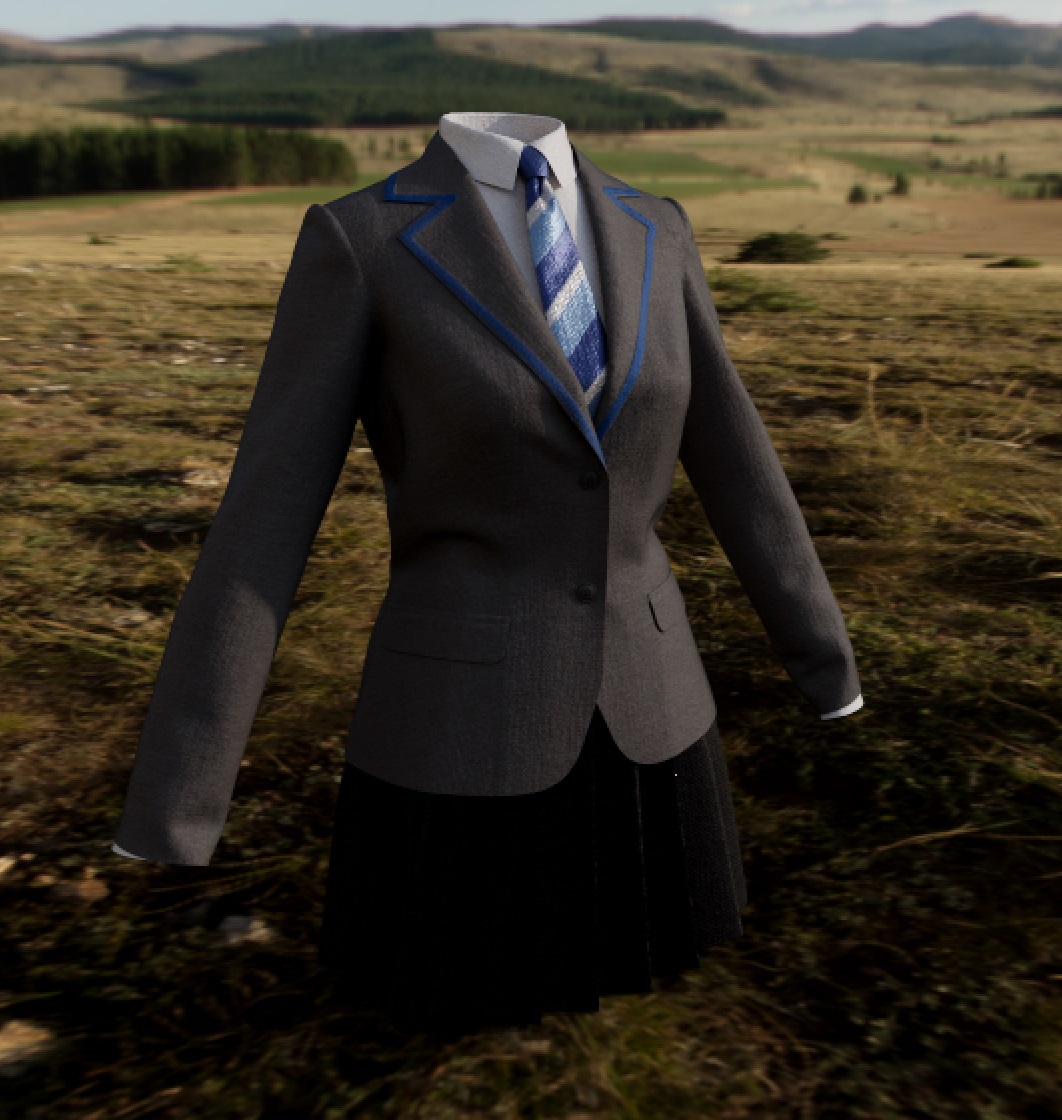
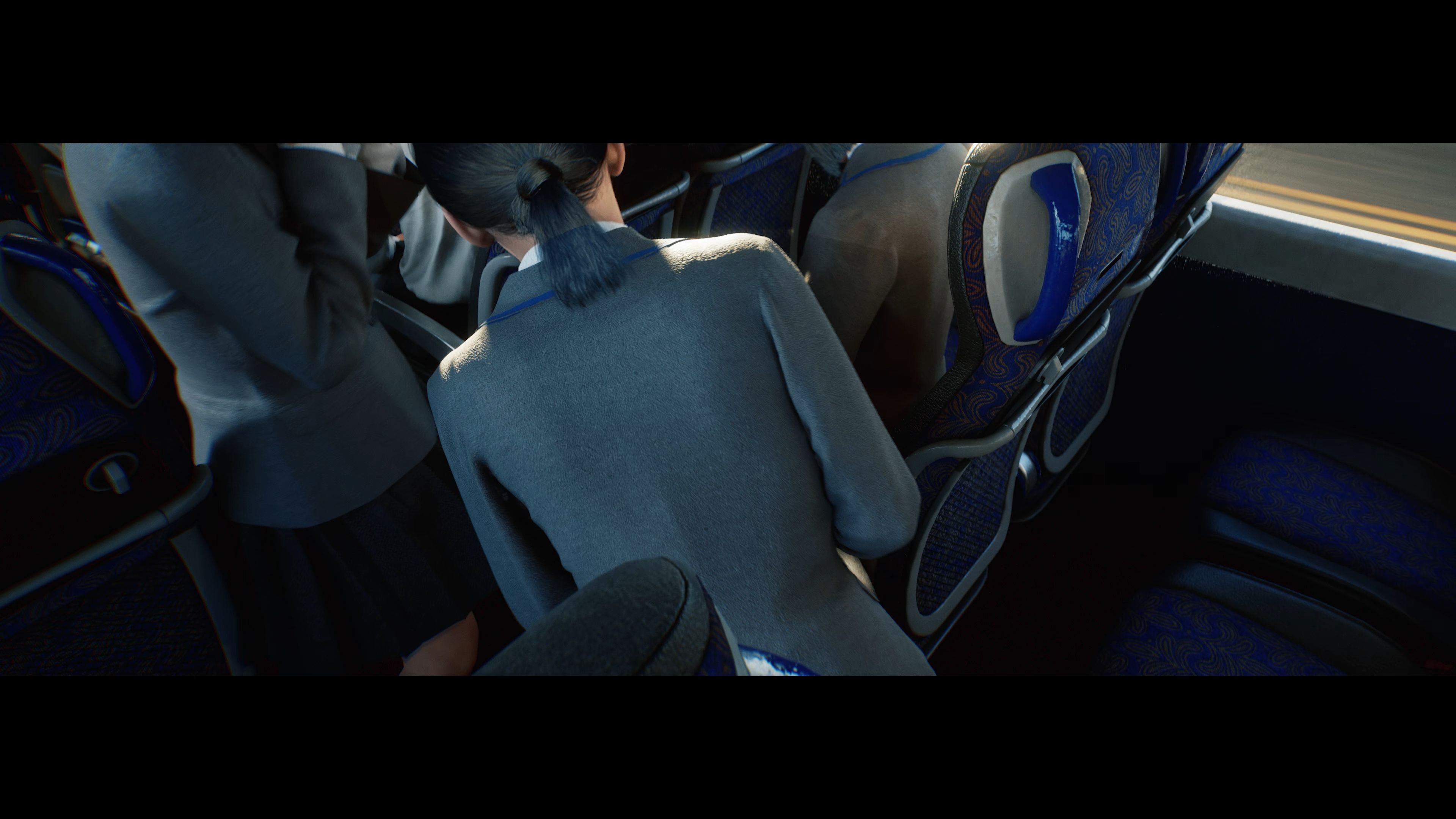
For a shot with a group of girls bullying our protagonist we wanted the cloth to feel physical; we wanted to get close into the action. For that we decided to go back Marvellous Designer, and simulated the clothes moving over exported Metahuman geometry:

We then added the texture and colour in Substance Painter:
And finally put it all together in the finished shot:
WHAT’S NEXT?

We are now continuing on with our next chronological scene, and will be doing further scenes until we have the 20 – 30 minutes we need for episode#1.

We meet a lot more characters over the next few scenes, so are currently spending some time designing and making all the assets we need before we start working with the motion capture data.

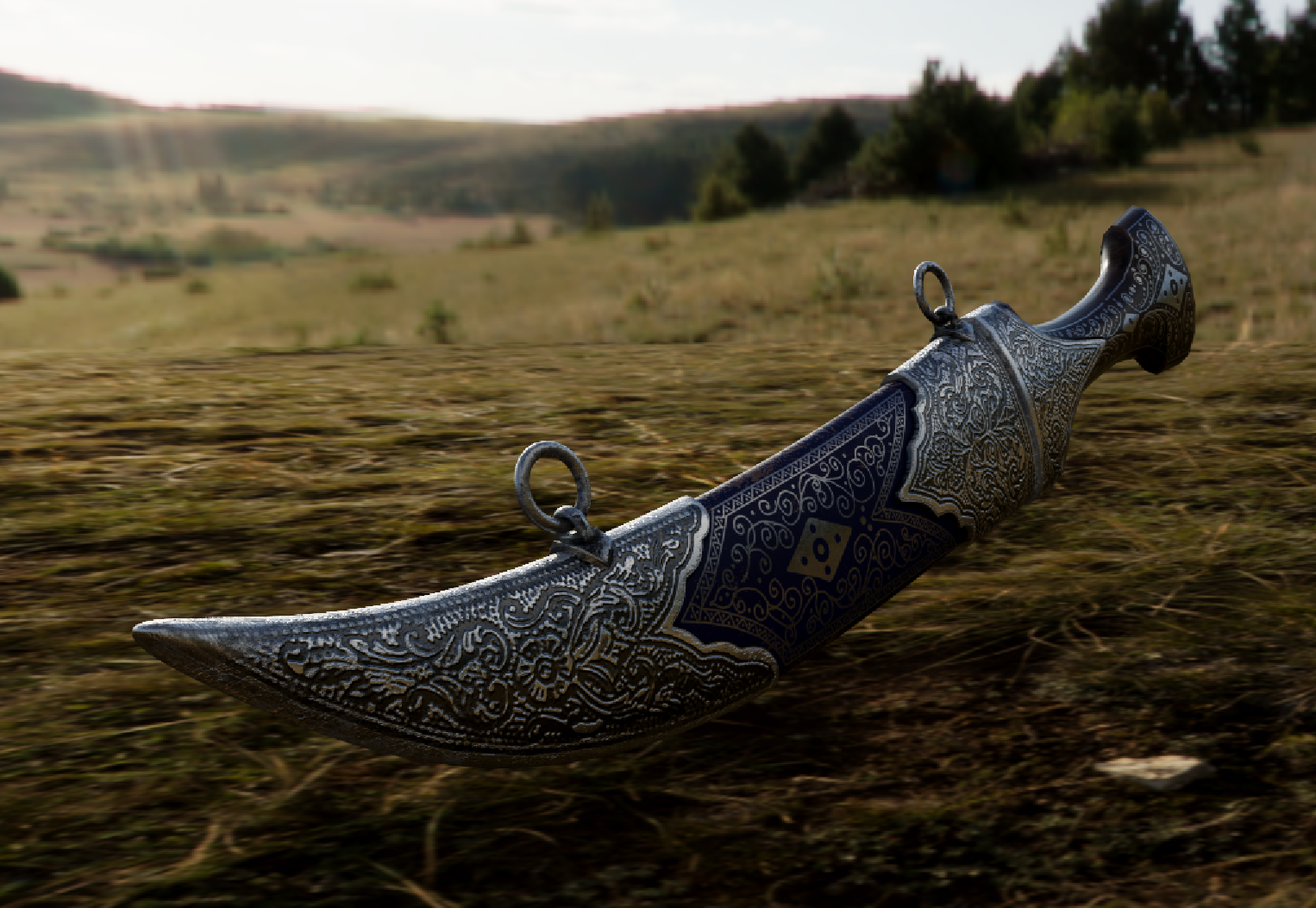
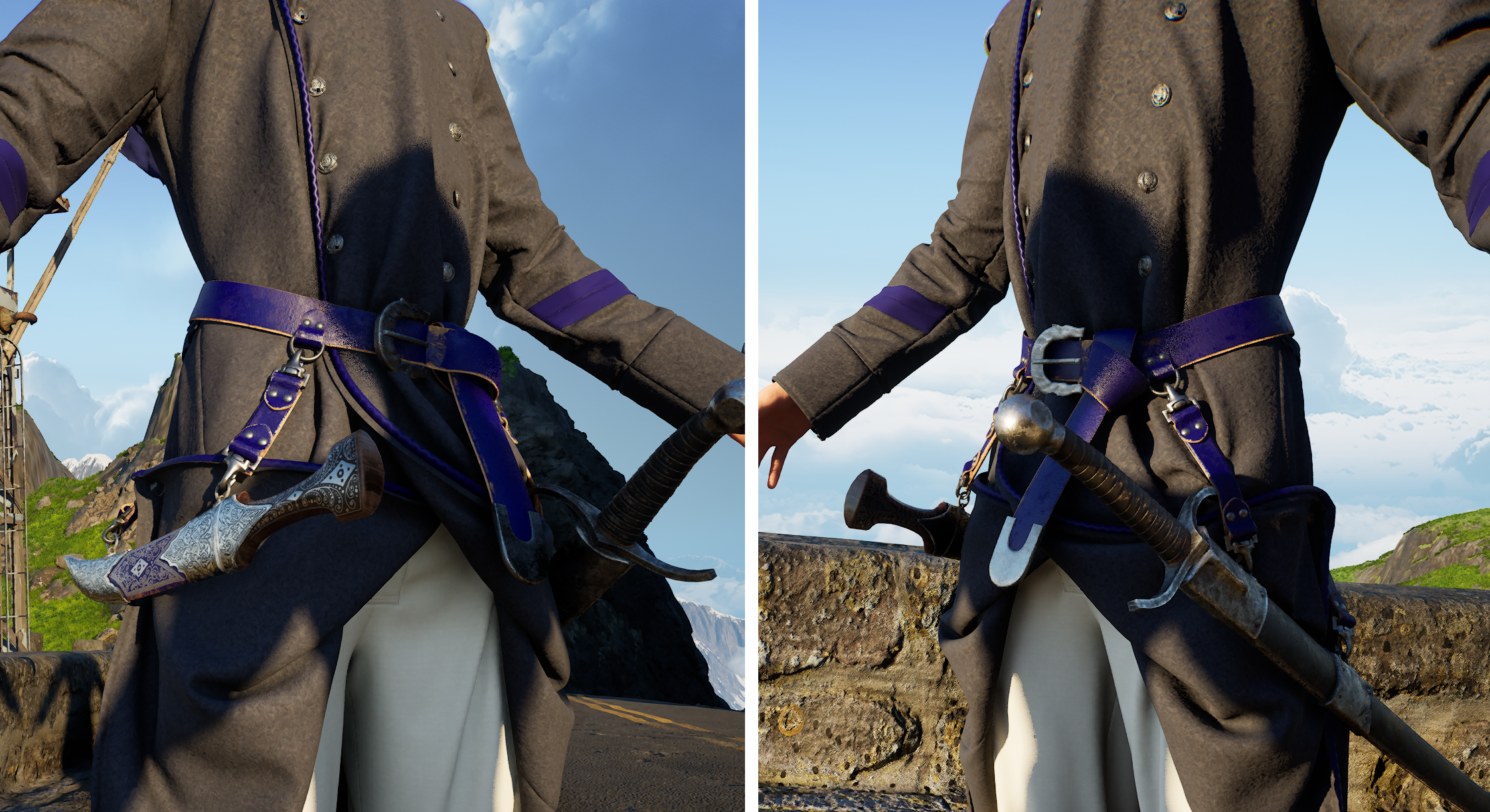
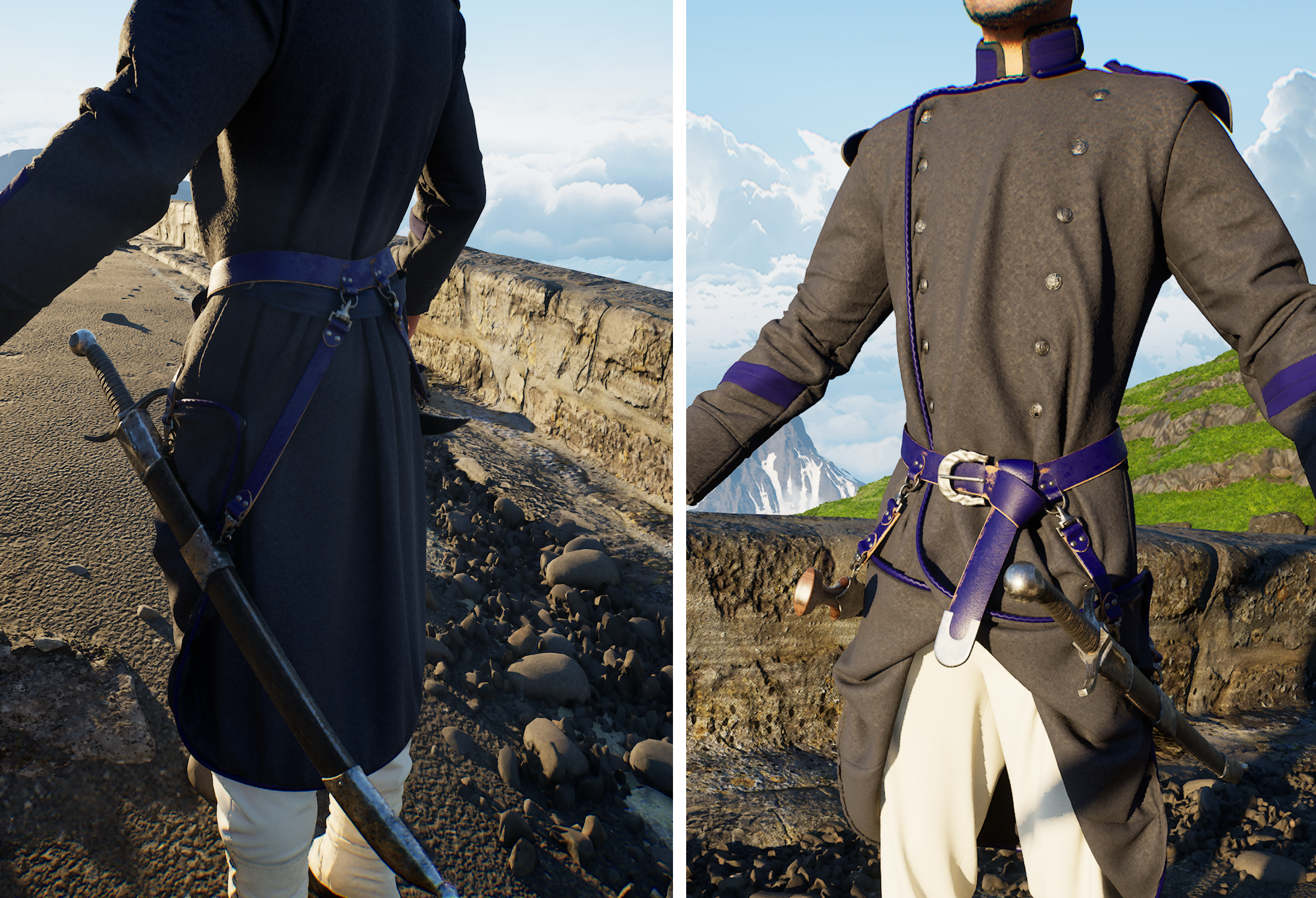
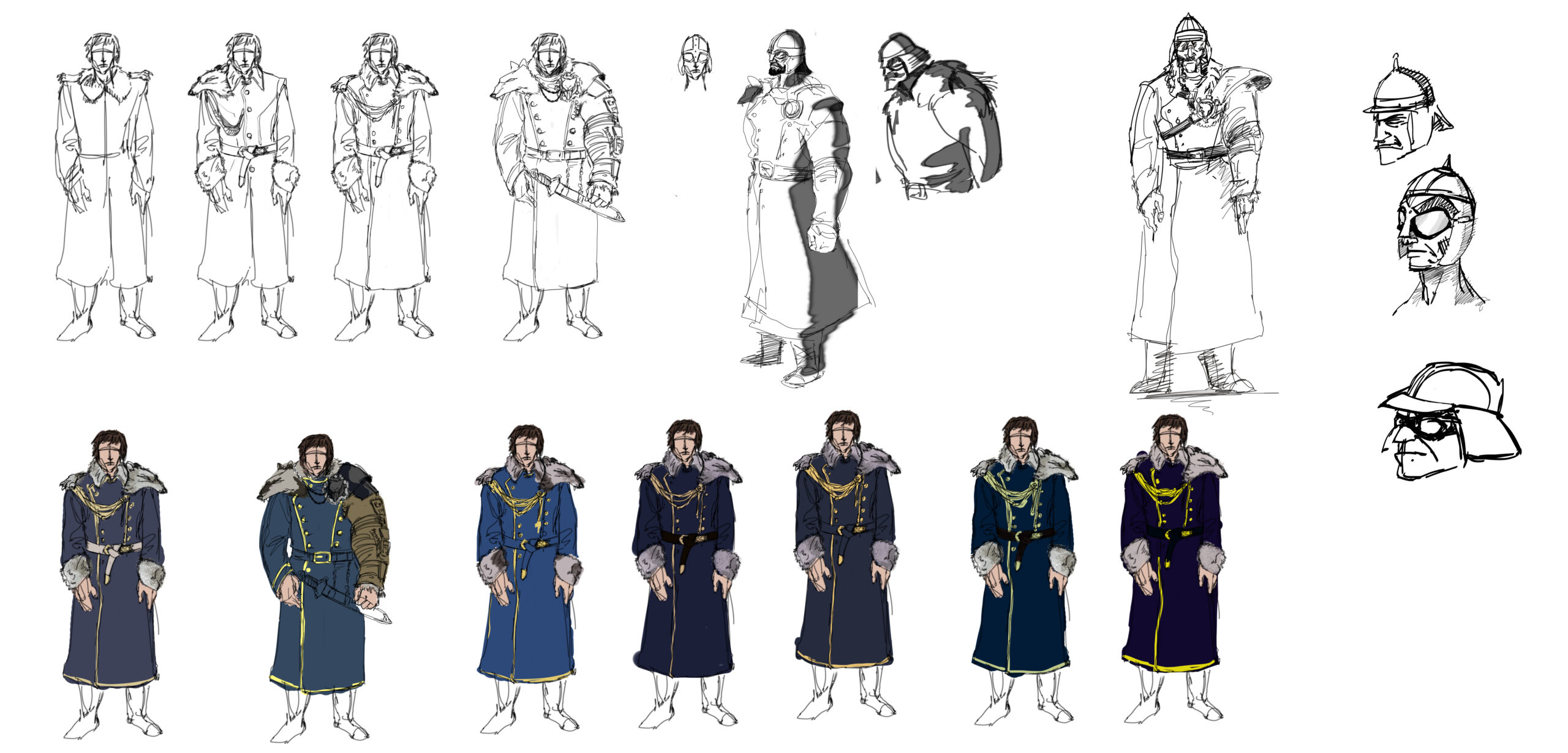
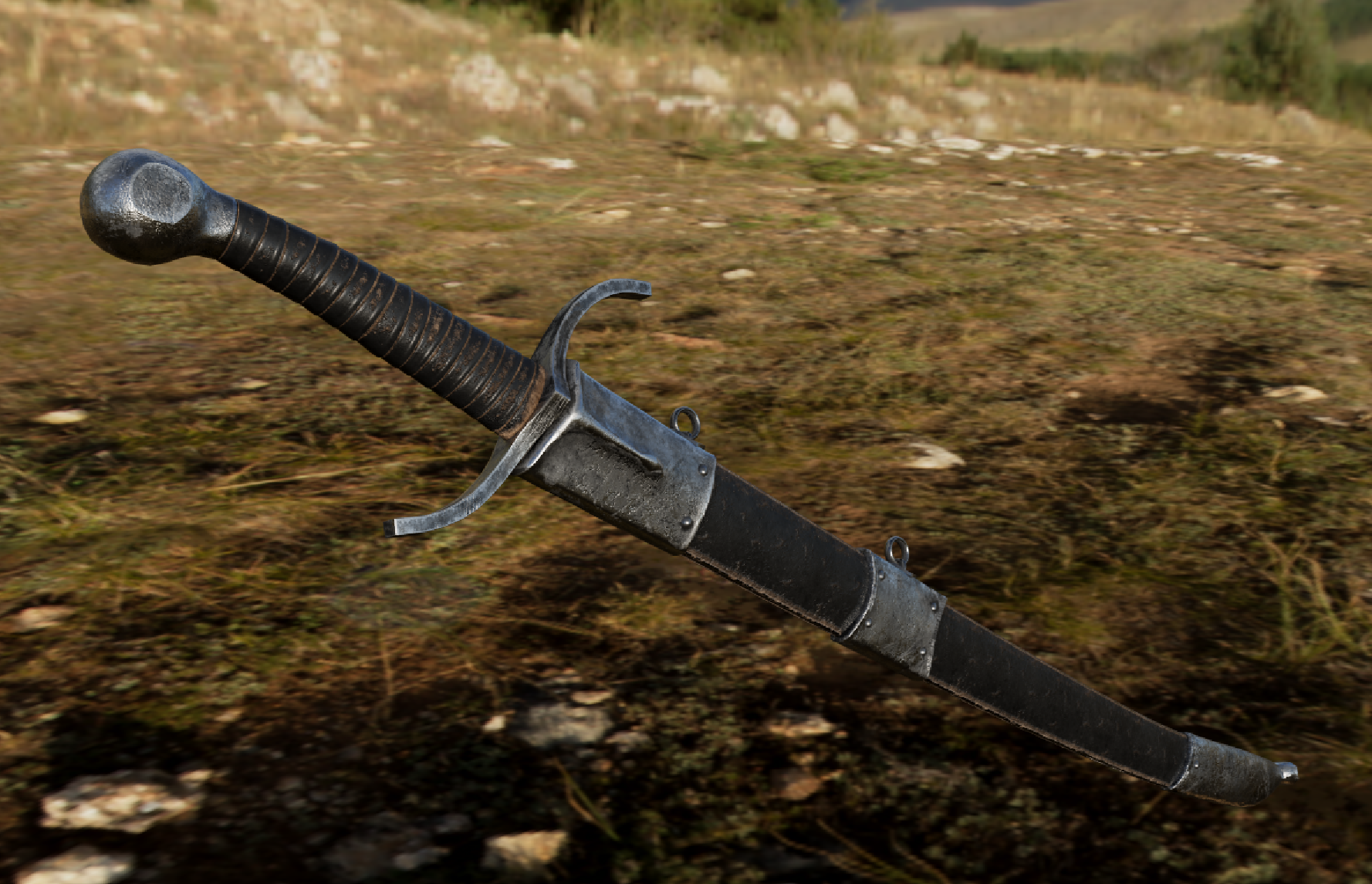
Here’s a look at the militia costume currently under development in Marvellous Designer and Substance Painter. This design forms the backbone of a lot of the outfits that will make an appearance over the next few scenes (And there’s something vaguely familiar about it!) :
That’s all for now!

More news soon as our story unfolds…

 

Print Friendly, PDF & Email

“The Aunt’s House” now out! (And what’s next…)

Our short film has now finished its year on the festival circuit, and we’re finally releasing it to the public today!

It’s been a long journey. (The original shoot was 14 years ago. The child actors are now 30 year old adults!) This particular sequence represents 1 out of 40+ scenes from our feature. It took 2 years to make using Unreal Engine (With a bit of help from Vicon/Maya/Houdini/Marvelous Designer/Facegood and Substance Painter) using a small team of students and lecturers. (With lots more having helped get it to this point over the years.)

We worked on it in our spare time, fitting it around our full time jobs/studies. (We are still looking for funding to make it professionally and speed up production, if anyone knows any billionaires who love magical-realist fantasy films!)

Since completing it we are close to finishing a further 10 minutes of film, which we are super excited about; starting from the beginning of the feature this time, and working through chronologically. We’ll be releasing it when we have an “episode” length section, so we can serialise it properly. (Each episode will run between 15 – 20 minutes in length) More blogs on this coming soon!

But until then, please enjoy this small slice of the world of “Stina & the Wolf” by clicking on the tab at the top:  Short – “The Aunts House”

Signing off for now,

Paul

Print Friendly, PDF & Email

Not all film-making heroes wear capes

There are many glamorous roles in filmmaking: the tortured director, agonising over the tiniest artistic sentiment, the star, giving their all in a virtuosic performance in front of a glorious set whilst adorned in a perfectly crafted costume, a composer digging deep into his emotional bag of tricks to conjure melodies that can channel the epic drama at the heart of the film.
 
All lovely, isn’t it! But that isn’t how great films are made. The above list is about 5% of what actually happens. Films are made by committed craftspeople who are prepared to grind through often dull, repetitive tasks, who turn up and do their job, all in the service of creating (hopefully) great art.
 
Beyond the Blu-ray cover lists are the real makers. And a lot of this making is pure logistics; it’s organising food, hiring equipment, negotiating and organising set usage, organising transport, scheduling actors, moving props, animating fingers, moving lights, filling smoke machines, buying smoke machine fluid, and so the list goes on…
 
In our case, the “glamorous” motion capture shoot for our film took 3 weeks. 3 weeks of really hard, but thrilling work, where our team pulled together to capture solid data on the performances. That was in 2011, 14 years ago! Since then, the reality of turning that data into a film has taken up all the time of those who have worked on it since. And most of that work isn’t the stuff of Blu-ray covers. It’s work that is never going to get a feature in Variety magazine, but it’s what truly crafts a film.

This is a spreadsheet of every motion capture performance in our 2-hour film. 377875 frames, 209 minutes (and rising!) of data from 43 individual scenes. Our team has just pored over every single performance in this list, performances currently visible only as a series of marker dots moving through space. (The skeletons come later) They have been picking out which bits of each performance are needed based on a rough-cut of the movie made from on-set video. This is done so the next stage: the motion capture cleanup, where the skeleton is added and prepared for the film character models can be done with as little waste as possible. (In time and money!) It’s a slow, laborious task that requires a lot of concentration; messing it up could add huge delays and cost to the production. But it’s essential, as essential as the director’s “vision”, or the star’s acting chops, but you’re unlikely to read about it in Variety magazine.
 
(Left to right – Borka, Issac, Umurhan, James. Fiona)
 
A big thanks to all the team who have worked on this. If I were the editor of Variety magazine, you would all be on the front cover!
 
Paul
Print Friendly, PDF & Email

Building Dravazzeki

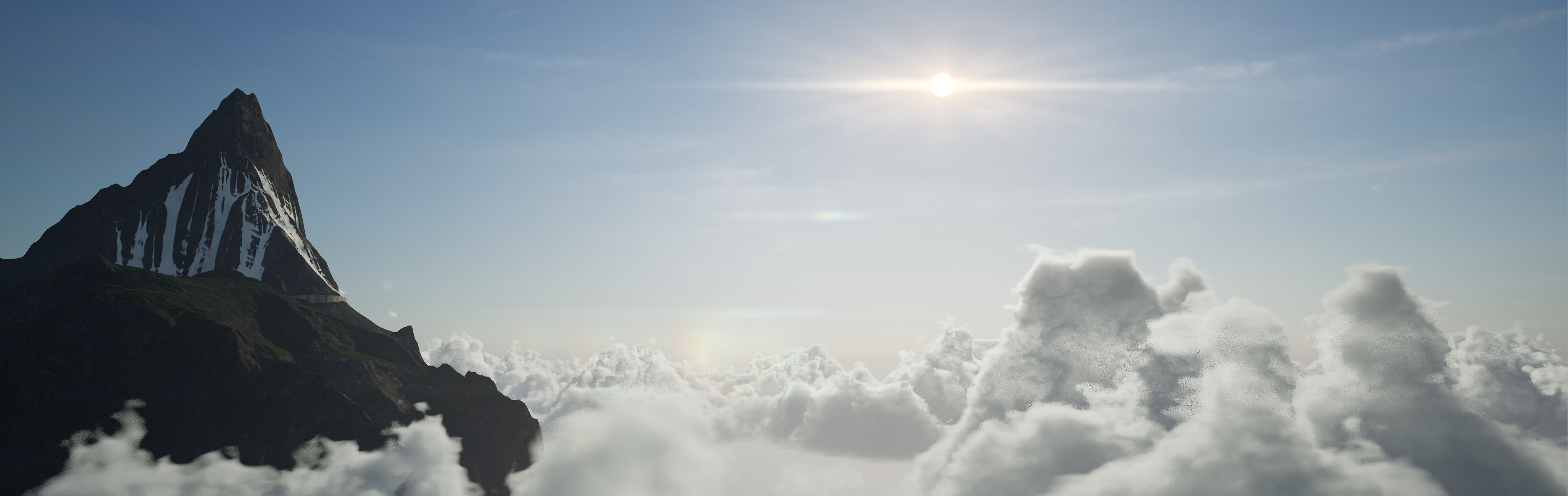
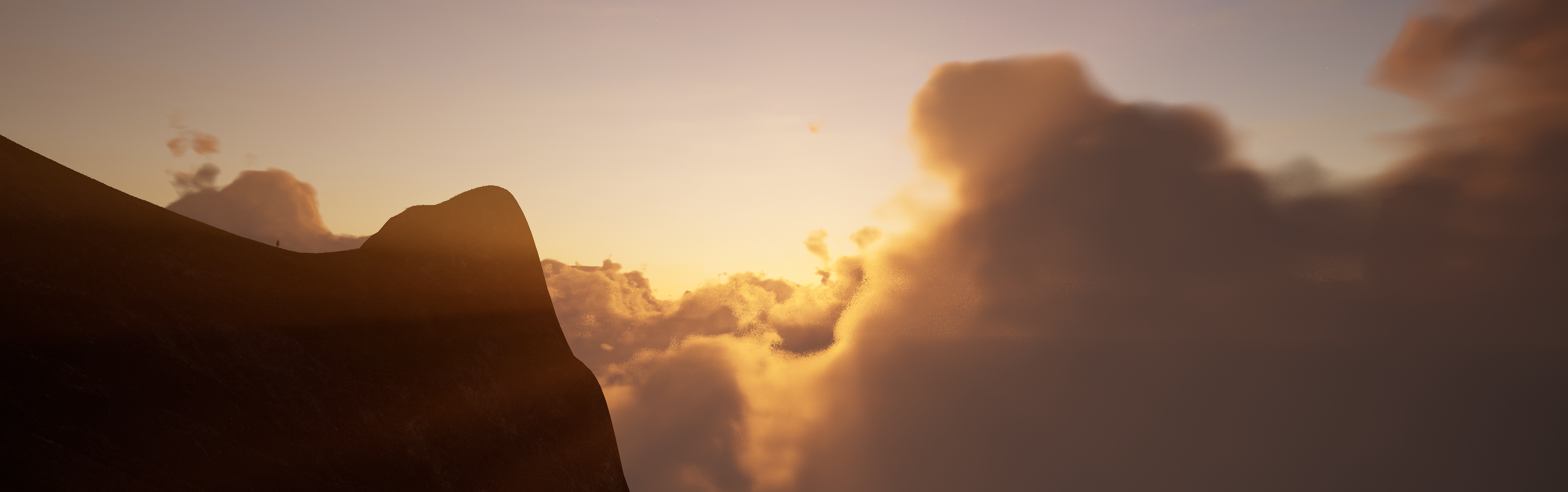
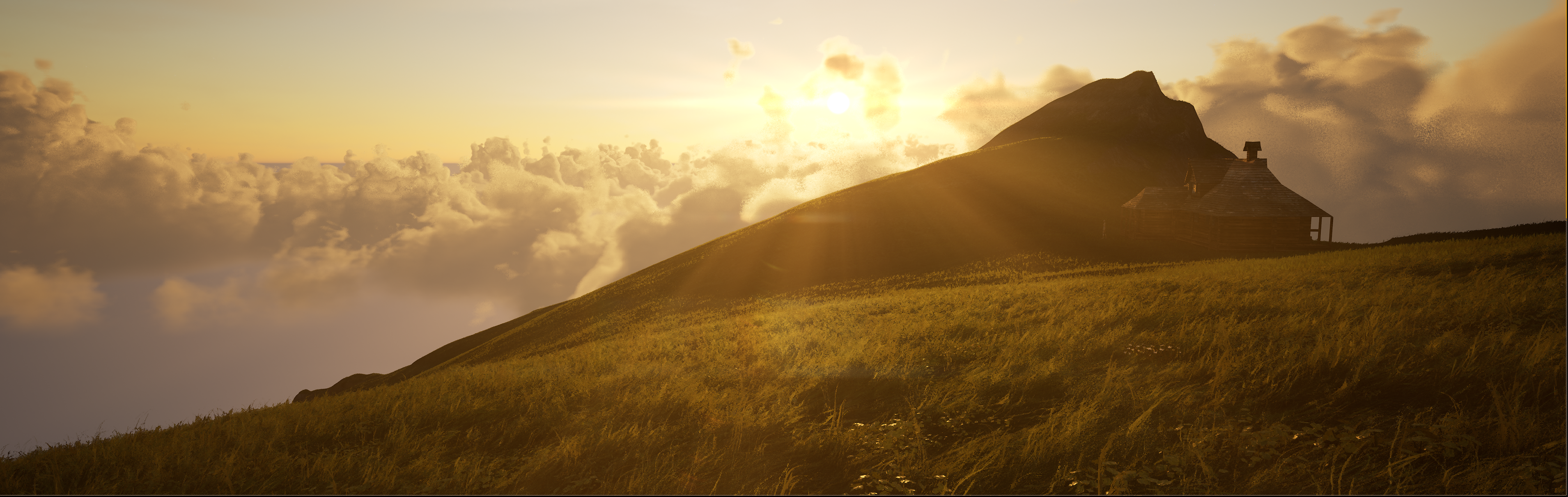
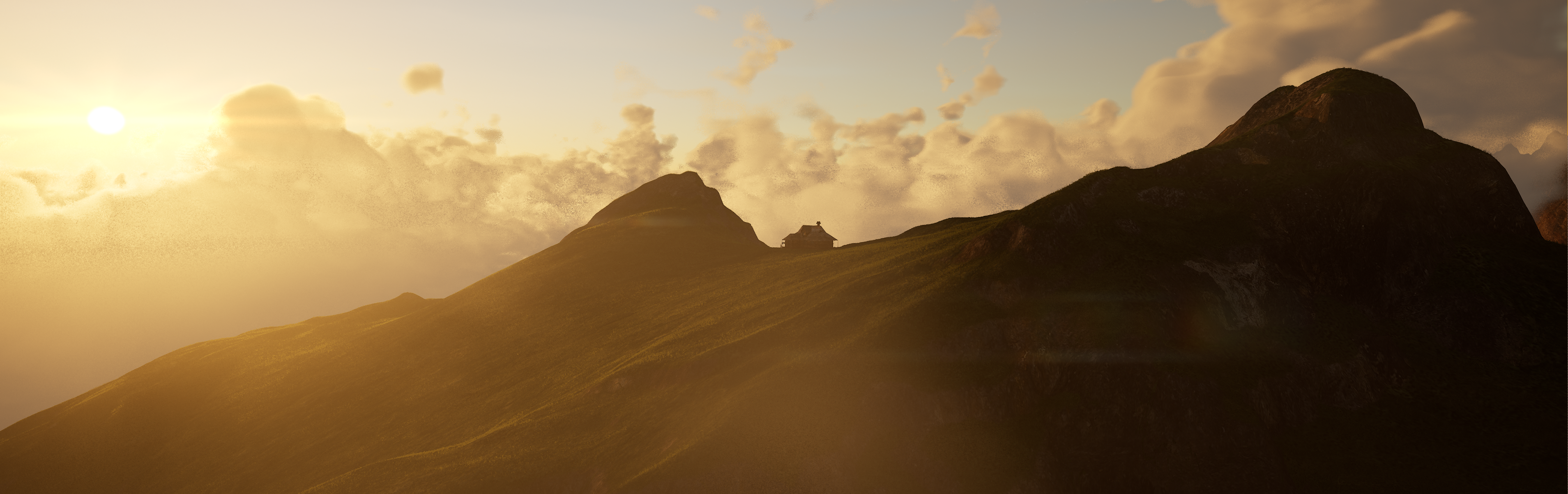
In preparation for tackling the whole movie one scene at a time, we are now working on one of the biggest sets we encounter early on in the film – the “Story Mountain”, with its superstitious military town of Dravazzeki nestled high above the forests and clouds. Below is a test shot rendered out of Unreal Engine 5.5.1 looking at various views of our work-in-progress:

Print Friendly, PDF & Email

Releasing our short film, and what’s next for our feature?

Our short film “The Aunts House” (or “scene05_AHS” as we’ve come to know it as part of our 2 hour feature) is finally complete, and we’ve now sent it out to film festivals around the world. (Fingers crossed!)


General online release will come once it’s finished the festival circuit. It now forms the centrepiece of our bid for an Epic Mega Grant which we’ve now submitted to Epic Games. (Fingers crossed again!) It’s been a very busy year for us here at Foam Digital, and we’ve had some great new talent join our Stina team along the way from the ranks of Portsmouth University’s Animation BA and BSC courses.


As we wait for the results of our film festival entries and our Mega Grant application we have started forging ahead with our full feature. We are now approaching it chronologically, scene-by scene (46 scenes in total).  Up until this point we’ve been choosing scenes to focus on that work well as proof-of-concepts to test the viability of our pipeline, and to find the kind of technical and aesthetic quality we can achieve. We are really happy with what we got with the “Aunt’s House”, it really delivered the look we want for the film, and allowed us to communicate the emotion of our characters’ journeys very effectively, which really is central to the whole project.
 
 
Using Unreal Engine has helped us experiment with ways we could weave in the symbolism of our central theme and react to the performances with camera choices and framings. We were able to move around our characters and cherry pick moments in the drama we wanted to focus on; subtle looks and expressions as the characters interact. This has been possible due to being able see the final results of our choices playing out in real time. It has allowed us to play and experiment, and proved a much more fluid way of working than we’re used to (And occasionally offered almost too much choice!) It also allowed us to flesh out the rich world Stina lives in and develop ideas from the script and lore more fully onto the screen. We are now settled on using the Unreal Game Engine for the entire feature, and we’ll be using our new short as a guide to the standard we need to hit for each scene. (Which we’re hoping will get increasingly quicker and easier as the technology advances.)


The Drama Cut

 
Yesterday we had our first screening of the “drama-cut”: a full length cut of the feature, which we wanted to show to the crew so they had a deeper understanding of our story.
 
It’s a 2 hour cut of the film with key music and foley but requires a lot of imagination; it’s a mixture of studio footage from our motion capture shoot, storyboards, concept art, 2d animation and some limited CGI (such as “The Aunt’s House” and other animation test scenes we’ve done over the years).
 
As a director, it’s always nerve wracking showing off a piece of work for the first time, and in this case particularly so, as it’s very much a simple blocking-out of the overall film as a story, with very few of the bells and whistles of a finished film such as camera editing, cinematography and CGI. We booked the film screening room in the university for it, and popcorn in hand, we sat down for a 2 hour viewing.  
 
“Gunter and Olaf creep out of the village to find the Pipecatcher’s Karavan”
 
“Griot is dumped in the animal shelter”
“A desperate Stina trys to save Gunter”
 
“A moment of calm with Griot in the forest”
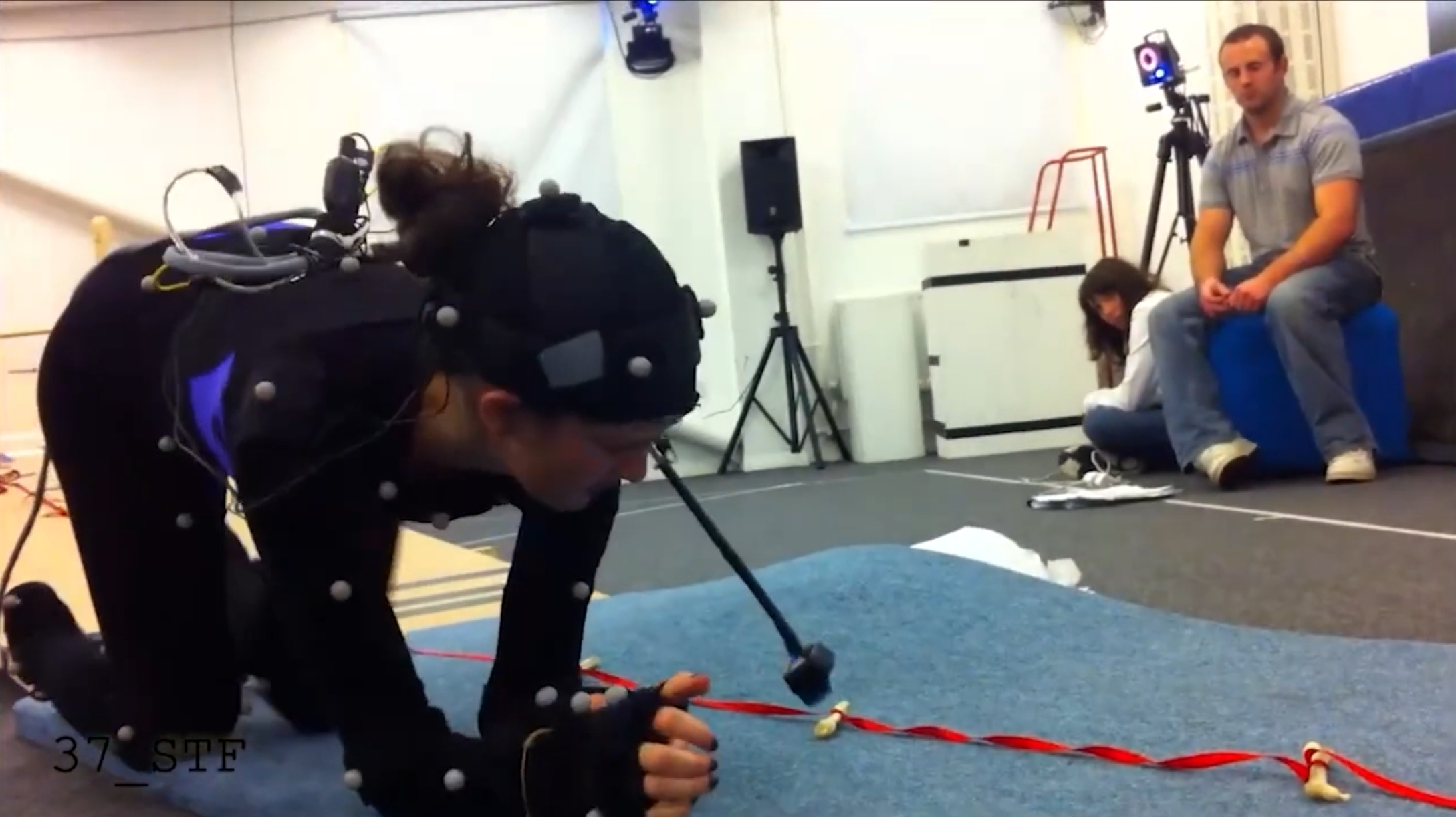
 
“Stina follows a horrifying trail into the underworld”
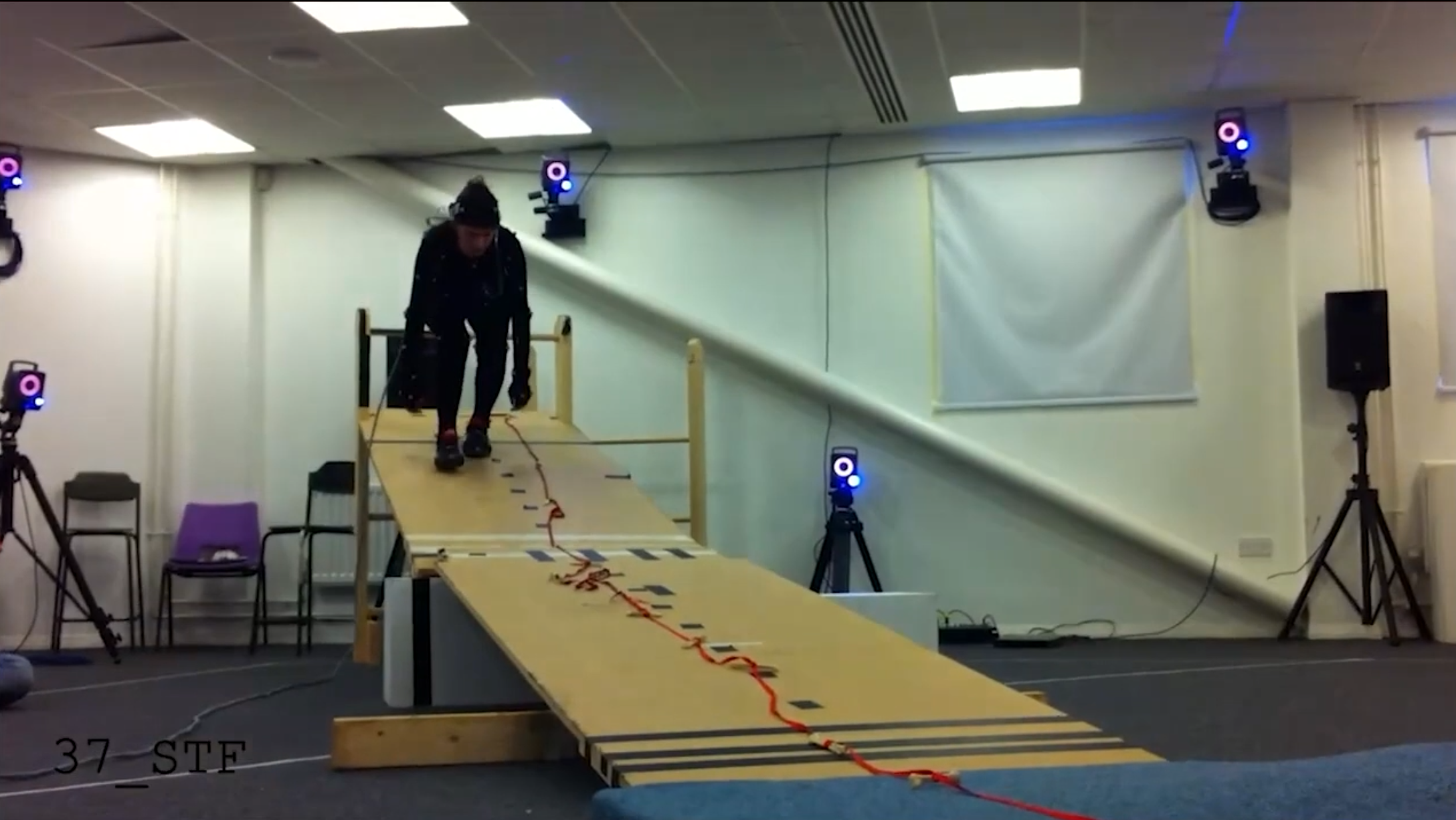
 
“..The trail leads down into the dark depths”
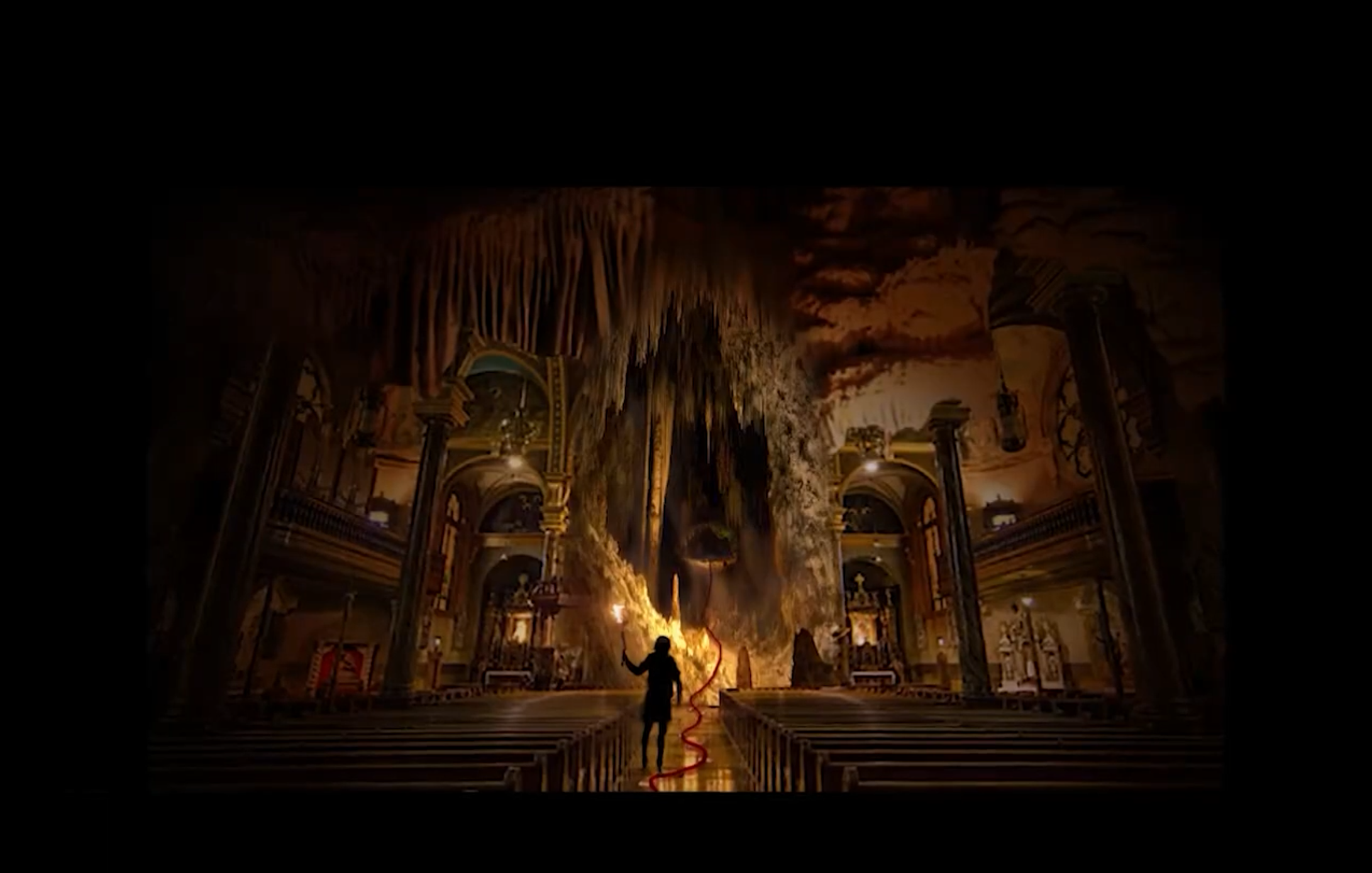
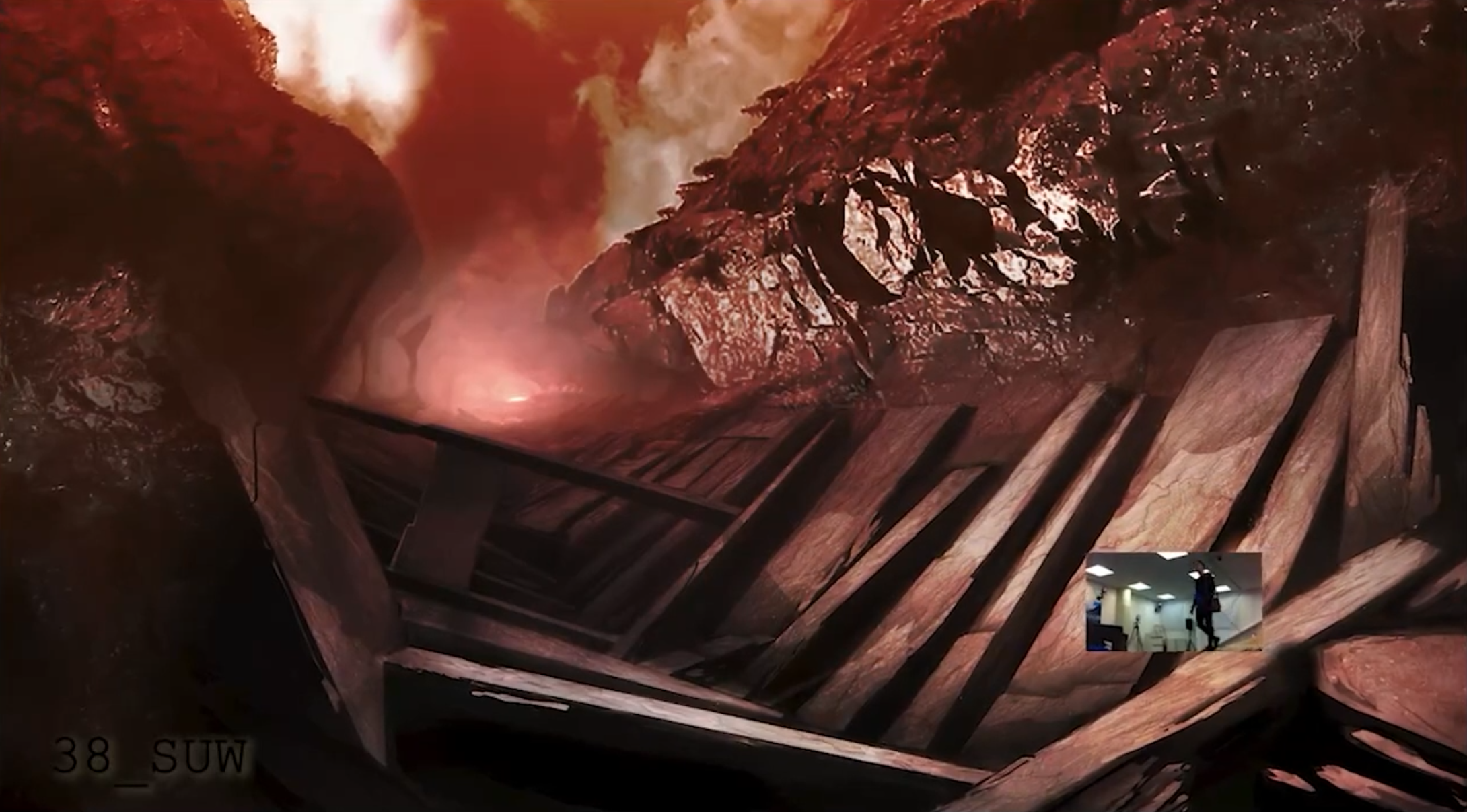
 
“The Lair”
 
“The Underworld”
 
After the screening we went for a social down the pub and dived into everyone’s reaction to what they had seen. The response was really exciting. The emotion of the film seemed to have really made an impact. (In no small part thanks to the music scoring choices – especially the end section of Mahler’s second Symphony which accompanies the emotional end of Stina’s journey in the final act; almost impossible to sit through and not get a chill down your spine.)
 
What was particularly exciting was that the film provoked some real post-viewing reflection on the themes of the movie. Without ruining the film, it deals with some very emotive subjects that, channeled through our fantastic performers, seemed really to hit a nerve. It’s an epic and emotional journey that seemed to have had an impact even in its raw, unpolished state.  In addition, the more ambiguous and symbolic elements of the story didn’t seem to alienate the experience, and for the most part seemed to support it well.
 
What was interesting from looking at these responses was gauging who would be the ideal market for this film. I genuinely didn’t expect it to have such an impact in its early form, and it made me wonder if the audience might be broader than I’d previously thought. It has some very dark and scary moments, so it’s definitely not a film for children, but films like “Pans Labyrinth” and “The Lovely Bones” came up as comparison movies, so I think as a young-adult film aimed at audiences that like an emotional, sometimes dark and scary journey, one that embraces the fantastical and the ambiguous and leaves you with as many questions as answers, it definitely has precedent and definitely has an audience! 


What’s Next?

 
So where next for the project? Well, we are already hard at work on the opening scene, with multiple animations already underway by our talented team. (More on that soon!). But we still have the same issue we’ve always had: Time v money.  There is no short-cut to producing the amount of animation minutes we need to produce in a reasonable amount of time (With the “The Aunts House” it took us 2 years to make 8 minutes of polished film. Our full-length feature cut currently runs to 118 minutes. That’s a 55 year production at our current rate!) If we get the Mega Grant ($150,000) that will give us a great start on our journey; we will be able to pay more animators to get the volume of work done more quickly.  
 

“Stina and the Wolf” – the Mini Series

 
Projections we’ve made have guided us to approach the movie in a new way: By splitting the feature into 3 40 minute episodes at natural break-points in the drama, the production becomes much more feasible to fund and produce. Our current plan is to fund each of the 3 episodes separately, using the Mega Grant to help us get the first episode done in a reasonable amount of time. We would then use that episode to help us fund the remaining 2 episodes. If we don’t get the Mega Grant (it’s a very competitive grant!) We will at least have a solid plan and costing for what it’s going to take to finish the project, which will hopefully make fundraising easier for us in the future.
 
 
That’s all for now folks.
 
More news coming in the new year.
 
Happy Christmas from us all here at Foam Digital, and thanks for all your continued support. It means a lot to us!
 
Paul

Print Friendly, PDF & Email

Finishing the sequence in UNREAL

METAHUMAN
 
 
Thanks to UNREAL’S Metahuman system we have been able to lean on their excellent facial animation systems (That work well with FACEGOOD) as well as their texturing and shading solutions which look great far away and in super close up. The only big problem we had with Metahuman (please fix this EPIC!) is that it only comes in 3 proportion sizes – small/medium/large. In our Softimage pipeline we had a rigging solution which allowed us to translate the exact proportions of all of our actors onto our rigs. this doesn’t work in UNREAL, and you have to compromise, but hopefully this will get fixed in future versions of the software. We are currently animating the tricky finger interactions in our scene in Maya (lots of eating!) that we then transfer onto our Metahuman rigs in UNREAL.
 

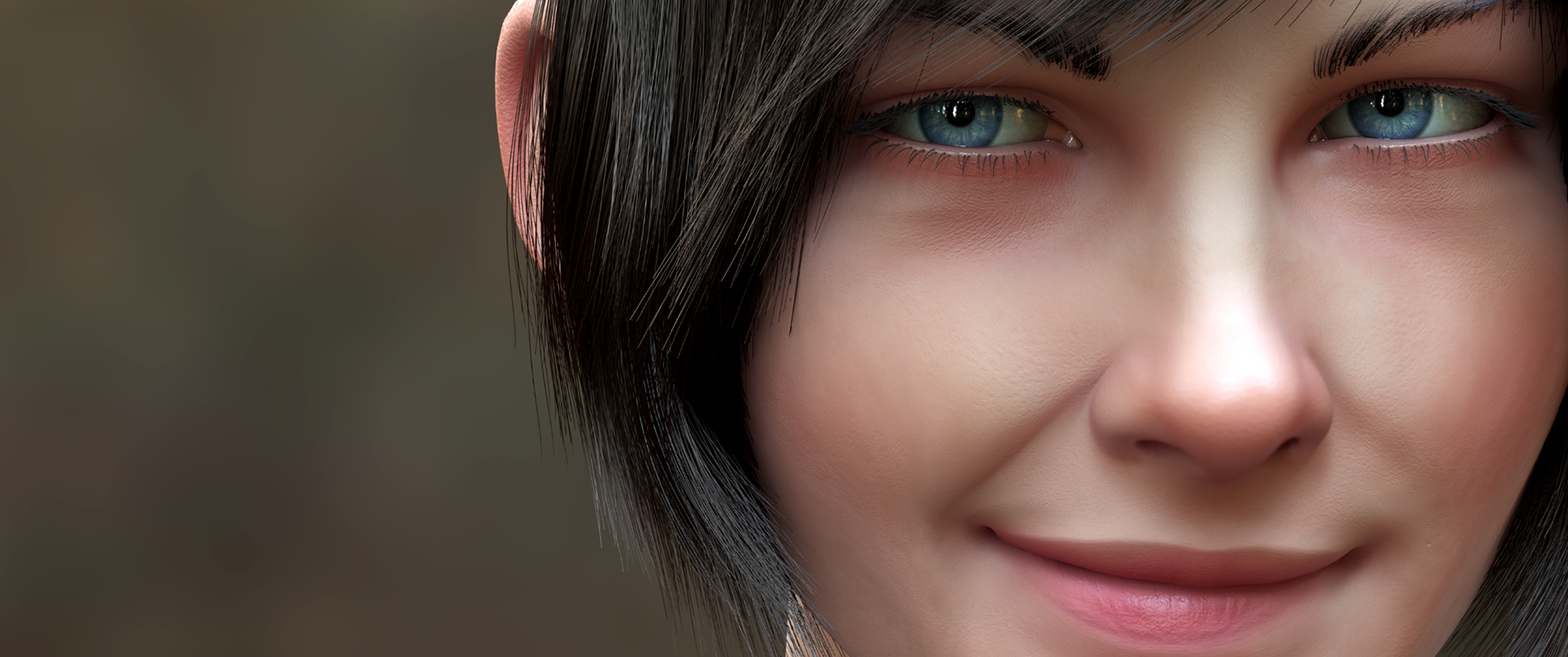
We also tried to get our Stina actress: Becky’s face directly into  Metahuman  as a possible option to replace our Stina face sculpt. This would have a lot of advantages; the biggest being a one-to-one equivalence between the performance and the CGI. We had a made a face cast of her back in the day plus a good amount of reference footage, and we got a good likeness:


It looks great! Very close to Becky. But it’s not really doing much movement in the above clip. Unfortunately, once the face started moving to capture Becky’s performance it was not so good. The extremes of the Metahumans calculated expressions did not match Becky’s at all, and in fact looked rather strange (Nothing like Becky!)  So we went back to our original solution, which weirdly has translated Becky’s expressions much more accurately. The fact we now have an accurate sculpt of her face may be useful in future though.
 
HAIR
 
 
We went through a lot of iterations of Stina’s hair trying to get the look we were after. The hair was made in XGEN in Maya then imported to UNREAL as an alembic, where it was made into an UNREAL groom with dynamic properties. Mahdid’s hair was off-the-shelf Metahuman hair and her face sculpt was designed completely within the Metahuman system. Griot’s hair was developed from the original Softimage spline groom, then itteratted on in XGEN and exported to UNREAL. Again this was a real test of the UNREAL pipeline; he has a lot of hair! But it handled these huge caches well and did a great good job in rendering. (After a few weeks searching through Reddit threads for tips!)


RENDERING
 
 
We had 2 basic rendering solutions to choose from in UNREAL: Lumen and Path Tracing. Path tracing was theoretically more accurate and closer to our old renderer: “Arnold”, but it proved very, very slow and prone to crashes. It also seemed to lack functionality with a lot of the inbuilt-systems (smoke/hair/flares etc.) And we just couldn’t get it to work well with our scene. Lumen looks slightly more stylised, but has lovely light bounces and gave our world a nice hyper-real look that suits our production perfectly. It’s really fast and allows a lot of 2d effects we would have previously done in compositing using Nuke (like depth of field/bokeh/lens flare/glow/vignetting/chromatic aberration.)


The main issue we found was fighting its game-ready optimization systems. In Arnold it’s simply a matter of turning up the samples to get a better look. In Lumen there are many completely separate systems at work optimizing everything from shadows to hair volumes to light bounces leaking into other frames. And on a few occasions these systems were really noticeable in-camera. This is a very different way of working for us, and has required a lot of diving into reddit forums and general confusion as we try and work out what is a bug and what is a feature! (The software is still technically in Beta so is constantly evolving.) Most issues we’ve found have been fixed now, and any remaining will have a Nuke fix or two.  But overall we’ve managed to use just UNREAL pretty much the same as our traditional CGI film pipeline, and it’s worked surprisingly well.
 
 
TEAM
 
 
Our team has grown over the last month and we now have a good variety of skills at play from a mixture of 2nd and 3rd year students providing full keyframe body animation/cloth/texturing and facial animation.   Here we are some of us taking a well earned break at a fine Vietnamese restaurant:
 
Left-to right:  Fiona(animation), Sonya(animation), Paul(director), James(production), Willow(animation), Issac(cloth/texures)


DEADLINE
 
 
As we have accrued assorted university grants for the project, we’ve also committed to a number of deadlines. (Always good to focus the mind.) This means we are currently aiming at September to wrap on our 8 minute scene. At that stage we will be writing our formal bid for an UNREAL Mega Grant, which was one of the primary drivers behind this proof-of-concept piece. With a Mega Grant we could actually finish the whole film. Wouldn’t that be something!
 
 
It’s been quite a ride getting to this point, and it’s been a great learning experience and shown us that UNREAL really can deliver as a CGI film production tool. (A lot of which has fed back straight into my day-to-today teaching and proven an invaluable aid for our course curriculum.)
 
Once our sequence is finished and has been submitted with our grant bid, we plan to enter it into some short film festivals and then release it online.
 
 
Thanks for all your support over the years and you’ll be the first to know it when it’s finally released!
 
Signing out, Paul
Print Friendly, PDF & Email

Shot Production

We are now firmly into Shot Production, having built enough of our assets (models, landscapes, rigs and textures) to get us started. Shot Production is the stage of the process where focus falls on the needs of individual shots, rather than the broader aspects of design and asset construction.

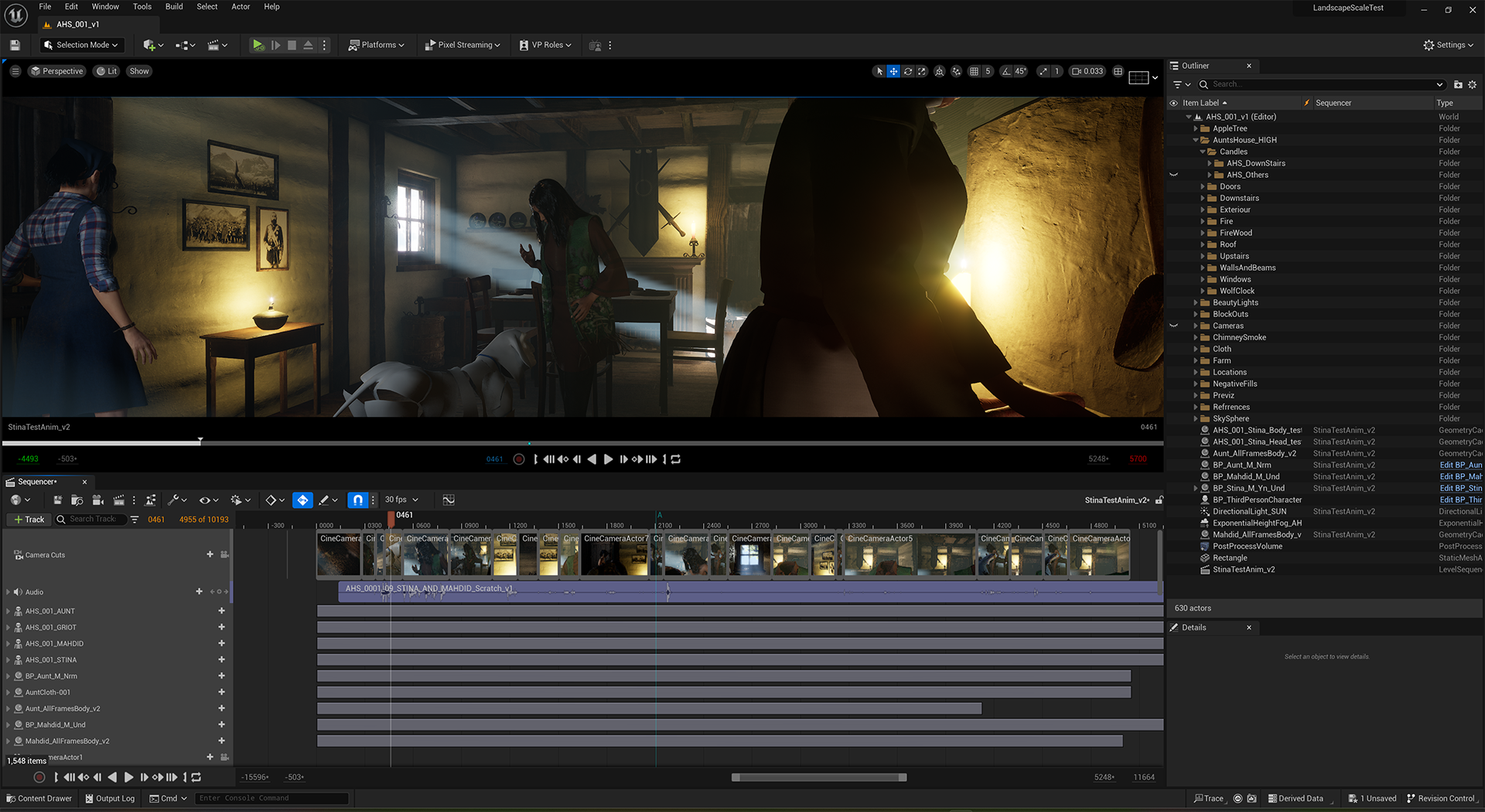
Preparing the scene in the UNREAL inteface.

What is slightly different in UNREAL compared to a traditional film pipeline is the ability to see the final look early on and integrate that into earlier stages. For traditional VFX and animation films the process is usually very linear:

Script > Production Design > Asset Construction > Previz > Performance Capture & Animation > Rendering > Compositing.
 
For us, we decided to Previz as we go so we could get a fidelity as close to the final look of the film as the engine would allow. (Normally previz is very blocky and only an approximation of the final result). This allows us to be much more reactive to the needs of individual shots whilst previzing, allowing real time tweaking of light placement, tone, colour and texture. It allows us to use much more reactive and traditional cinematography approaches to compose the shot with full lighting and compositing tricks in-camera (like depth-of-field, and glows/flares) at an early stage. This also feeds back into colour choices that can directly feed into production design changes we can add in as we go. (Including the costumes below.)

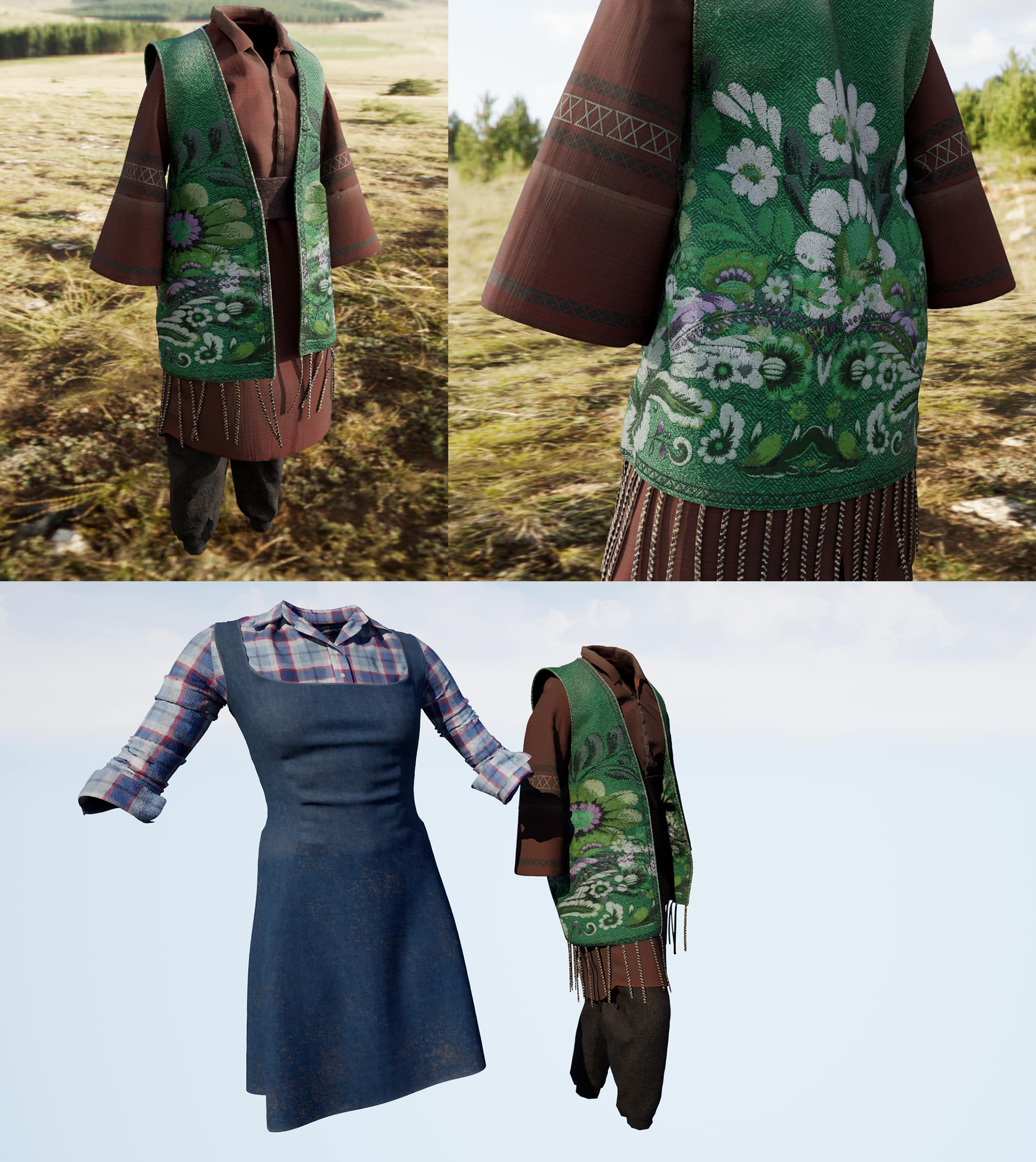
Our clothes are being designed and simulated in Clo3d & Marvelous Designer. Some of our talented students Isaac Macheri and Mya Mistry have built the costume, with the simulations currently being run so we can export them into the UNREAL scene. (For nerds: We are using the alembic data format; this allows us to add frame-by-frame geometry animation of pretty much anything we want and although very heavy on storage seems to be working well so far.)

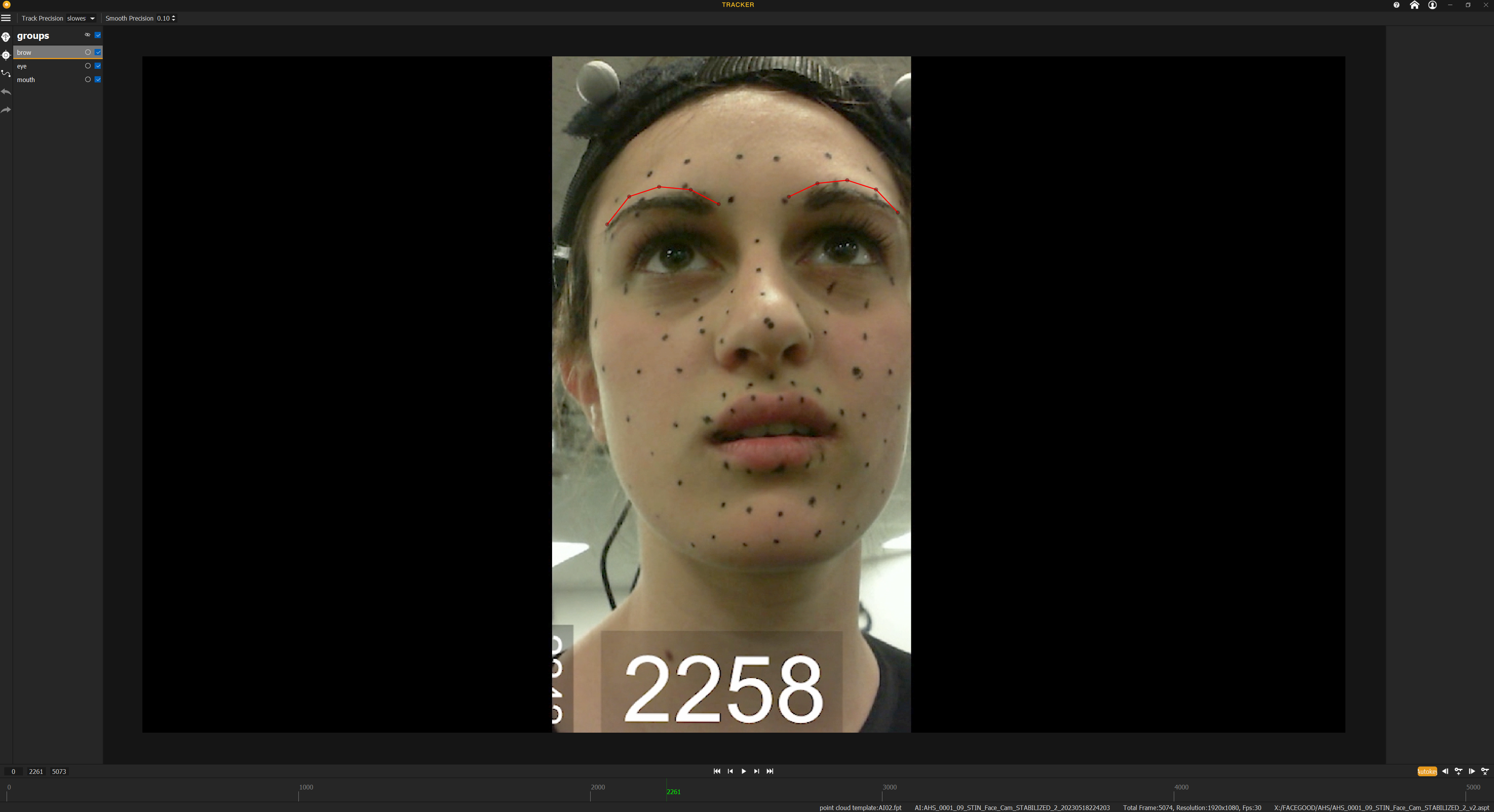
We are also now finalising our facial animation pipeline and are using FACEGOOD to help us translate our actors facial performances onto the facial rigs from our Metahuman characters:

Stage #1 – Facegood Retargeter

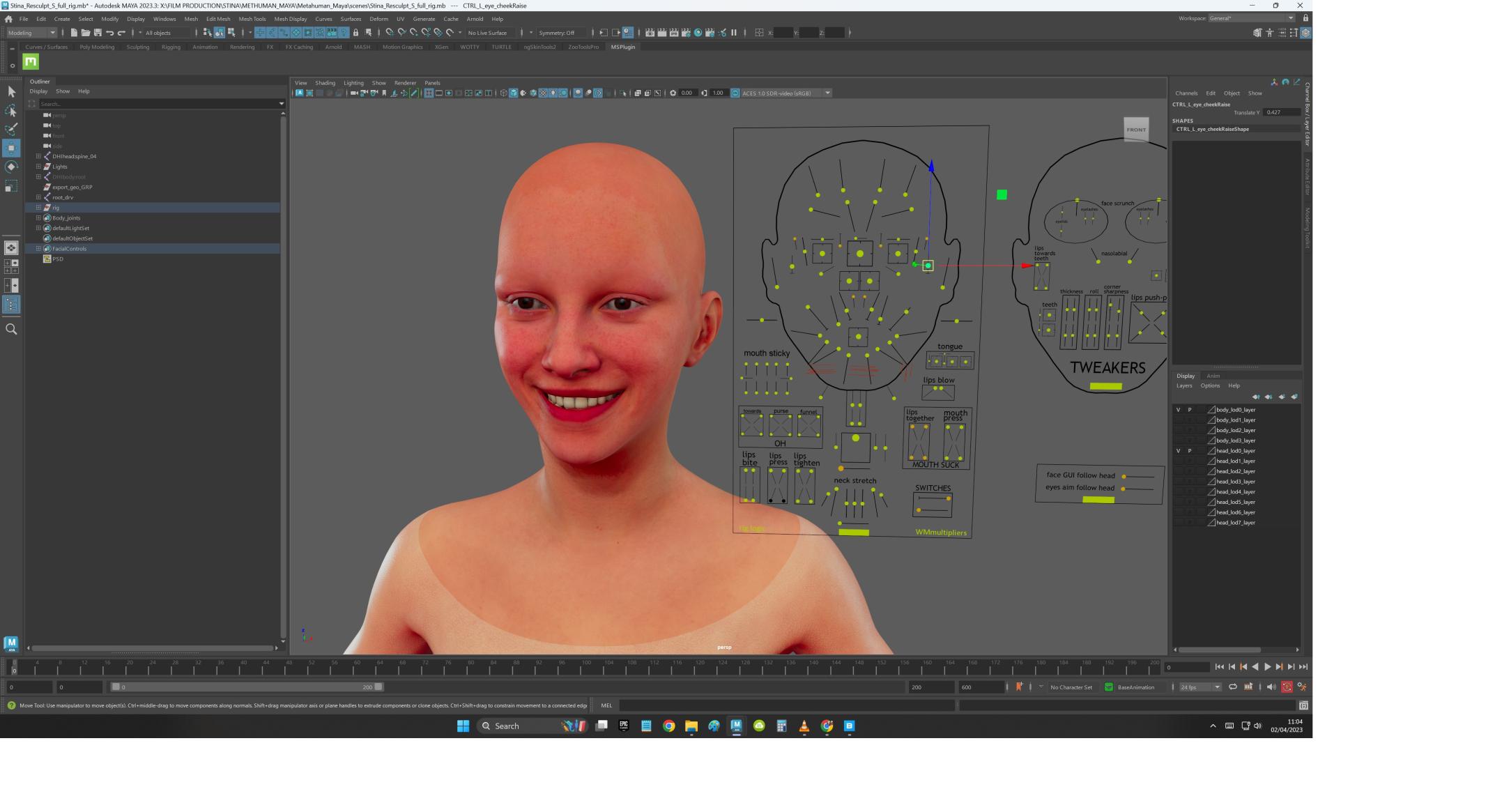
Stage #2 – Retargetting onto the Metahuman Face controls in Maya

Stage #3 – Importing into UNREAL

We are currently tackling the finger animation (This is done with hand-keying, as it’s was not captured with our orginal motion capture) and refining our assorted post effects and render settings to get the best render quality we can.  We have just taken delivery of a fancy new machine for the project (With a GTX4090 graphics card for the nerds out there!) so are hoping this will really help speed things up and allow us to ramp up the settings to get the best fidelity we can.

That’s all for now folks, more soon…

Print Friendly, PDF & Email

Stina & the Wolf : A fairy tale of dance and music, coming soon…

As well as the full 2 hour CGI feature, there is also a 45 minute live musical under development. It’s based on the original Fairy Tale version of “Stina & the Wolf”  (below). It’s planned to use the full orchestral score, with live solo instruments and feature dance, costume and projected CGI backdrops.

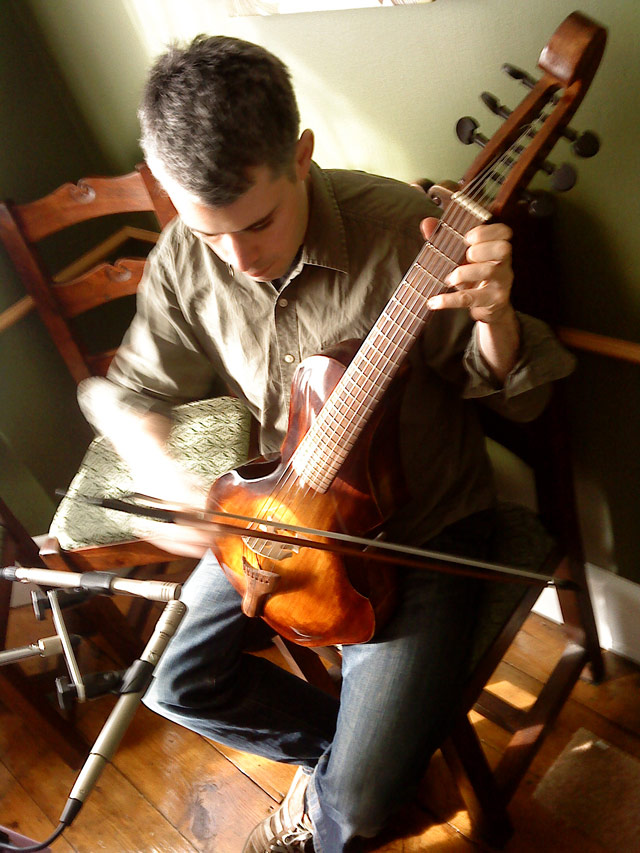
A Guitarviol in action, playing “The Village”.

A taste of what’s to come:

~ Stina & the Wolf ~ 

(a musical fairy tale)

1 – The Village

Stina is an ordinary girl, and she’s an orphan, of course. She lives in a small village high in the mountains with her unforgiving aunt and a nice, but goat-bodied uncle. The village is a hard place: brutal tradition, endless ceremony and always a cup to wash or homework to do. Today she is doing her chores, like every other day. As she toils away she looks towards the distant snowy mountains. She watches an eagle as it soars above a distant peak, then vanishes into a cloud; she follows it into a daydream of a better life, as a woman.

“Stop daydreaming!”.  

2 – The Snow

The next morning she wakes to a glorious sun. Her aunt is asleep. Her uncle is in his basket. She creeps past them unseen into the wild meadows. She has escaped, for now. It suddenly begins to snow. She has never seen snow before. It’s new and exhilarating. She likes the feel of it as it settles on her skin. She runs into the blizzard and is soon lost, although she doesn’t know it yet.

3 – The Caravan

Finding her way back to the village, she follows a strange caravan of brightly coloured wagons led by a charming devil. He is flanked by wild dancers wearing the beasts of the forest.

4 – The Baiting

The caravan sets up in the village square and erects a high-walled arena offering a test to boys on the threshold of manhood. It soon draws a crowd of excited teenagers. Only boys enter. Once inside they begin enthusiastically killing wolves but are tricked into the awaiting cages. The caravan leaves with the boys inside.

5 – Transformation

Stina follows it down into the forests below.

Losing the trail, she stops to rest by an icy lake.  Lost, tired and alone, she regrets ever leaving the comfort and safety of the village. Washing cups isn’t so bad, not really.  Suddenly the moon appears. She fails to notice it turning blood red. She catches her reflection in the ice. Her eyes are a poisonous yellow. On the far side of the lake a creature howls. She is surrounded by a pack of hungry wolves. The blood light engulfs her and she becomes a wolf. She is hungry and joyful. She dives into the forest to feed with the pack. She follows as they tear through the trees, finally diving into the ground, sated, to rest under a giant oak.

5 – The Underworld

When she awakes she is deep underground and only a girl. She makes her way down into the earth and enters the underworld, arriving at a giant ocean. A lone wolf stands guard on a rock and calls to her, saying no girls may enter. She persuades him she’s a boy and he lets her pass (easy). He summons up the horde from beneath the waves. All the real and fantastical creatures of the forest emerge and process down into the depths. They carry her down to the lair of the charming devil and she arrives through a giant wall of water.

The lair is dark and empty. Suddenly the devil emerges. He is sarcastic and rebukes her for her boyishness. But Stina isn’t afraid. Boys are boys. She replies softly and they dance. He resists at first, but she soon teaches him to dance like her, and they move in harmony. Softened by the dance, he doesn’t notice as she releases the boys and they flee into the wall of water, leaving the charming devil pirouetting off into the darkness. The horde carries them all back to the surface, travelling through every terrifying level of the underworld. Finally they burst into the brilliant mountain sunlight, right next to the village.

6 – Home

The village is full of snow and the villagers are gone. In their place are wolves. They are eating viscera and staining the white snow red. With her new found skills, Stina casts a spell and returns the villagers to human form and the boys reunite with their families (they also put their clothes back on!). She calls out to them, but her voice is now that of a wolf, and they throw stones. She watches from the trees as the villagers go about their lives; her aunt does her chores, her uncle eats the grass. She knows she can never go back. She is a wolf and she is a human. She turns from the village and runs into the mountains to live with the other beasts of the forest forever, the real ones and the fantastical ones.

~THE END ~

Print Friendly, PDF & Email

Stina becomes Metahuman

A quick post about the transfer of Stina into her new world as a Metahuman in UNREAL 5

Stina in Softimage

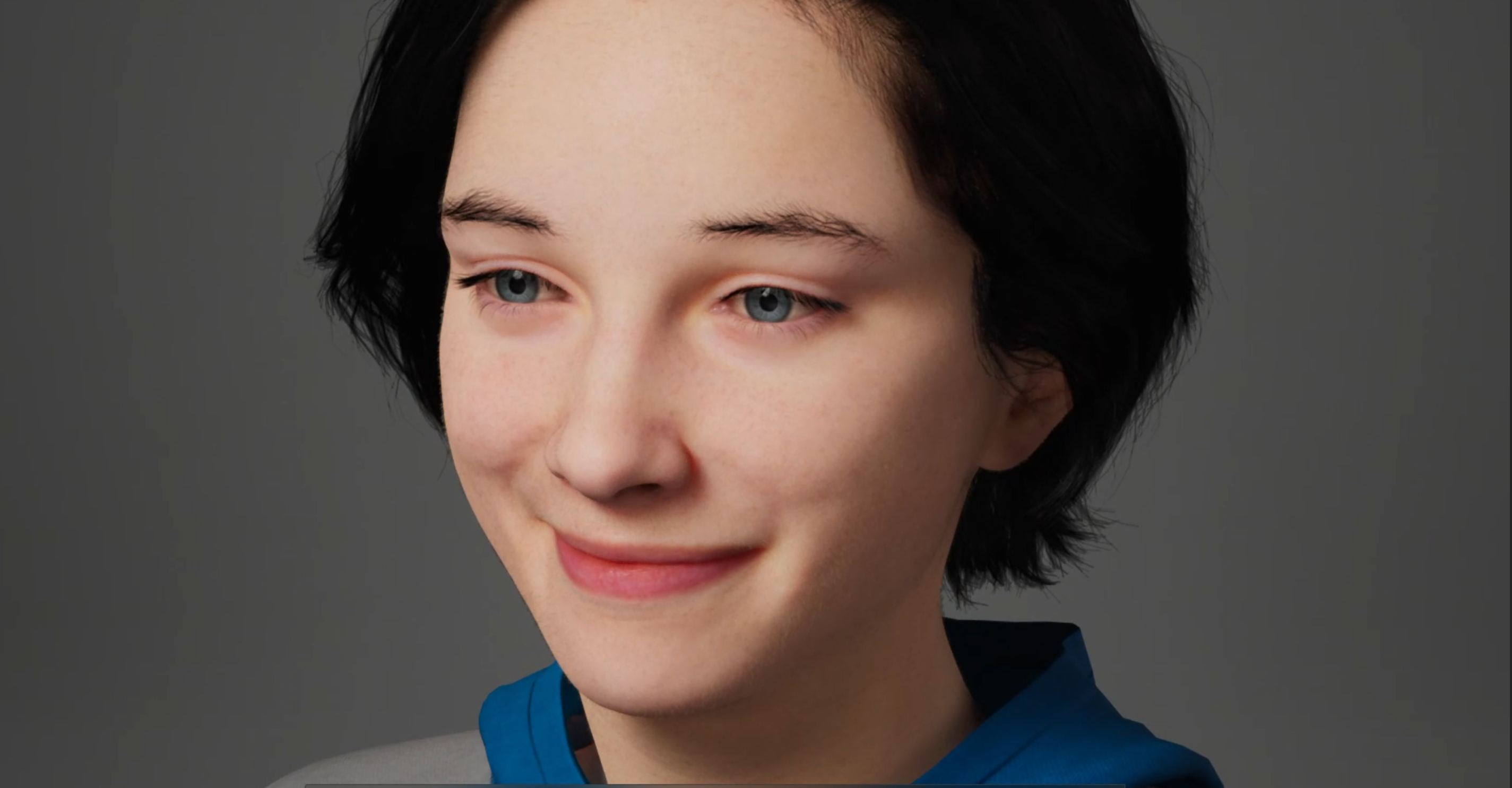
The Stina model has existed in Softimage with our custom built facial animation system for some time. It has been the cornerstone of our production, so we were super excited to see how it faired in Metahuman, the new ground breaking character system in UNREAL.  A recent development in the software now allows you to load in your own custom meshes and fit the system to it. (Before you had to make new heads out of blending presets.)

First we exported the base head sculpt out of Softimage in its relaxed position:

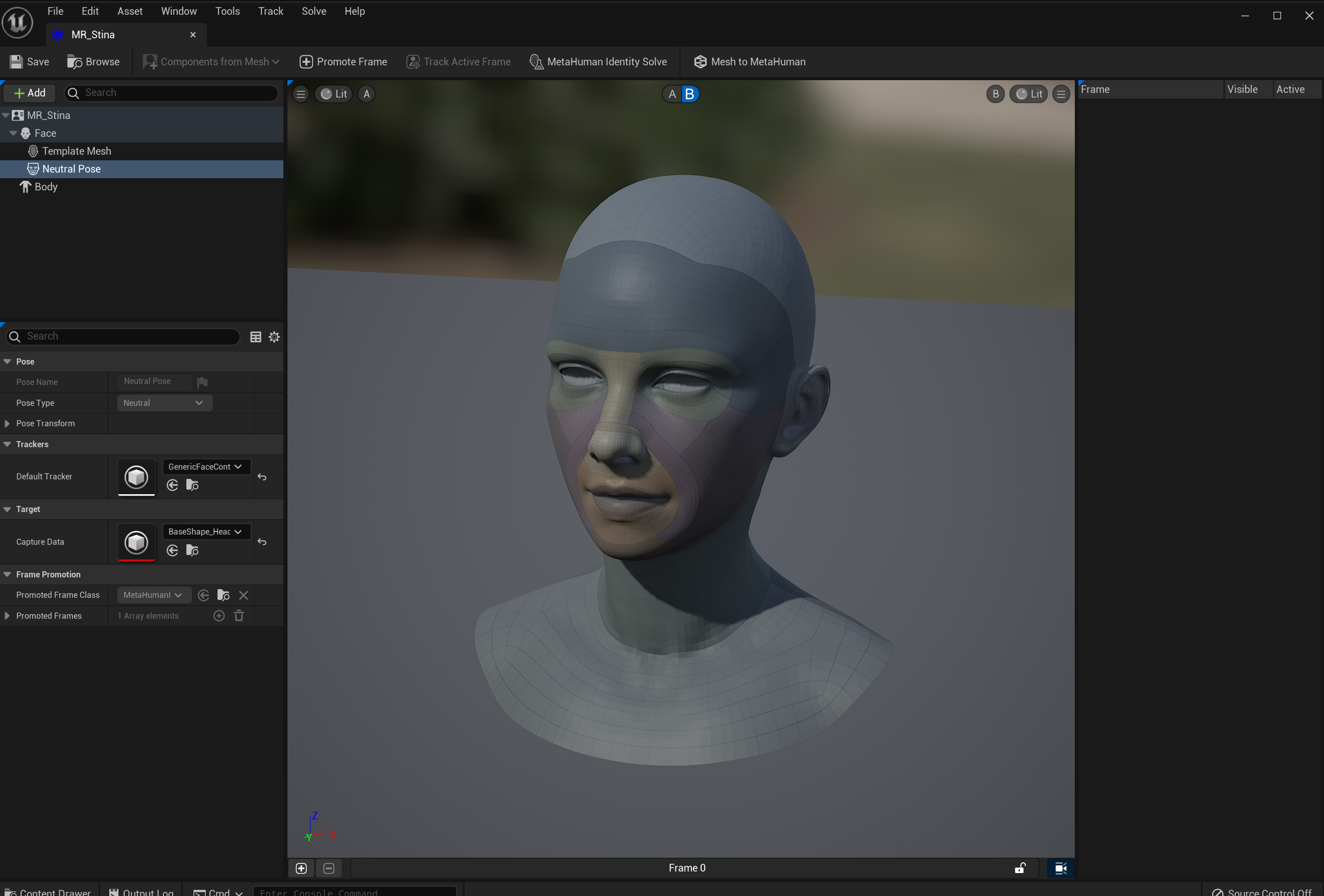
Then converted it into a Metahuman template that identified the different regions of the face to add the animation and texturing system within unreal.

Then added in the texture, hair and animation system by tweaking a wide range of built in presets. All surprisingly straightforward.

And a range of motion test:

The results are astonishing, verging on photoreal. It’s very strange to see the sculpt we’ve been using for so many years almost seeming to take on a life of its own! The next stage is to see how it responds to Becky’s performance. Really looking forward to bringing the other characters to life now. The Meta-world awaits!

Print Friendly, PDF & Email

Location scouting the UNREAL

It’s early days, but we have now jumped into the UNREAL game engine and begun crafting Stina’s world, and it’s a lot of fun!

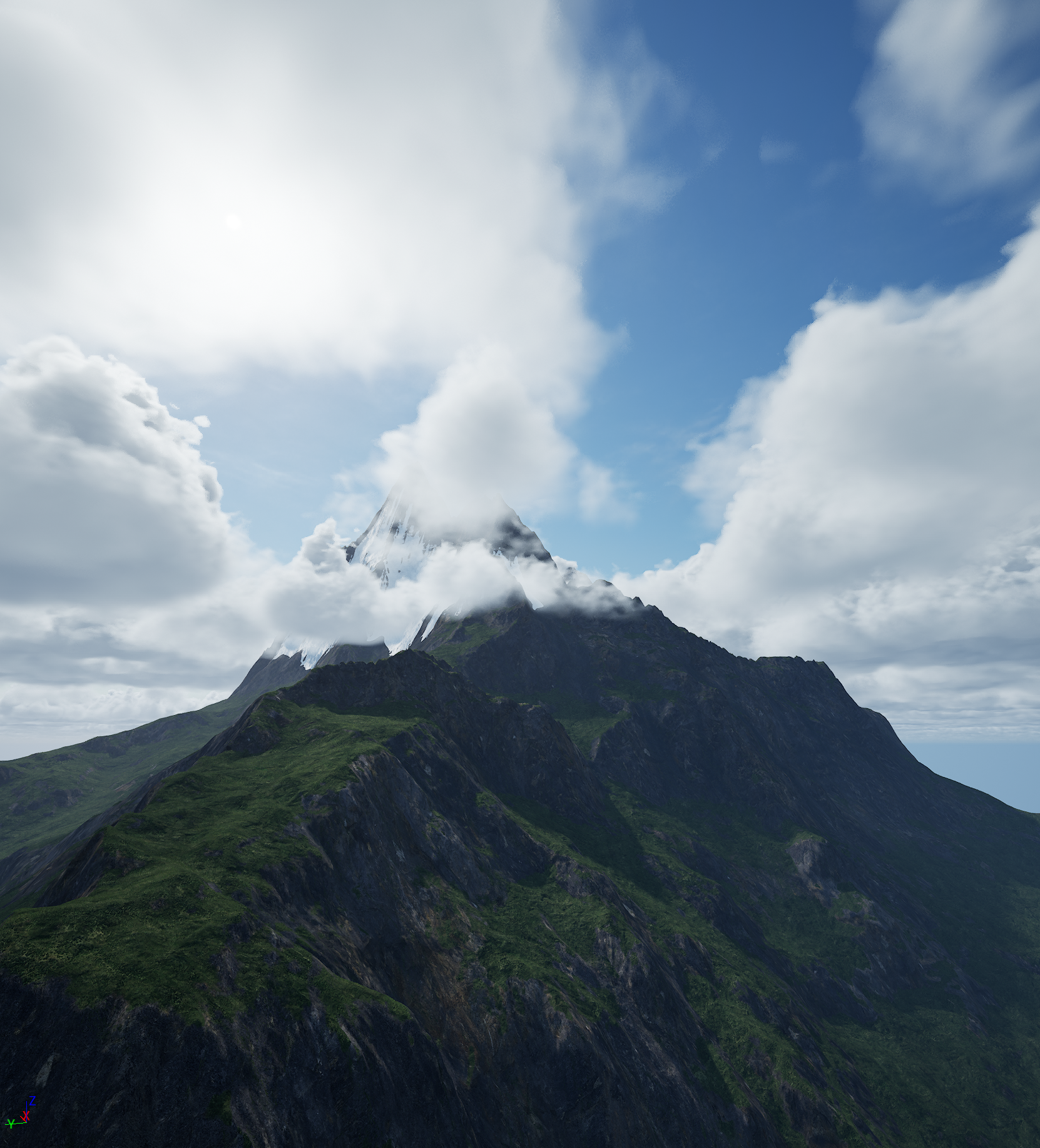
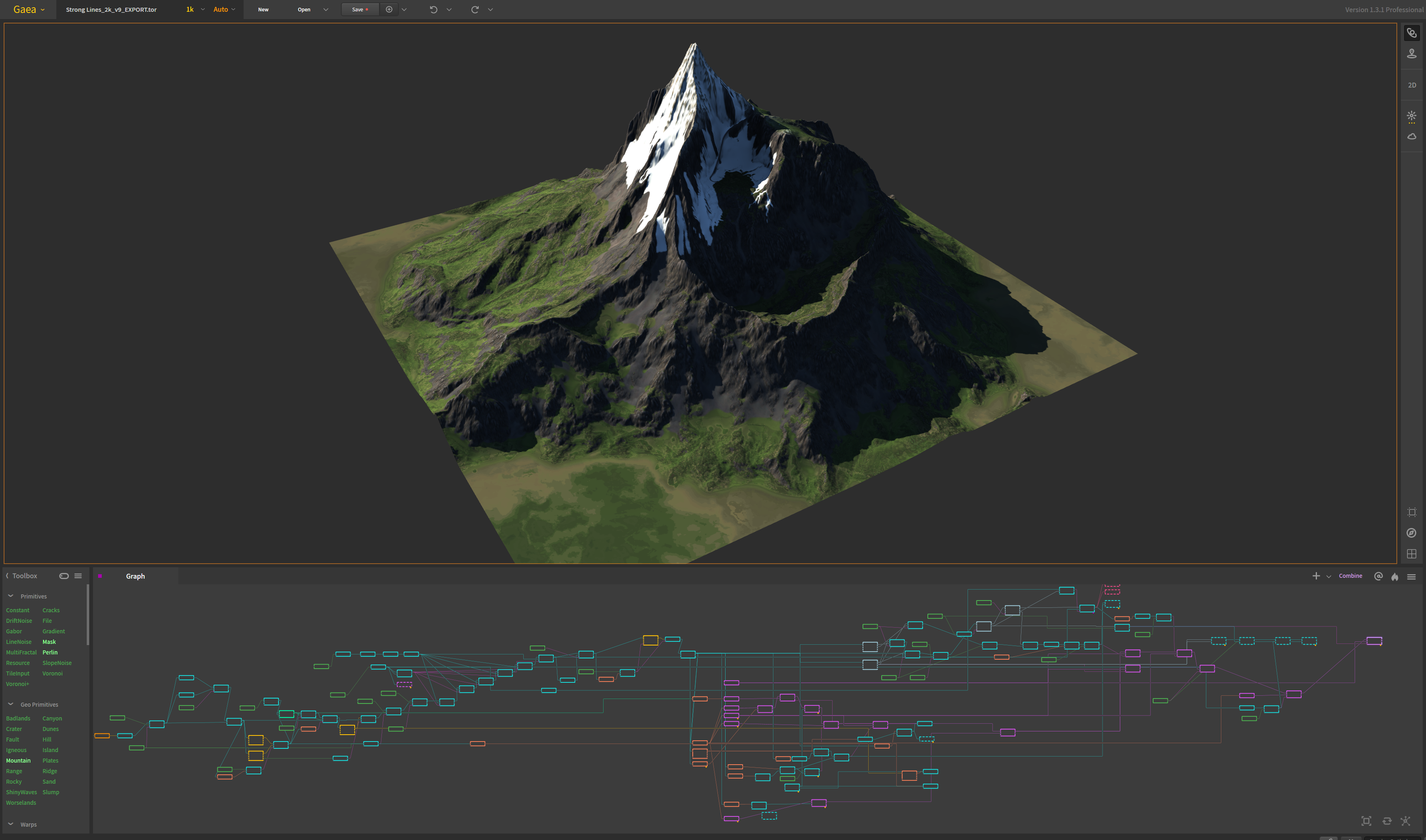
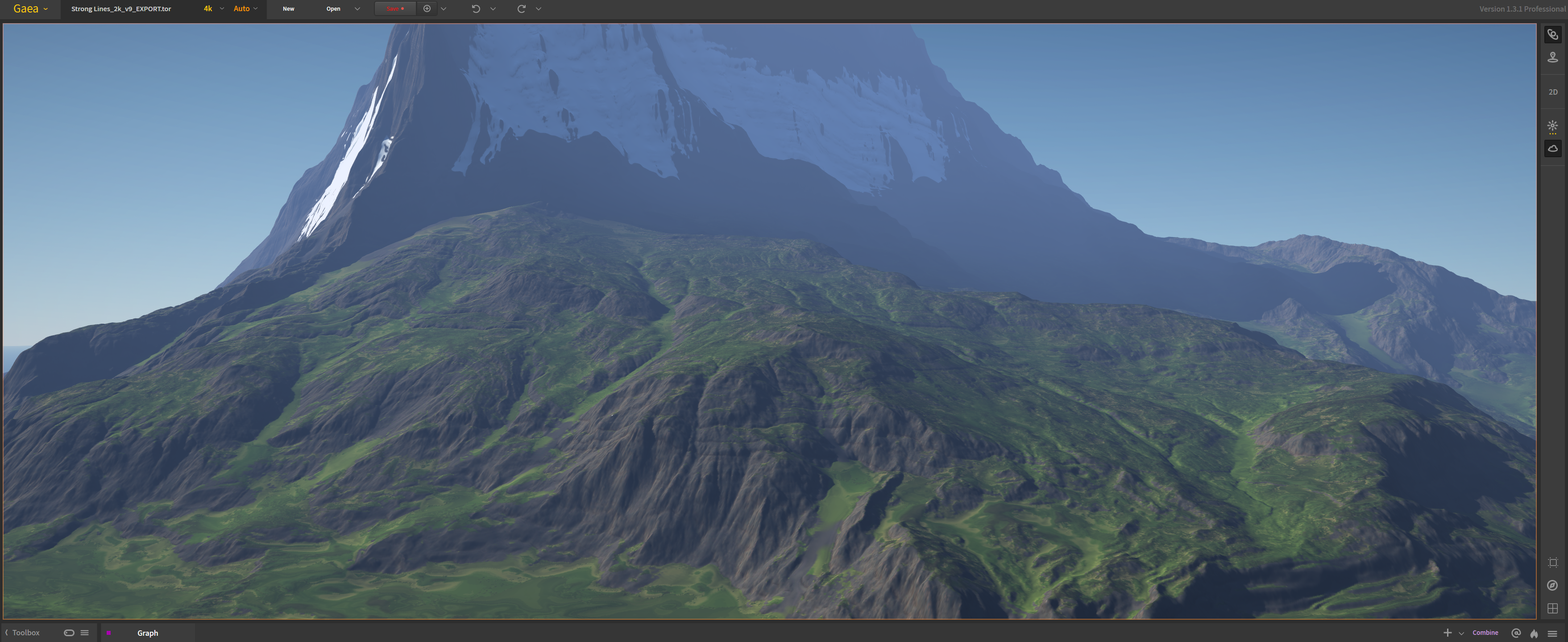
The world map is being built with GAEA, a fantastic node-based tool for making landscapes from geological principles: Layering stratification, erosion and sedimentary flow.

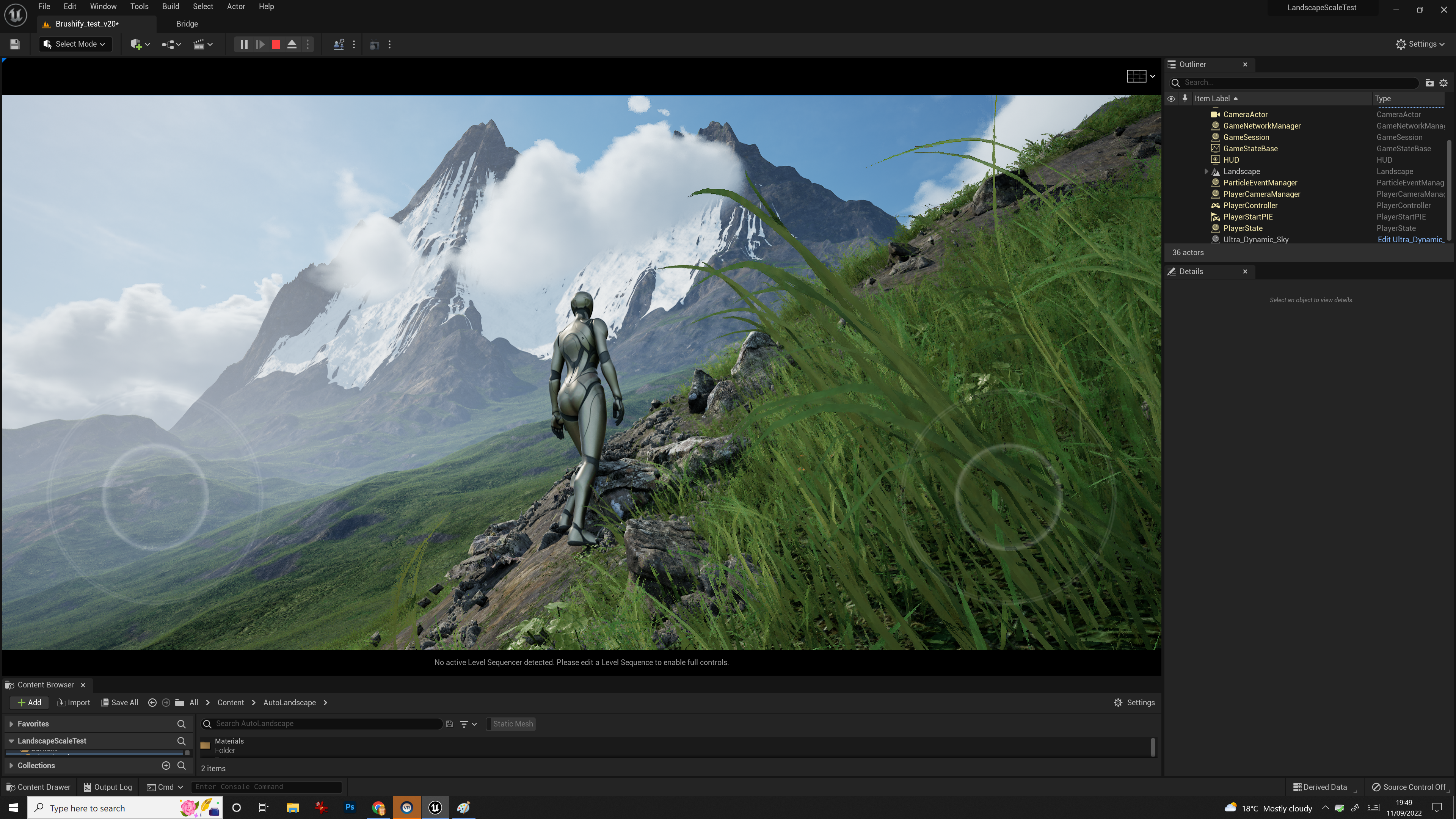
This map is then used to deform the terrain in UNREAL, where we use the different maps exported from GAEA (height maps, erosion maps, sedimentary flow maps etc.) to help position the smaller, high-frequency textural details UNREAL can help us create, like grass and rock (Utilizing the fantastic BRUSHIFY shader packs as a starting point.)

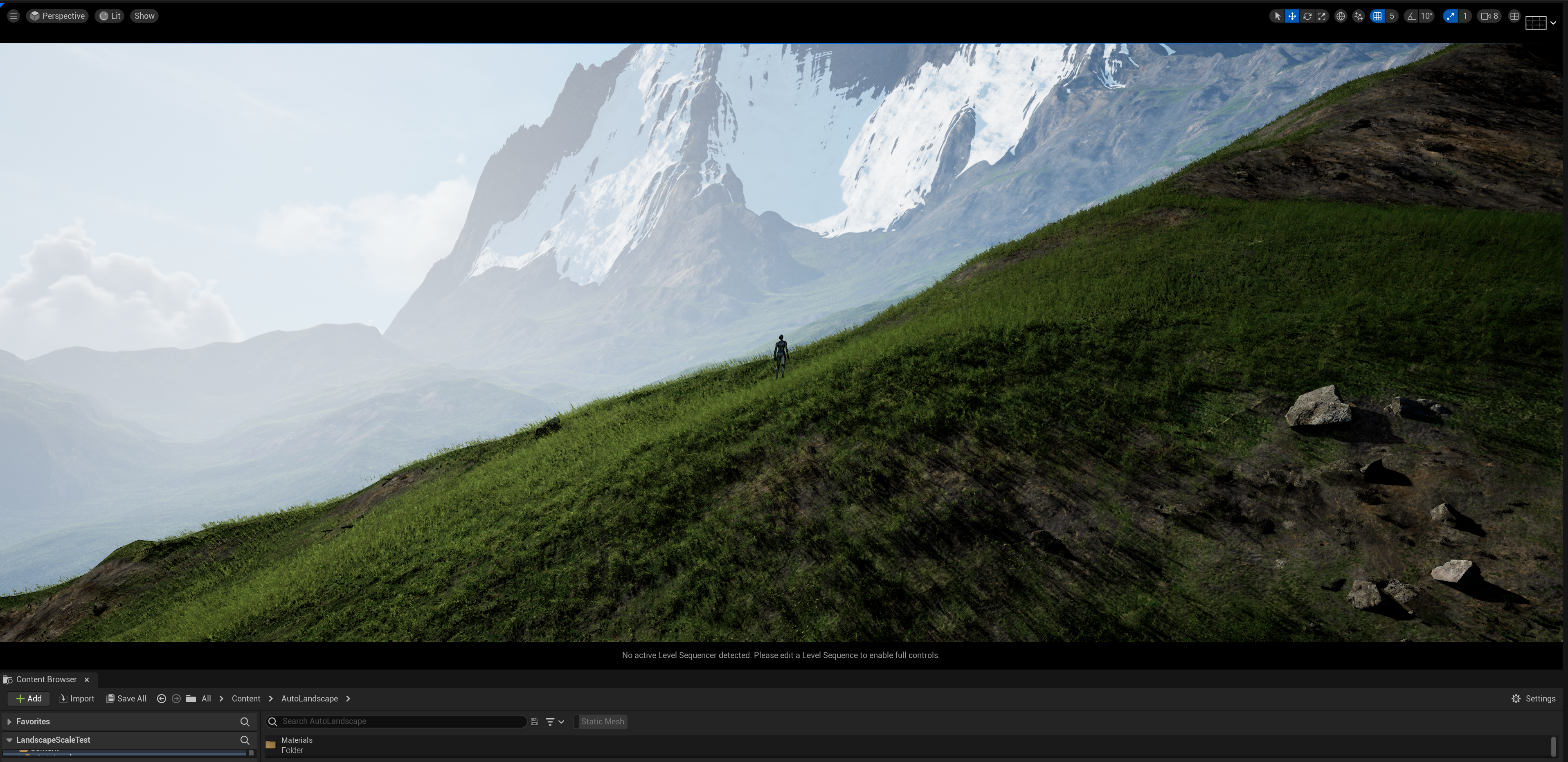
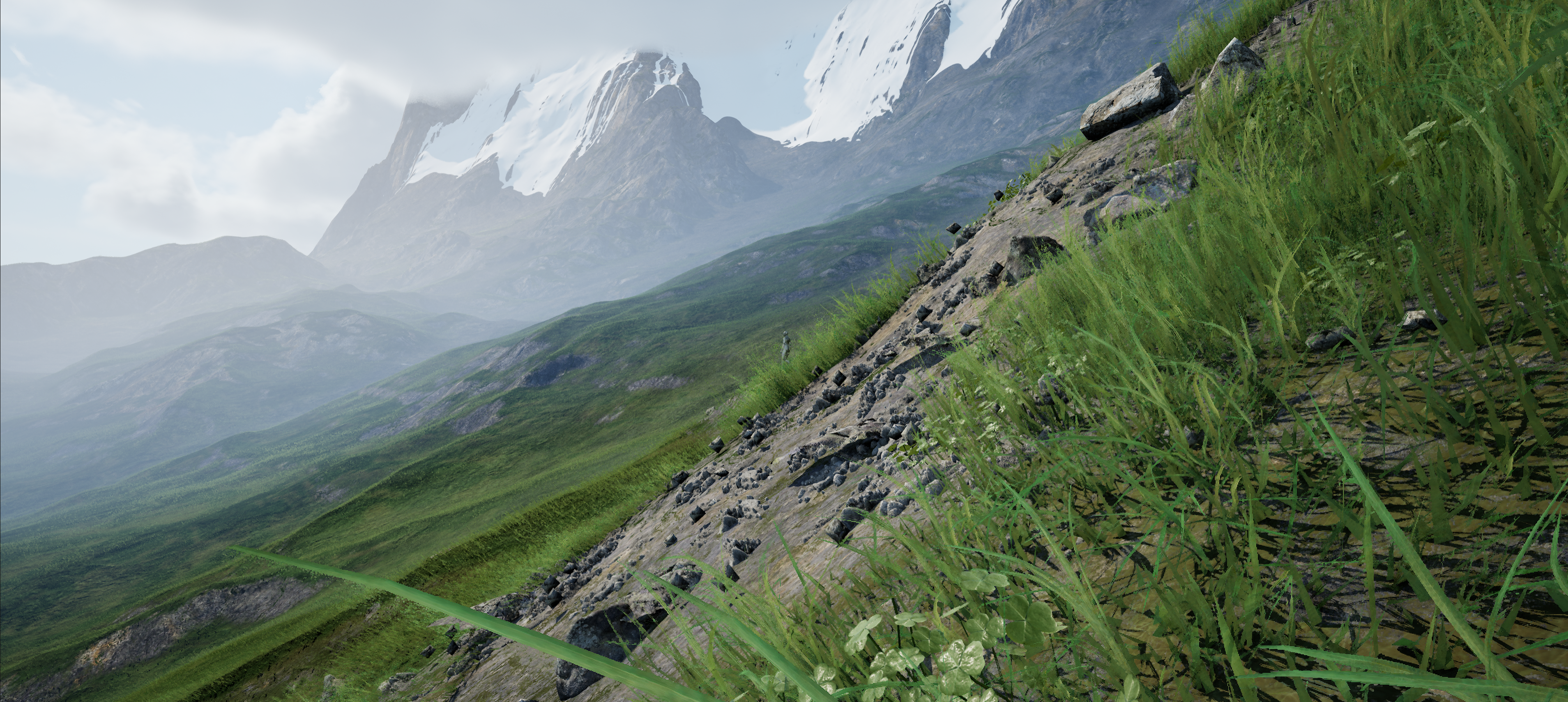
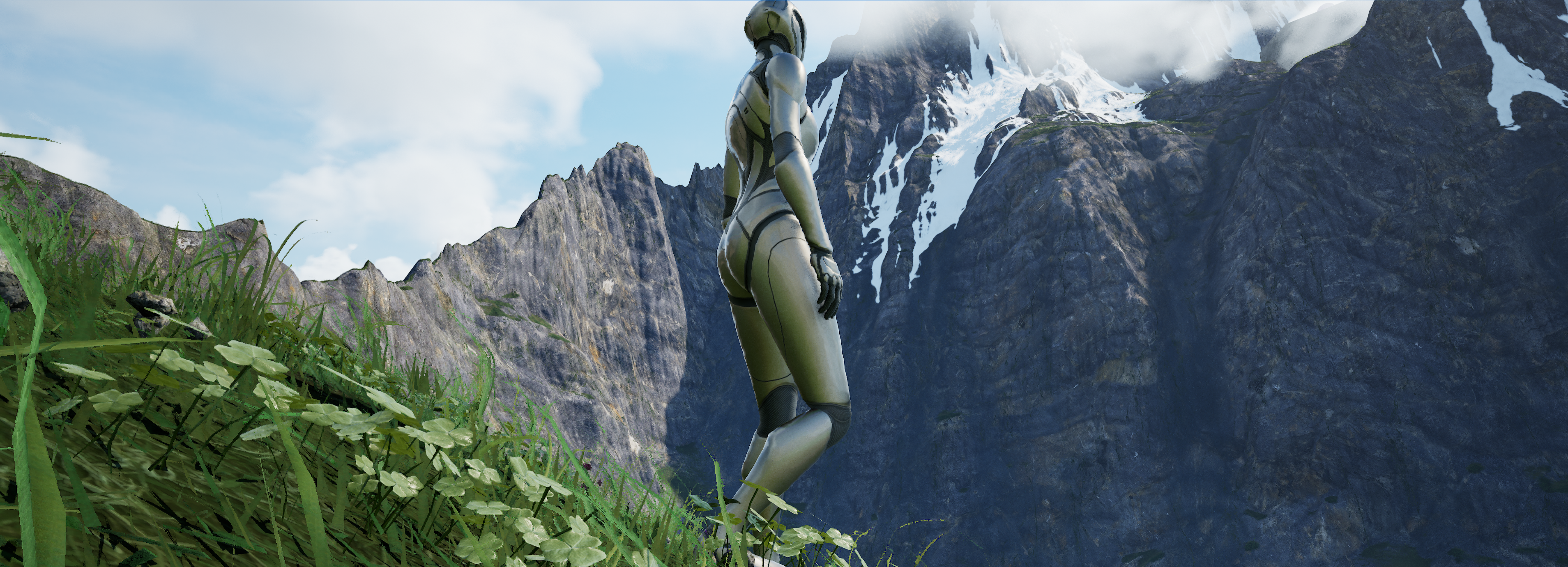
It’s an amazing new experience, to be able to make a CGI environment and then run around it location scouting. (Below with UNREALs built in avatar. No Stina hasn’t become a cyborg!) A very different paradigm to the purely design-based approach of CGI we were previously used to. We can now run around and discover things about the world we didn’t know where there, reacting to it in real time like a photographer exploring an unfamiliar landscape; experiencing different compositions of light and form. The ability to instantly change the time of day with Ultra Dynamic Skies makes this even more exiting; how will the vista look at midday? Will the setting sun totally transform the mood?

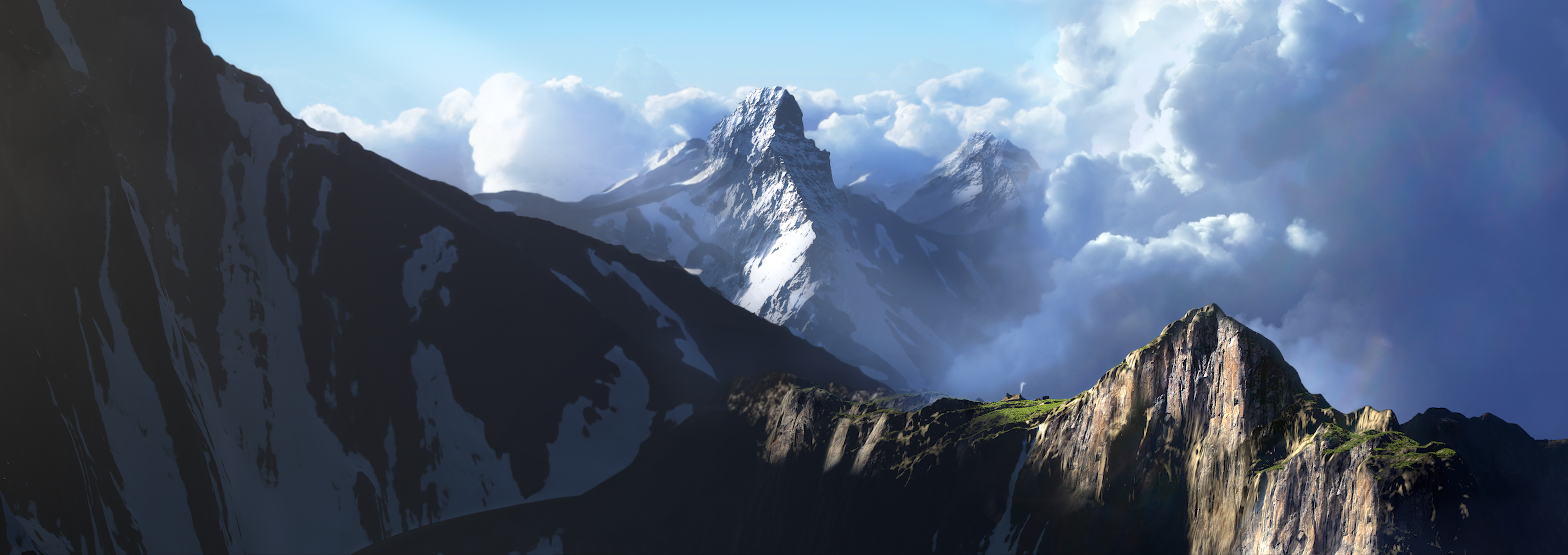
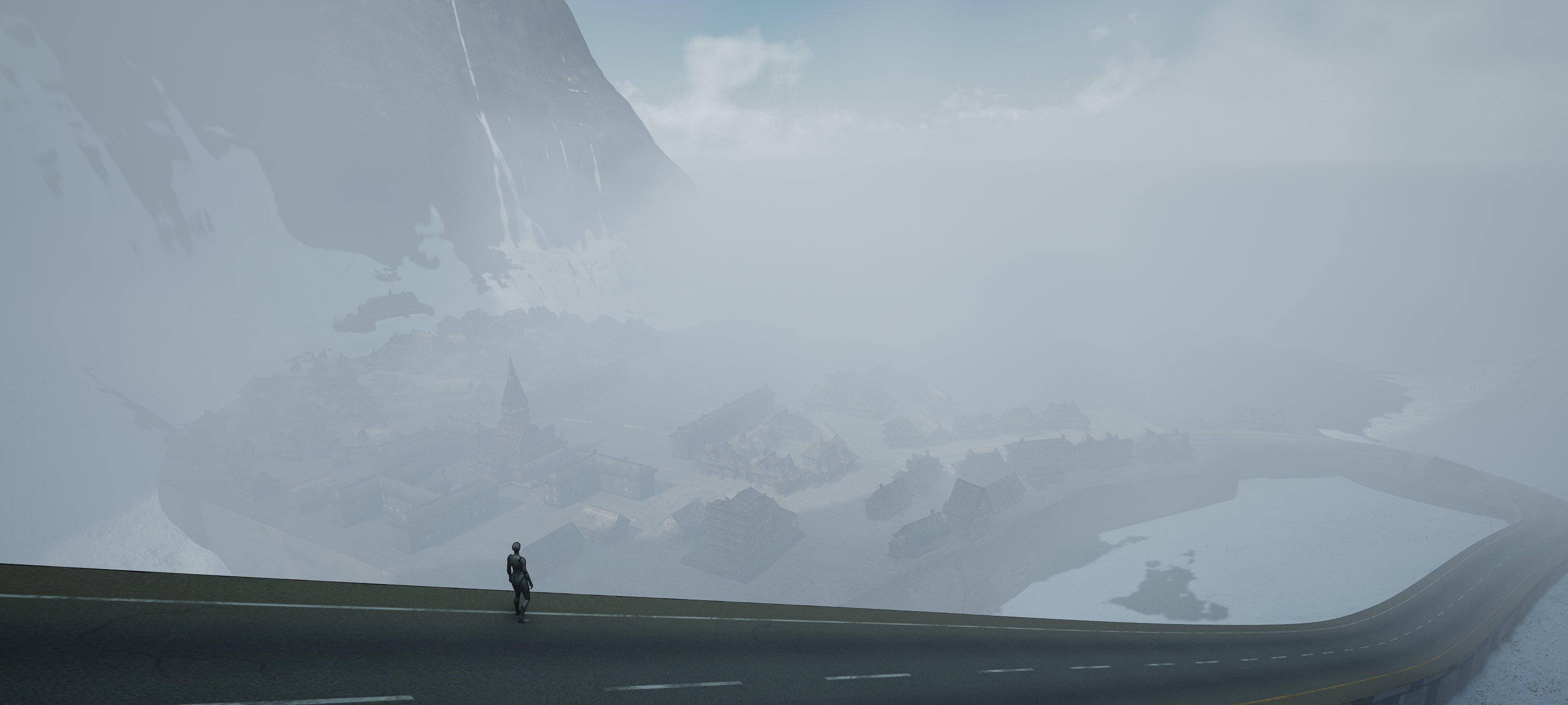
Standing high up a on mountain pass looking down through a cloud as it diffuses the sunlight over the village:

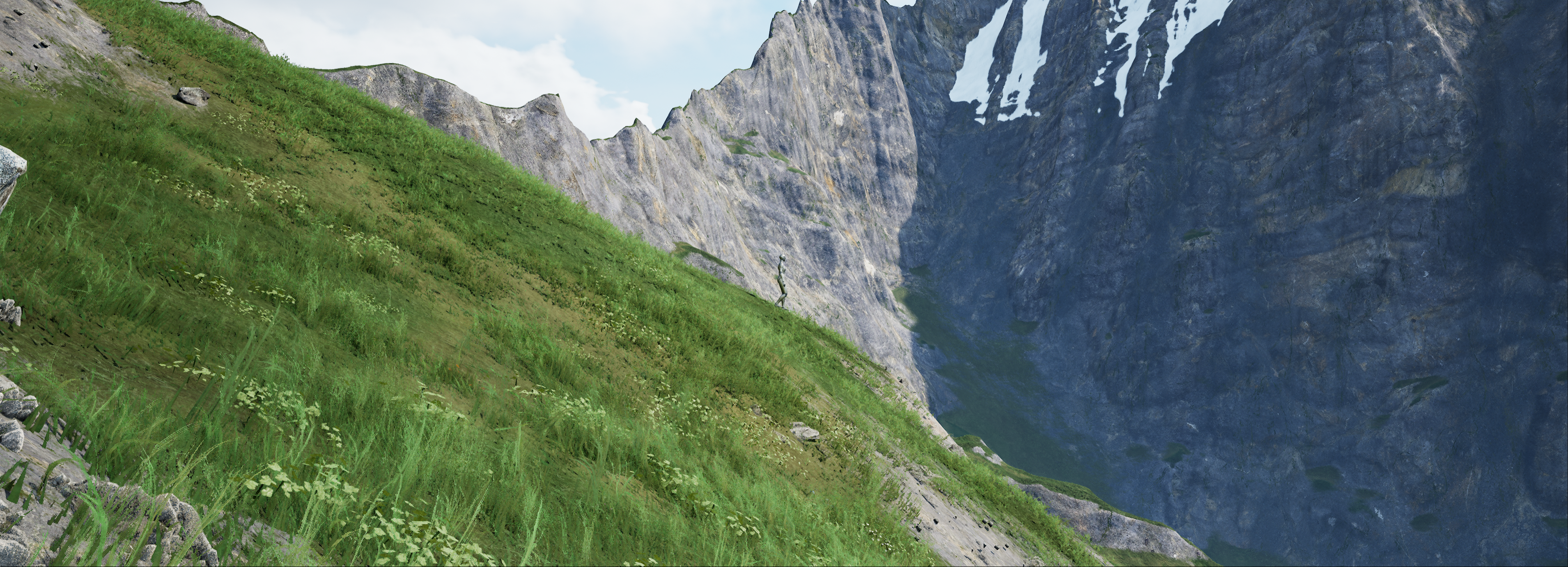
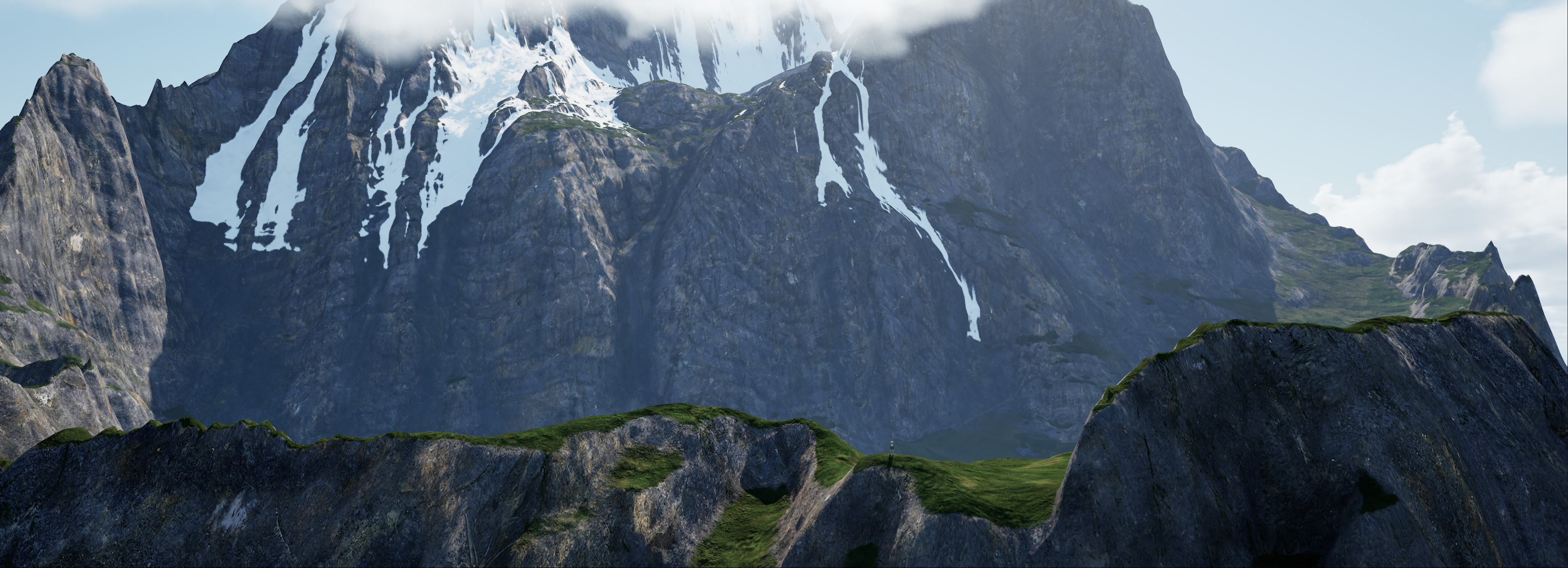
Looking up at our peaks from down in the valleys:

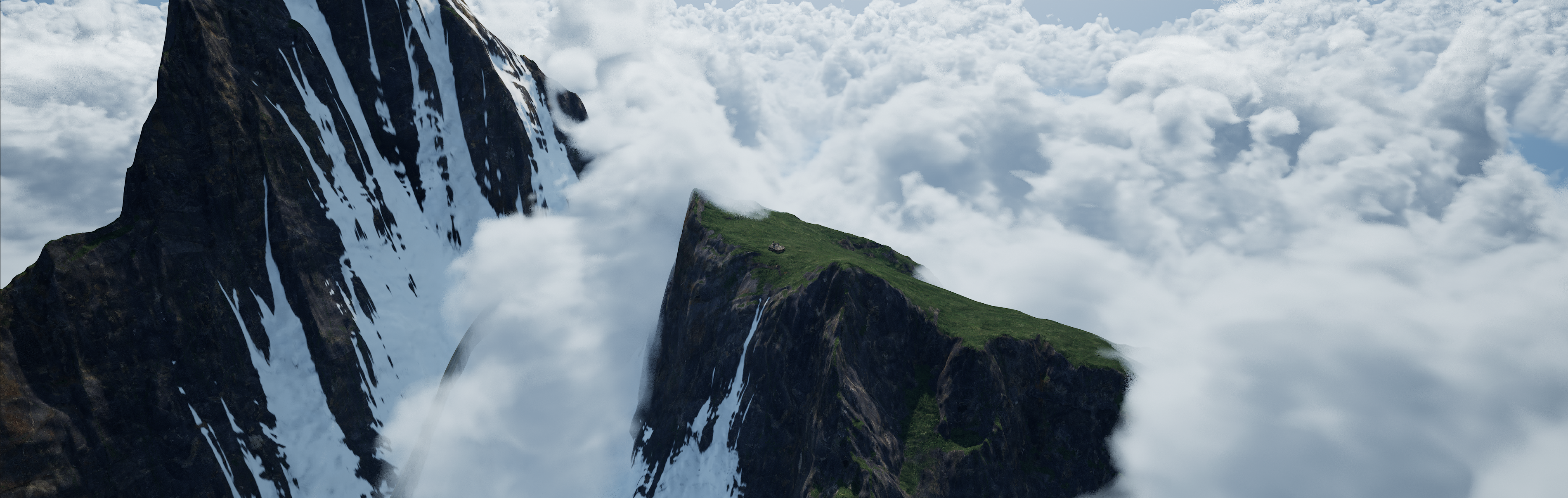
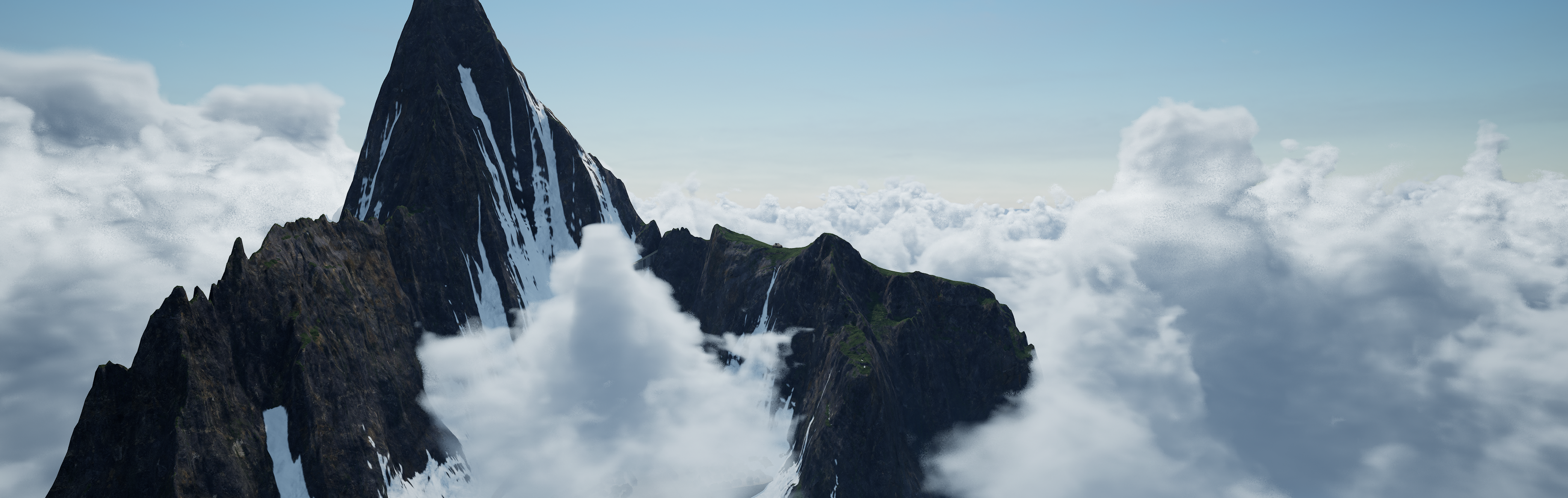
Looking down on Stina’s aunts house from high above the cloud layer:

Stina’s field and the aunt’s house at sunset:

We are also beginning to design our other pipelines, from animation and facial motion capture through to cloth and fluid simulation. A lot of work ahead, but we’re already assembling a great team and have achieved a lot more than we ever expected in just 2 weeks. (Back at the start of the project this level of fidelity would have taken forever. Technology has come a long way in 10 years!)

We’ll be posting some videos soon exploring our new world in more depth, so keep your eyes peeled…

Print Friendly, PDF & Email